‘Naturalizing Architecture’: Koichi Takada’s Japanese Lens on Nature-Centred Design
Published by The Biophilic Blueprint
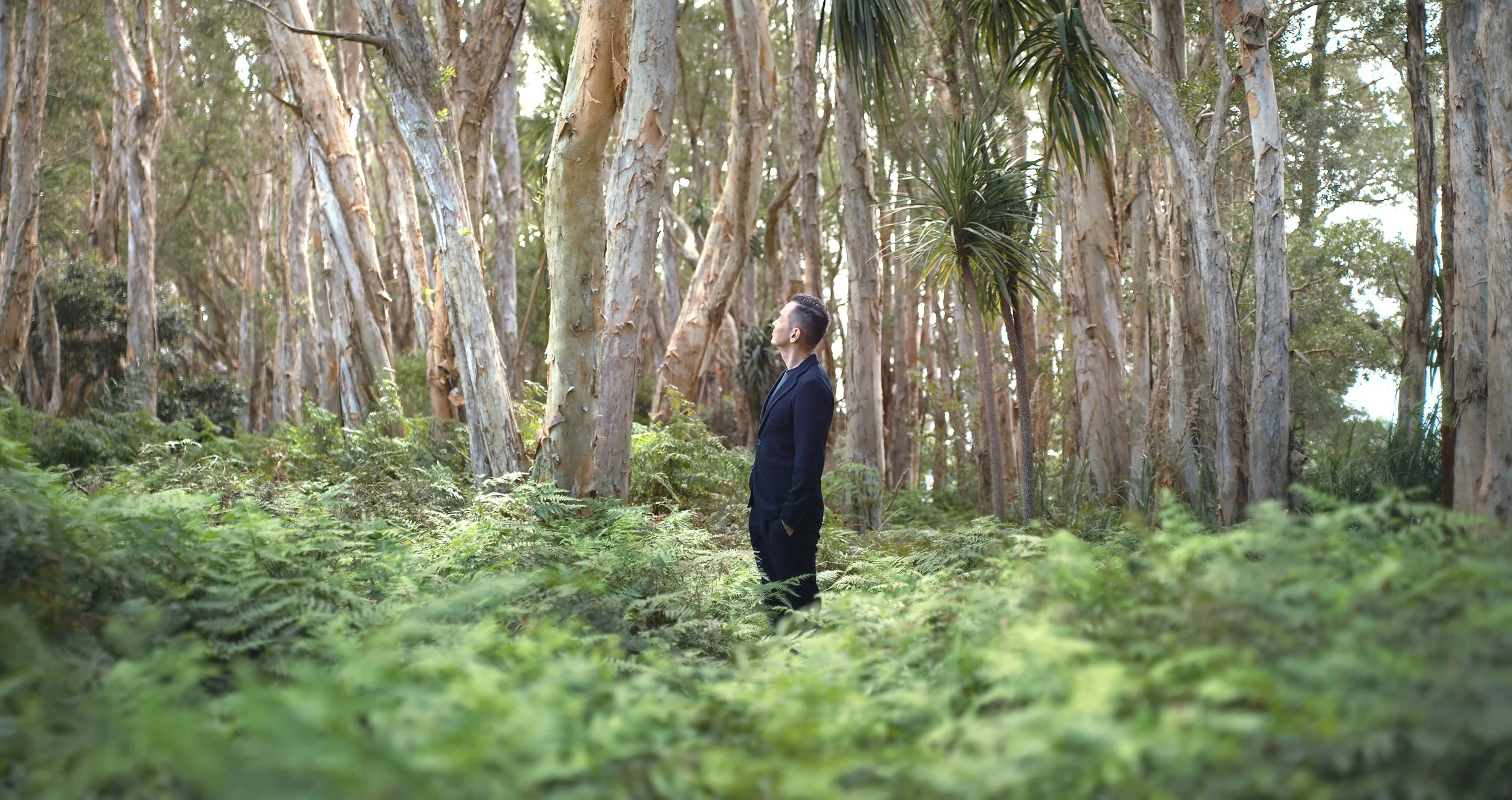
Koichi Takada designs with nature in mind.
In an era where dense urban living increasingly disconnects people from nature, Architect Koichi Takada is reimagining architecture as a force for reconnection—between people, place and the natural world.
In his second book, Naturalizing Architecture (Rizzoli New York), Takada presents a portfolio shaped by a post-Covid, nature-centred vision for architecture—one that places life, wellbeing and ecological balance at the core of design. Spanning residential, commercial and mixed-use projects, the work demonstrates how biophilic design can be applied across scales to create healthier, more resilient urban environments.
“Architecture today must respond to ecological constraints, but also offer more than utility. It should inspire, connect and restore balance with nature,” Takada said.
Approaching two decades in practice, Takada is internationally recognised for architecture that blends natural inspiration with contemporary form. Based in Sydney and educated at the Architectural Association School of Architecture in London, his perspective has been shaped by living and working in Tokyo, New York and London—global cities that reinforced his belief in architecture as a connector between people and nature. Takada’s international practice spans Australia, Japan, China, the Middle East, Europe and the United States, responding to diverse climates and cultures while maintaining a consistent, nature-embedded design ethos.
Through Naturalizing Architecture, Takada illustrates how embedding nature’s regenerative qualities into the built environment can reshape city life and support more humane, future-ready cities.
Organic lines, natural materials, rich textures and carefully orchestrated spatial rhythms define Takada’s work, drawing on the principles of biophilic design. This approach recognises humans’ innate psychological and physiological affinity with nature.
When buildings integrate natural systems—such as daylight, airflow, vegetation and material tactility—research shows they can reduce stress, improve cognitive performance, support physical health and strengthen social connection. These benefits sit alongside environmental outcomes including improved air quality, reduced energy demand and enhanced urban biodiversity.
Japanese Sensibility Meets Global Urbanism
Across his projects, Takada’s work reveals a consistent fusion of Japanese restraint and organic form, challenging the status quo to consider nature’s deeper role in contemporary cities. His designs embed nature as a structural and philosophical presence—creating environments that resonate emotionally and physiologically with their inhabitants.
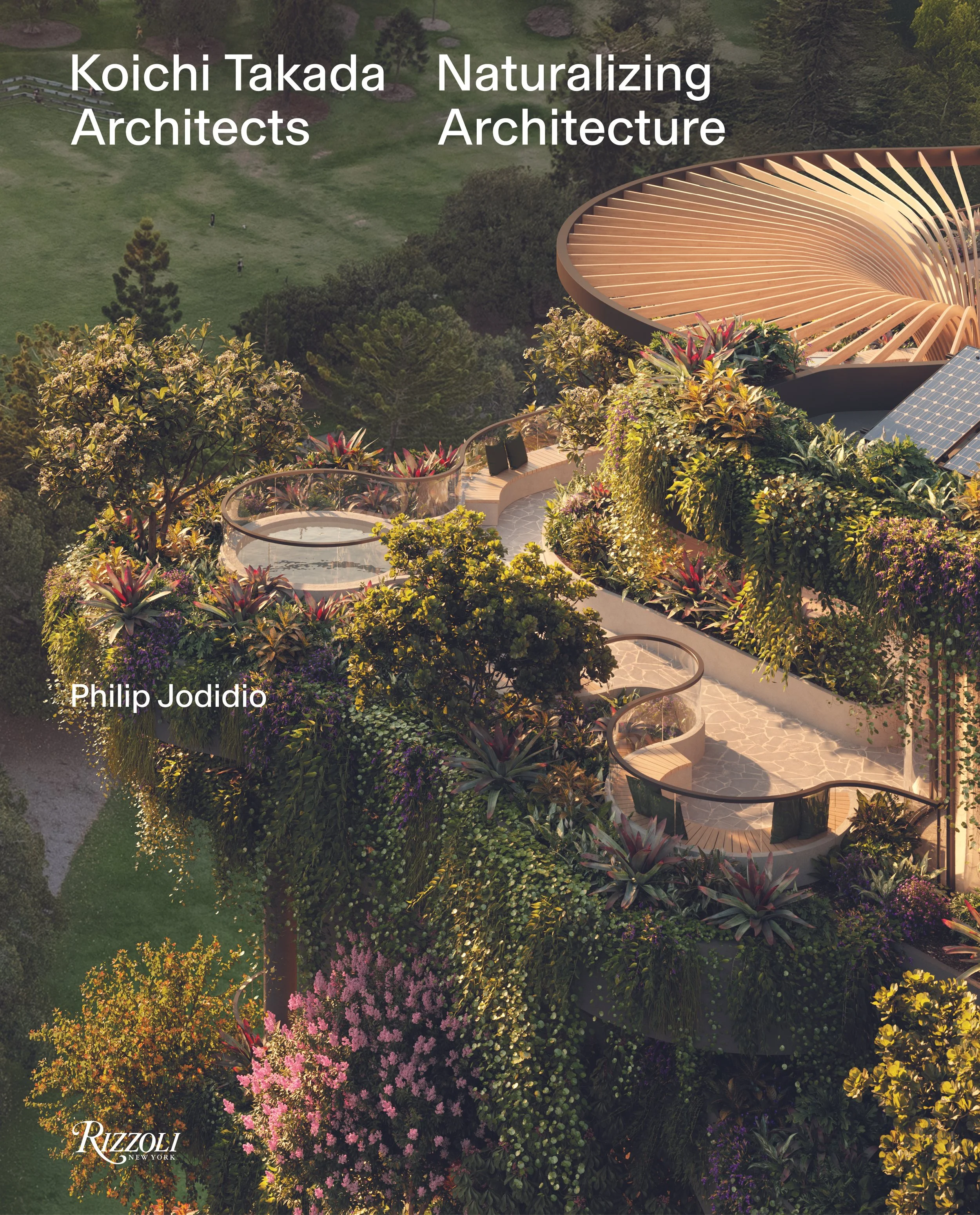

In the foreword, Béatrice Grenier says, “Koichi Takada architecture today acknowledges what the 15th‑century Zen tradition had expressed in aesthetic terms—that there is no possible division between city and nature, landscape and architecture.”
Naturalizing Architecture presents this philosophy through 240 pages of photography, diagrams, and reflections, with text by architecture writer Philip Jodidio and a foreword by Béatrice Grenier, Director of Curatorial Affairs at Fondation Cartier. Grenier writes that Takada’s work “proposes new principles of mutuality and inclusion between nature, architecture and culture”—reinforcing the message that architecture can foster deeper ecological and human connection.
Takada’s work speaks directly to the growing movement in architecture that seeks to heal the “connection deficit” of urban life through design that honours nature, supports wellbeing, and champions sustainability. In doing so, he inspires a new generation of architects and urbanists to design cities that are not just efficient but alive with nature’s presence.
Biophilic Projects: Design Rooted in Nature
The following projects featured in Naturalizing Architecture illustrate how Takada’s work embodies biophilic principles in diverse ways—bringing nature into cities, homes and community spaces. The Biophilic Blueprint has selected three projects from the 15 featured in the portfolio.
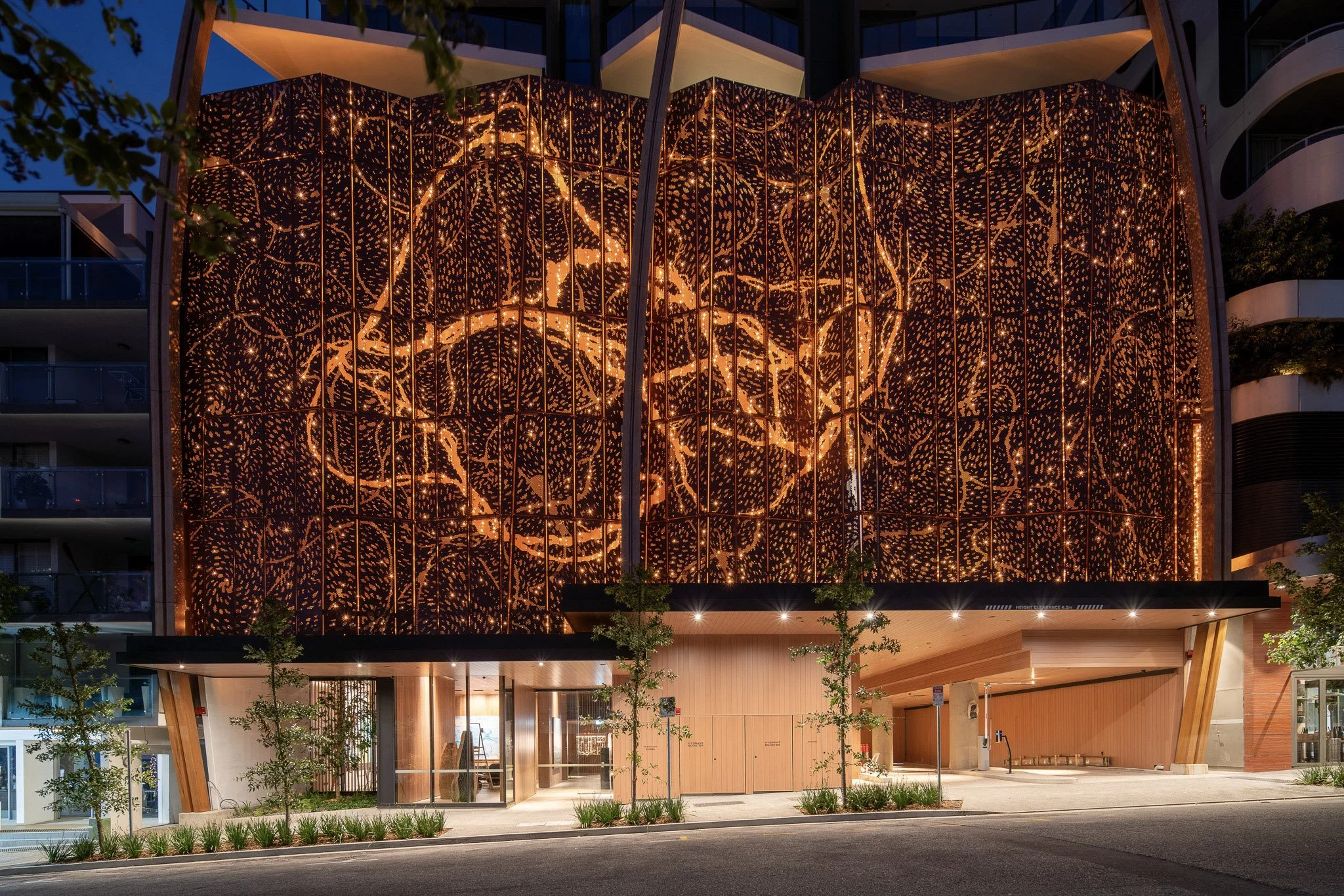
Upper House follows the Brisbane skyline with a timber pergola and two levels of premium rooftop amenities. Photo: Mark Nilon.
Upper House, Brisbane, Australia: grounded in Australia’s rich First Nations history
Upper House, South Brisbane is a 33‑story residential tower, offering 188 apartments designed to reconnect urban dwellers with nature, community and culture. Its architectural form draws inspiration from the Moreton Bay fig (Ficus macrophylla), with “architectural roots” that take residents on a journey from our ancient past at the base of the building to the future of vertical living. The project directly addresses what is described as a “connection deficit” in contemporary high‑rise life.
“High-rise lifestyle has become so detached and disconnected—from the community, from nature, from one another,” Takada says about the project. “With Upper House, we are looking to challenge that and establish a new model for vertical living that is, at its foundation, about connection.”
Located near the Southbank cultural precinct, Upper House integrates biodiverse outdoor areas and a range of wellbeing amenities that encourage both communal and private encounters with nature. Access to abundant natural light, sweeping views of greenery and thoughtfully designed social spaces echo biophilic design principles, emphasising sensory engagement, psychological comfort and restorative experiences.
The tower has achieved a five-star rating from the Green Building Council of Australia, with design measures that reduce water consumption by 20 percent compared with similar structures and generate 100 percent renewable energy through a 30kW solar system. Landscaping both within and around the building not only enhances aesthetics and resident experience but also provides insulation and mitigates the urban heat island effect, demonstrating a holistic approach to sustainability.
Upper House also celebrates connection to history and culture. A five-story artwork by Aboriginal Australian artist Judy Watson, Bloodlines Weave String and Water (2023), links the tower to Indigenous culture and the land. “They are the bloodlines that pull us to country and culture,” Watson explains, highlighting the deep ties between community, heritage and place embedded within the building.
Through its form, function, and art, Upper House presents a vision of high-rise living where ecological sensitivity, cultural resonance and human wellbeing converge—offering a new benchmark for urban residential design.
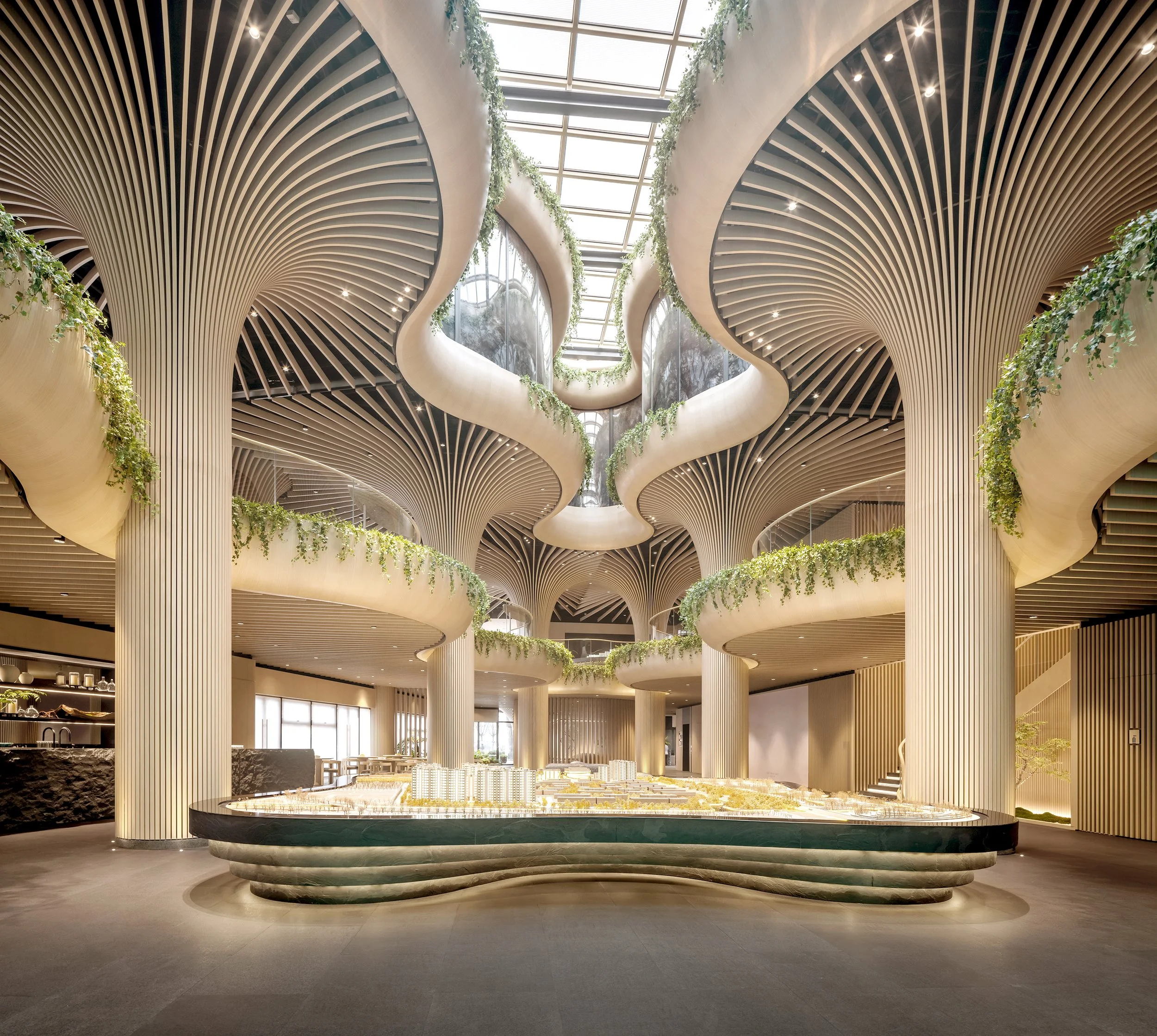

Solar Trees Marketplace, Shanghai, China: Nature-Inspired Public Spaces for Urban Wellbeing
In one of the world’s most densely populated urban environments, Solar Trees Marketplace illustrates how nature-inspired architecture can transform public spaces into vibrant, healthy and engaging environments. The project is located in the Minhang district, approximately 20 kilometres southwest of Shanghai.
Drawing inspiration from Shanghai’s rich landscapes and surrounding forests, thirty-two architectural “trees” rise from the ground, their timber branches weaving together to form a canopy above the marketplace. This organic structure not only creates a visually striking landmark but also fosters a sense of shelter, comfort and connection for visitors and residents alike.
The canopy echoes the green spine that links the 155,000-square-metre One Tian An Place residential master plan, reinforcing the project’s integration with its broader urban context. The forest-inspired design also symbolises China’s commitment to achieving carbon neutrality by 2060, setting a new sustainability benchmark for mixed-use residential developments.
As a three-story mixed-use hub, Solar Trees Marketplace brings the restorative qualities of nature and a sense of wellbeing back into the neighbourhood. Biophilic principles underpin every element of the design. Fifty camphor trees planted at the edge of the site mark the start of a green corridor that threads through the masterplan. Across the development, 3,000 trees and shrubs native to Shanghai—including white Magnolia (the city’s emblematic flower), Ginkgo, Camphor, and Celtis sinensis—come together to form a vibrant new park.
Thoughtful colour-coding of the plantings not only highlights different neighbourhoods within the masterplan but also provides intuitive wayfinding for residents. The marketplace extends this natural landscape into daily life, with the solar canopy filtering sunlight to create a pleasant outdoor environment that enhances the health and wellbeing of shoppers.
Through its combination of artful form, environmental innovation, and social function, Solar Trees Marketplace exemplifies how architecture can reconnect people with nature in dense urban settings, making public spaces both resilient and regenerative.

Mamsha Palm, Saadiyat Island, Abu Dhabi, UAE. Photo: CGI by Bucharest.
Mamsha Palm, Saadiyat Island, Abu Dhabi: Biophilic Luxury Rooted in Desert and Coastal Ecology
Mamsha Palm exemplifies biophilic luxury on Saadiyat Island, where architecture responds directly to the desert and coastal ecology. The building’s flowing curves are inspired by nature, evoking the protective canopy of palm trees in desert landscapes.
“I also strive to create the space of what we call in Japan iyashi, a sense of retreat through our design, an escape from demanding urban lifestyles; similar to the effect nature has on lifting your energy and recharging your mind. Luxury to me is allowing space to breathe: an environment that allows the concept of time to disappear,” Takada says.
The Japanese concept of iyashi can be translated as healing, soothing, therapy, comfort and solace—qualities that Mamsha Palm brings to life through its design. Amenities include a rooftop wellness deck, state-of-the-art gym, yoga studio, a swimming pool with panoramic views of the Arabian (Persian) Gulf, a Zen garden lobby, a Japanese-inspired tea room and a playful children’s area. These spaces foster relaxation, reflection and social connection, bringing the restorative qualities of nature into daily life.
Conceived as an “urban oasis,” Mamsha Palm draws on the date palm as a symbol of life and resilience in arid environments. The architectural form recreates a dynamic interplay of light and shadow throughout the day, while materials, textures and landscape elements are drawn from the surrounding environment, grounding the building in place and culture and offering a rich sensory experience.
Through its thoughtful form, integrated amenities, and biophilic principles, Mamsha Palm demonstrates how luxury, wellbeing, sustainability, and a deep connection to nature can coexist in an arid urban context.
Alignment with The Biophilic Blueprint
Koichi Takada’s architecture embodies the core mission of The Biophilic Blueprint: to highlight designs and spaces that reconnect people with nature, enhance wellbeing and foster ecological resilience. His projects illustrate biophilic principles in action, showing how thoughtful architecture can transform urban living environments into restorative, human-centered spaces. The portfolio of works in Naturalizing Architecture transports its readers to a world where nature and city making co-exist.
Comment below: Which of Koichi Takada’s projects do you find most inspiring, and why?
References and further reading
Koichi Takada Architects. (n.d.). Palm Frond Retreat.https://koichitakada.com/projects/palmfrondretreat/
Koichi Takada Architects. (n.d.). Solar Trees Marketplace & biophilic marketplace design.https://koichitakada.com/news/koichi-takada-architects-designs-biophilic-marketplace-inspired-by-shanghais-forests/
Archinect. (n.d.). Upper House | Koichi Takada Architects.https://archinect.com/koichitakadaarchitects/project/upper-house-koichi-takada-architects
Indesignlive. (2025). Koichi Takada – Naturalizing Architecture.https://www.indesignlive.com/news/koichi-takada-naturalizing-architecture
Biophilic Design | Journal of Biophilic Design. (n.d.). What is biophilic design?https://journalofbiophilicdesign.com/what-is-biophilic-design