Equity in Biophilic Architecture: Toward Nature as a Human Right
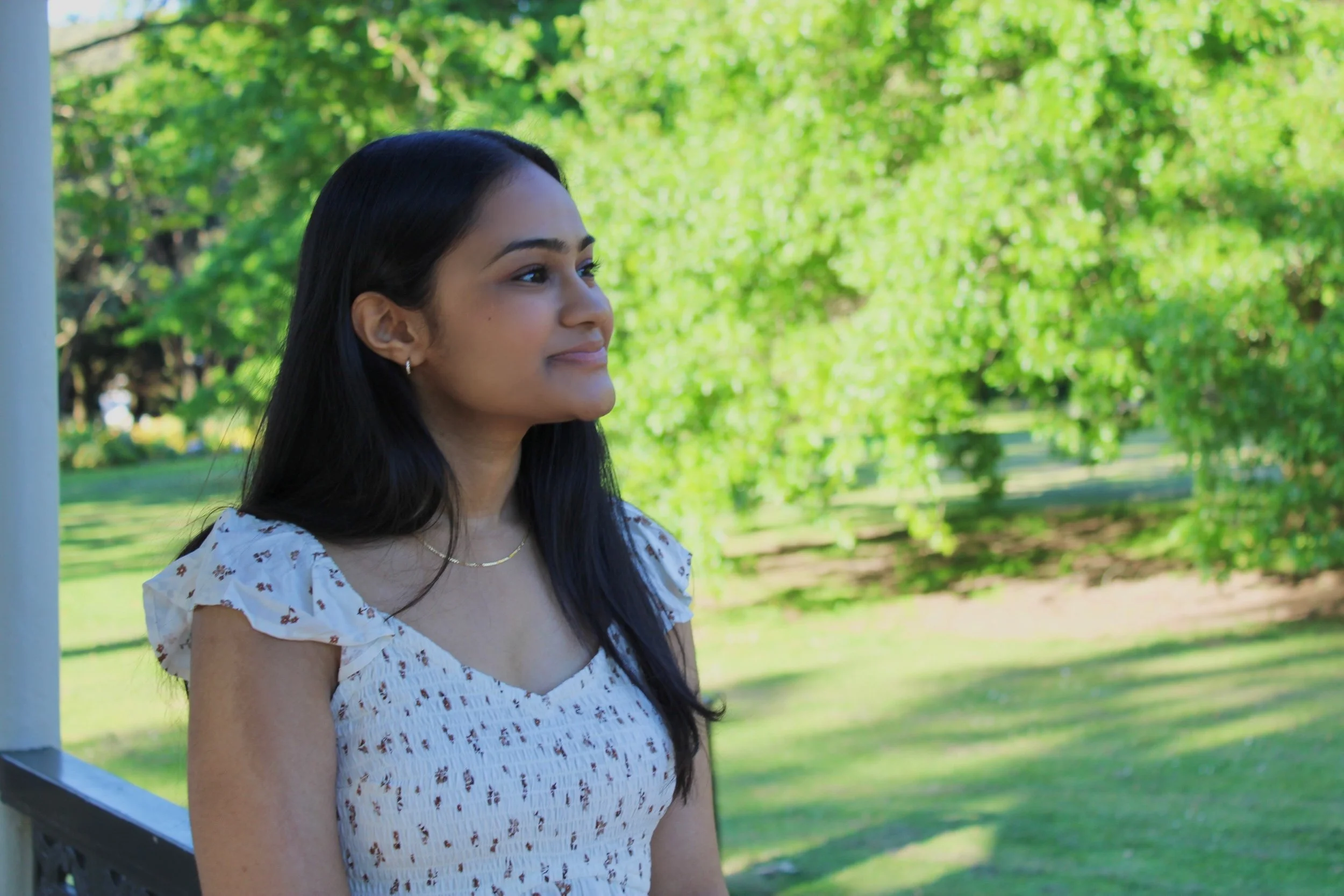
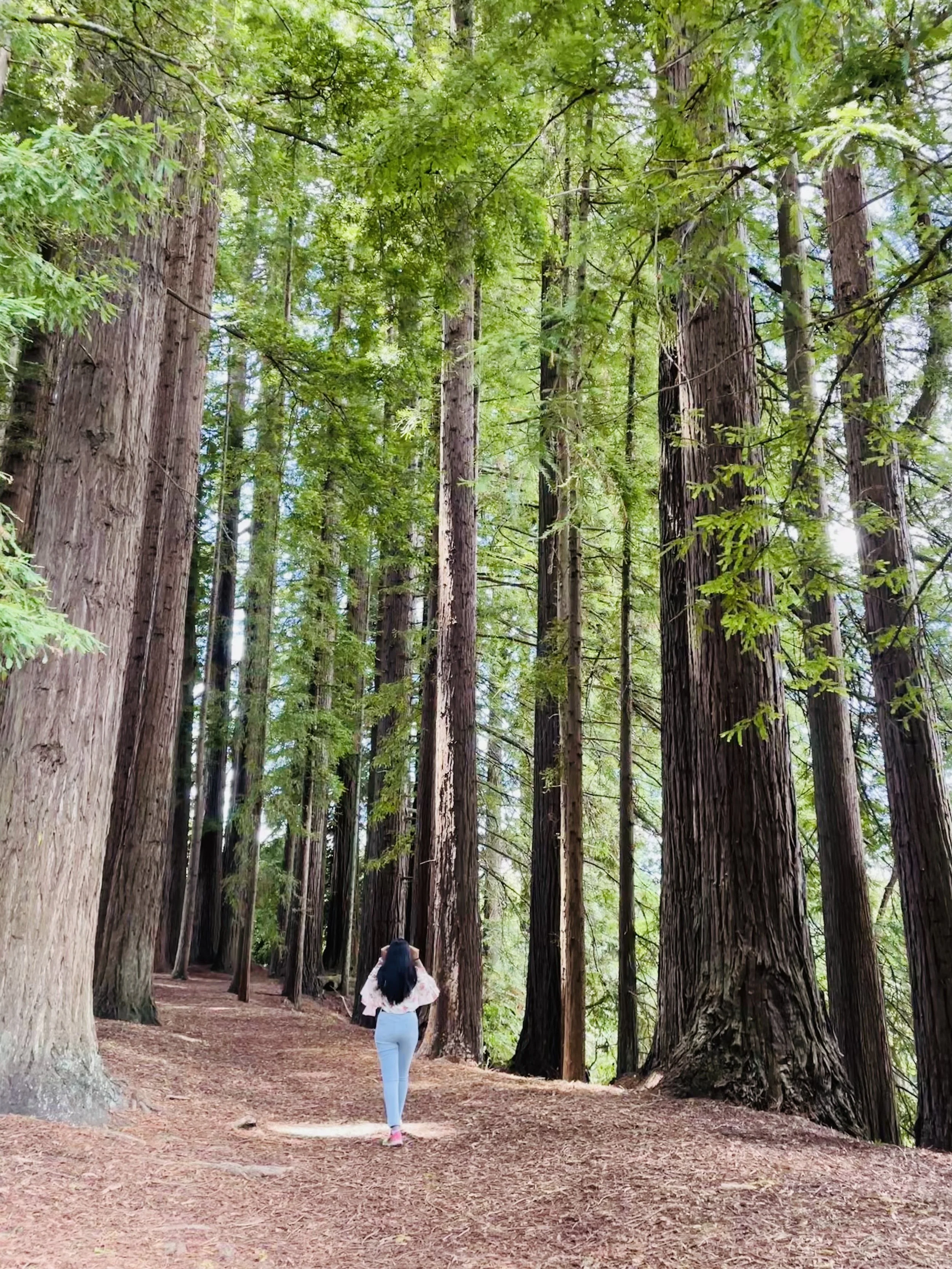
Tisha Lad on Frank Lloyd Wright’s Fallingwater, Pennsylvania and Stefano Boeri Bosco Verticale, Milan.
The Biophilic Blueprint | Written by Anjelica Smilovitis
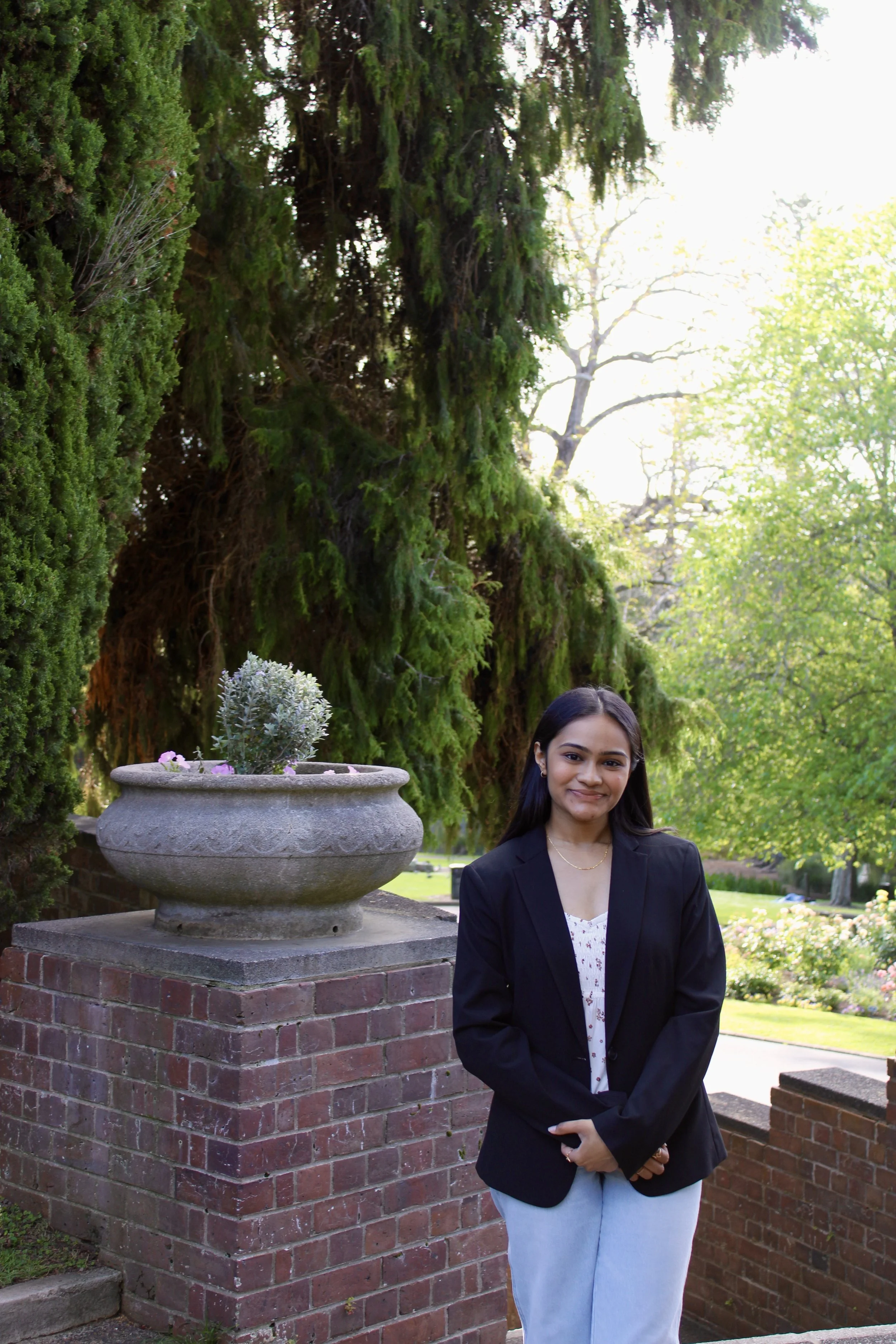
Tisha Lad at Auckland University of Technology in New Zealand.
Biophilic design seeks to bring people closer to nature; however, projects have shown that buildings meant to reconnect us with the natural world can just as easily disconnect people from it.
A building can wrap its occupants in trees, waterfalls or forest-like greenery and still operate as an environmental burden—or as a luxury reserved only for those who can afford it. In these moments, biophilic design risks becoming a contradiction: an architecture that celebrates nature while limiting who can experience it, and at times failing to support the ecosystems it claims to honour.
This tension raises human-rights considerations: in 2022, the United Nations formally recognised the right to a clean, healthy and sustainable environment, affirming that access to nature is not a privilege but a universal necessity—essential to wellbeing, dignity and life itself (United Nations Environment Programme, 2022).
The Biophilic Blueprint sat down with emerging Architect Tisha Lad to explore inequities in biophilic design and how access to nature through architecture can come with a “price tag” as she describes it, a pattern reflected in projects around the world. She contends that access to nature in the built environment should not be an exclusive privilege.
Tisha points out that restricted access to nature-rich spaces not only excludes people, it undermines the very goals of biophilic architecture.
Together, we examined two iconic examples of nature-connected architecture where equity quietly slipped through the cracks, even as the intention was to foster connection with the natural environment. We also explore how, despite these limitations, gaps were recognised and addressed—allowing more people to engage with each concept.
“I compared Fallingwater built in 1935 by Frank Lloyd Wright—great architect, great design and initially built as a private retreat for the Kaufmann family—with Bosco Verticale built in 2014.”
Frank Lloyd Wright’s Fallingwater in Pennsylvania and Stefano Boeri Architetti’s Bosco Verticale in Milan—projects separated by nearly 80 years—offer different contexts but provide wholesome lessons on designing with nature.
Both projects demonstrate the power of integrating architecture and the natural world: Fallingwater sits within its forest landscape, while Bosco Verticale introduces dense planting into an urban district. However, the intention to connect people with nature came at a cost—one that restricted who could participate and benefit.
In their ambition to connect buildings with nature, both originally created spaces that, in some ways, disconnected people from it. The very act of designing with nature inadvertently highlighted issues of access, equity and the broader integration of ecology into everyday life.
Drawing on the limitations of both projects—Fallingwater’s narrow focus on human wellbeing at the expense of broader ecological connections, and Bosco Verticale’s exclusivity and lack of equity—Tisha highlights how these lessons have informed more inclusive and thoughtful approaches to biophilic design.
Fallingwater was eventually opened to the public, and the concept of vertical forests was adapted into a social housing project by Stefano Boeri Architetti, extending the vision of biophilic design to more people.
We turn to these iconic projects to examine how they connect people with nature, and what lessons they offer for more equitable biophilic design—and toward nature as a human right in the built environment.
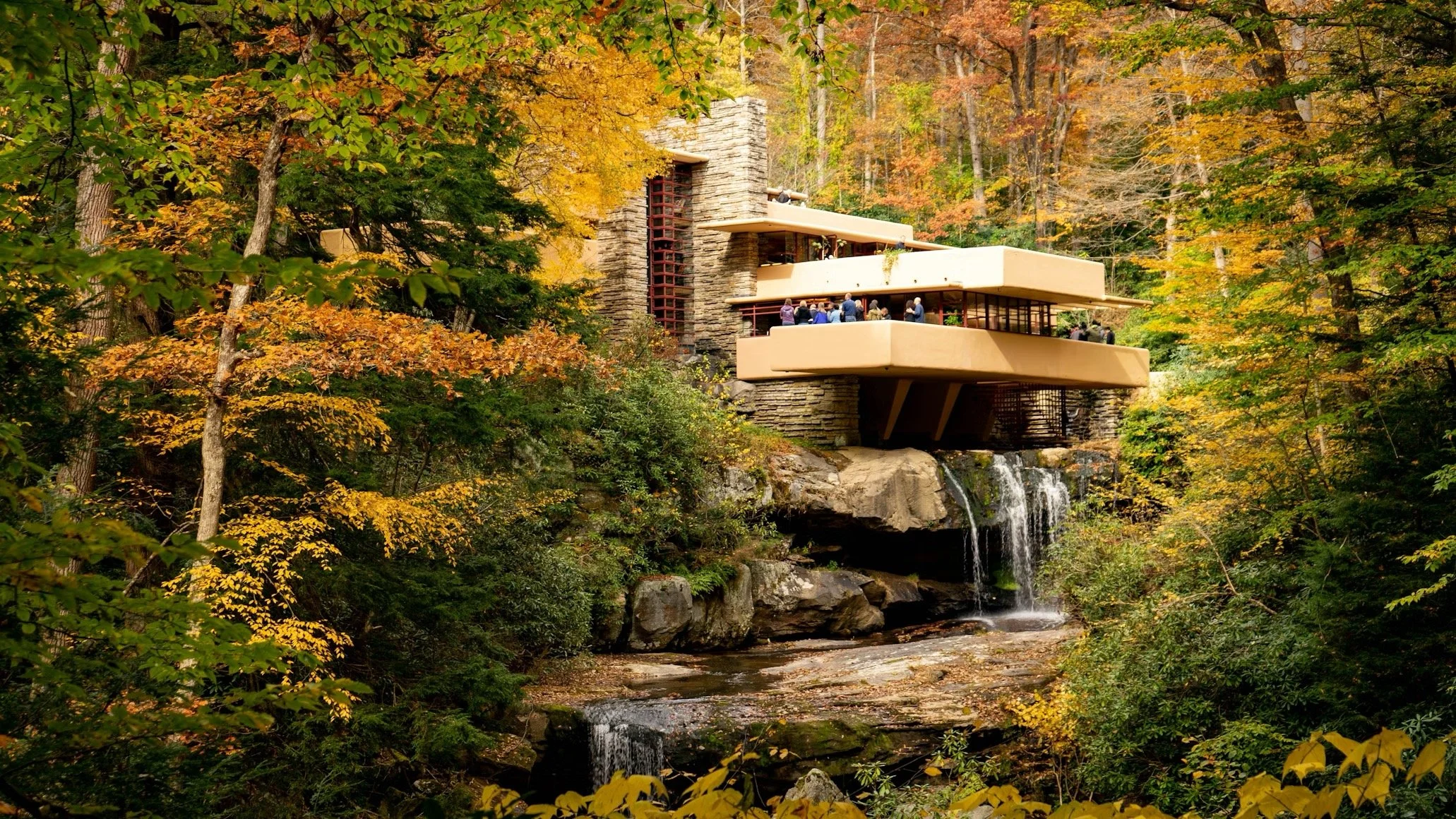
Fallingwater: from private luxury to shared legacy
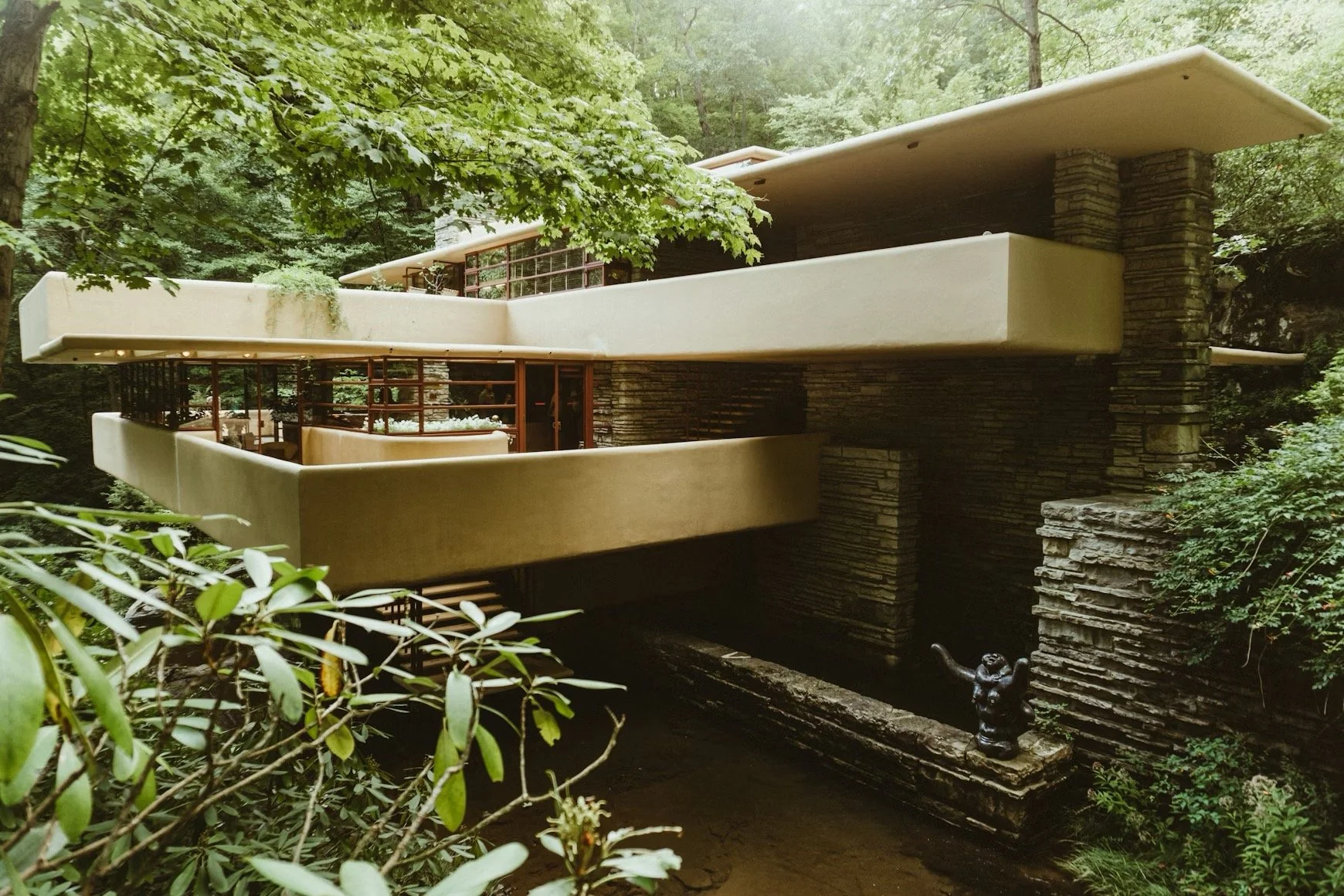
Fallingwater, designed by Frank Lloyd Wright (1867-1959) in 1935, is one of the most celebrated examples of nature architecture in the United States. Located in rural southwestern Pennsylvania, the house was originally commissioned as a private retreat for the Kaufmann family and is famed for its daring integration with the natural landscape.
Wright’s architecture tried to harmonise the built environment with the natural environment through what he called organic architecture.
The home was built directly over a waterfall, with cantilevered terraces extending above the stream, creating a dialogue between the interior spaces and the surrounding forest. Fallingwater embodies Wright’s philosophy of organic architecture: buildings should grow from and complement their environment, rather than dominate it. However, this has some critique given it was built over a waterfall.
Over time, Edgar Kaufmann Jr., the home owner’s son, began to recognise that the house shouldn’t be “kept away in time,” Tisha told The Biophilic Blueprint. The house transitioned from a private luxury to a public treasure, when Kaufmann Jr. donated it to the Western Pennsylvania Conservancy in 1963, ensuring that future generations could experience its innovative fusion of human habitation and nature.
“He wanted the house to evolve and grow over time, along with its surroundings. That’s one thing we learned at Auckland University of Technology—a building shouldn’t be a static object. It should evolve with its environment and its people. That was one reason I chose Fallingwater. But also because it started as a private retreat. It was built as a luxury. And my point was: why was it built as a luxury? Why does beautiful architecture like that have to be limited to the wealthy?”
Tisha described how the donation embodied an idea they discussed in her course—something she referred to as futuritality—the notion that architecture should give something back to future generations.
“We see Fallingwater as a project that was eventually donated, and then it gave something back—like a gift to future generations.”
This idea directly connects to biophilic design: creating spaces that foster human-nature connection shouldn’t be a privilege of the wealthy. When thoughtfully designed and made accessible, biophilic environments can provide restorative, emotional and cognitive benefits to entire communities, ensuring that the gift of nature is shared broadly rather than restricted.
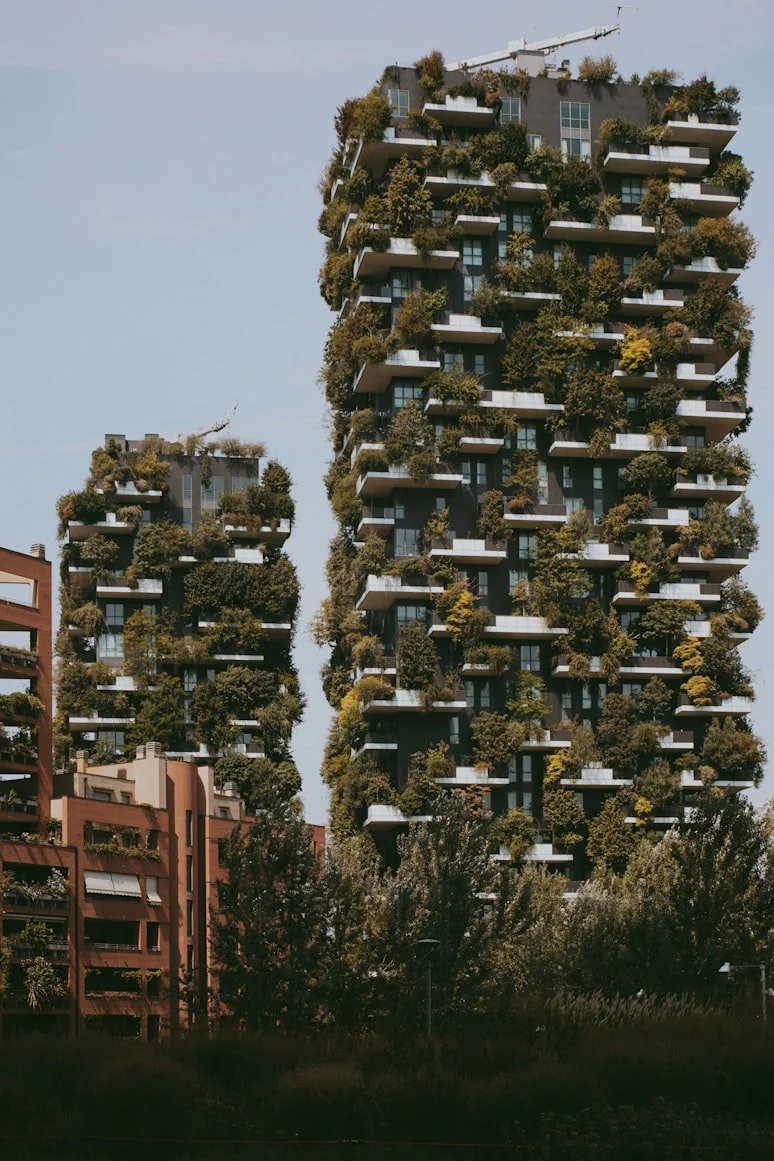
Vertical Forest Milan: Bosco Verticale, Via Gaetano de Castillia, Milano, MI, Italia. Photo courtesy of David Salamanca.
Bosco Verticale: a landmark of biophilia with limited access
“Bosco Verticale was built in 2014, and it's also an amazing project—the way they bring a forest to a city in Milan. It’s got hundreds of trees and plants,” Tisha explains. “But the question here was: who gets to experience that as well?”
Unlike Fallingwater, which evolved into a public asset, Bosco Verticale remained deeply exclusive.
“It was expensive to buy an apartment in Bosco Verticale, and it became expensive to live around it, because the surrounding buildings had views of it. That raised the prices of everything nearby.”
While the project improved biodiversity, air quality and urban habitat, Tisha emphasised that a central question in biophilic design should be: “How much does it really benefit people, and how many people does it benefit?”
Inside the Vertical Forest
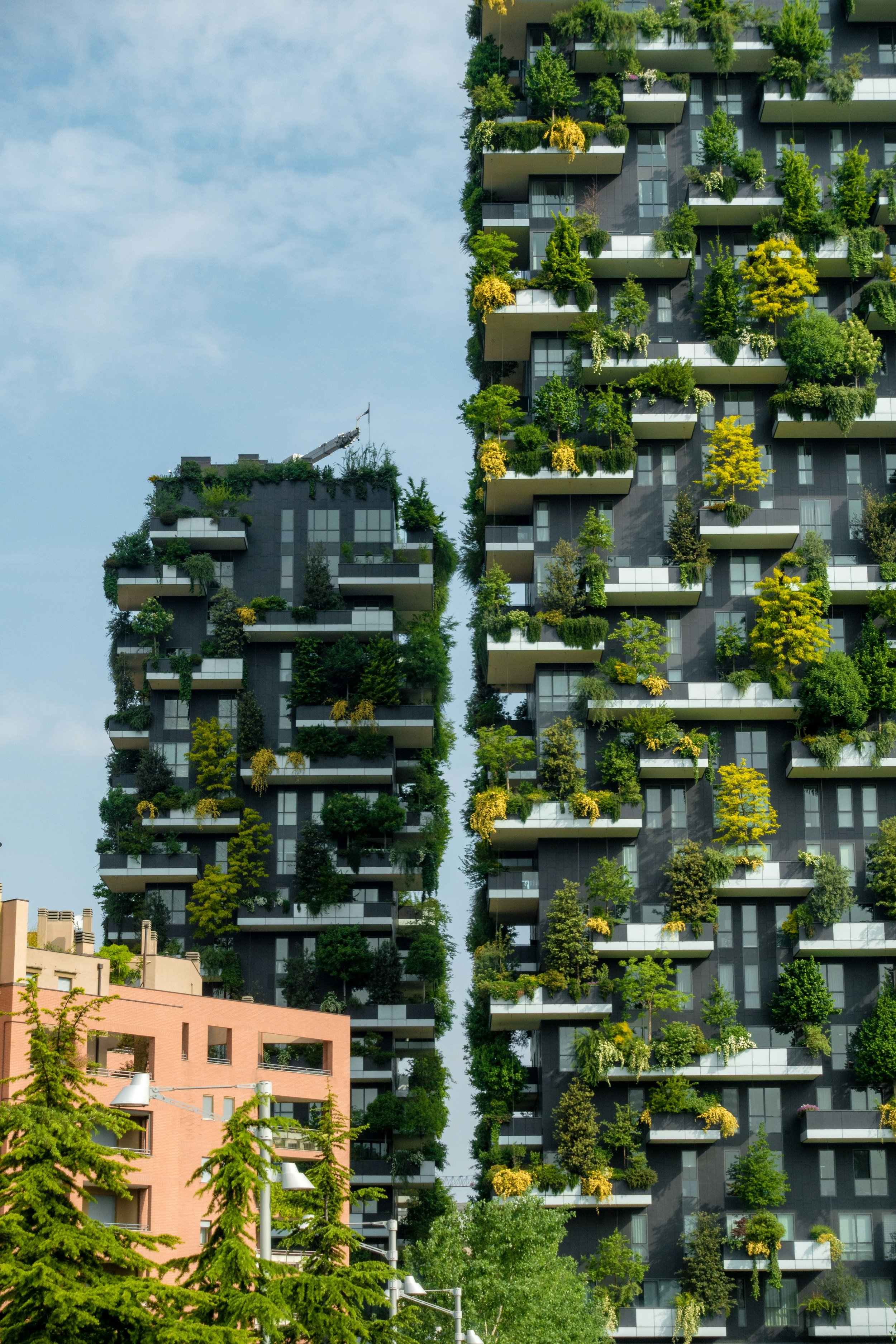
Bosco Verticale by Stefano Boeri Architetti has defined a new typology in biophilic design. Conceived as a model of architectural biodiversity, it shifts design beyond human-centred sustainability into a shared habitat where people, plants and wildlife coexist.
It’s a remarkable example that challenges the built environment to rethink how design can support both people and the planet.
Rather than treating vegetation as decoration, the Vertical Forest is conceived as “a home for trees and birds, that also houses humans.” Its two towers in Milan’s Porta Nuova district—110 and 76 metres tall—host:
800 trees
4,500 shrubs
20,000 plants
representing around 100 species
The density of vegetation equals five hectares of parkland on flat land but fits into a footprint of roughly 1,000 square metres—about fifty times less space than a horizontal forest would require.
This compressed ecology absorbs fine dust and CO₂, produces oxygen, moderates noise, improves water management and improves the life quality—for humans, plants and animals. As an anti-sprawl model, it demonstrates how vertical densification of nature can regenerate cities while protecting ground-level soil.
But, as Tisha argued, it came with a cost.
“With Bosco Verticale, the Architects realised they designed something so beautiful, but very few people could access it,” Tisha said. “If biophilic architecture is supposed to improve wellbeing, isn’t that supposed to be a human right? Everyone has the right to be around it and live in something like that. But if you're going to limit it, it defeats the whole purpose.”
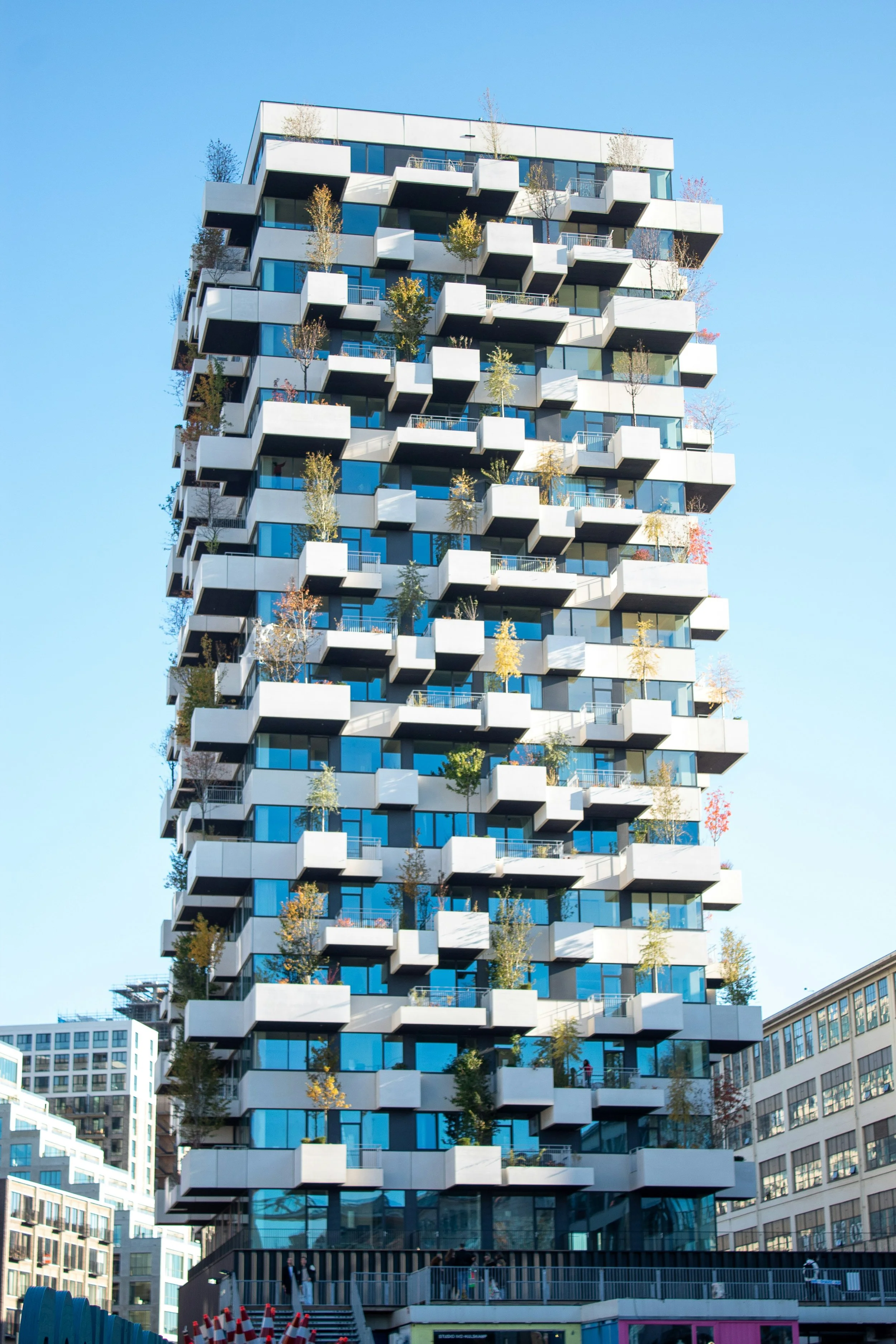
Tisha said Boeri later developed the Trudo Vertical Forest in Eindhoven—a social-housing adaptation of the Bosco Verticale model.
“It looks quite similar,” Tisha explained. “The same idea of trees and plants on the building, but built in a way that was more affordable because it’s social housing. They made it cheaper by having fewer trees and plants and by using modular construction.”
Lessons from both projects: why everyday access to nature matters
Tisha argues that nature in the built environment is ultimately about ensuring all people—regardless of income or status—can maintain a meaningful connection to the natural world. She explains that nature in urban environments should not be viewed as a luxury, but as a human necessity.
A growing body of empirical evidence highlights the importance of nature experiences for mental and physical health—benefits that are critical for communities and societies as a whole (Bratman et al., 2019). Research suggests that exposure to non-threatening natural environments helps reduce stress and supports recovery, while many urban environments can hinder it. In an experiment, participants were first exposed to a stressor and then shown natural or urban scenes, with emotional responses and physiological indicators measured. The results showed that stress recovery was faster and more complete when individuals viewed natural environments compared to urban ones (Ulrich et al., 1991).
When natural environments and biophilic design are limited or absent from the built environment, communities are excluded from regular, everyday access to the restorative presence of nature. While nature may still be sought elsewhere, this uneven access contributes to inequities in health outcomes, with nature-rich environments concentrated in wealthier areas.
Beyond wellbeing benefits, the promotion of everyday access to nature fosters environmental awareness, empathy and care—qualities increasingly vital in a changing climate. If access is limited, we also risk creating societies disconnected from the natural world, undermining conservation efforts and long-term sustainability. People are more likely to protect and advocate for ecosystems when they have direct, personal experiences with them, which encourages stewardship and a sense of responsibility for the environment.
While both Fallingwater and Bosco Verticale have their limitations, each offers valuable insights—and opportunities to evolve how we design with nature. Tisha commends both projects for acknowledging how disconnected people can be from these spaces, and for evolving in ways that bring more people closer to the natural world. It is through this willingness—and courage—to design with nature that meaningful improvements can be made.
“For future designers, if we want to create something truly regenerative or biophilic, we need to ensure both equitable access and meaningful integration with natural systems,” she said.
Aligning with The Biophilic Blueprint
The Biophilic Blueprint aligns closely with these ideas by promoting design that balances human wellbeing, ecological health and equitable access. By highlighting projects like Fallingwater and Bosco Verticale, it demonstrates both the potential and the limitations of biophilic design, using these examples to inspire future design to create spaces that connect people to nature without reinforcing inequity. In doing so, the Blueprint serves as a guide for regenerative architecture that benefits communities, ecosystems and future generations alike.
Comment below: Should access to nature be a human right in the built environment?
References and further reading
Tisha explores these ideas further in an essay on Biophilia: When Nature Comes With A Price Tag.
Read next: The Talo Agroforestry Centre, Samoa: A Regenerative Vision of “Alive” Architecture
Bratman, G. N., Anderson, C. B., Berman, M. G., Cochran, B., de Vries, S., Flanders, J., … Daily, G. C. (2019). Nature and mental health: An ecosystem service perspective. Science Advances, 5(7), eaax0903. https://doi.org/10.1126/sciadv.aax0903
Cristina Parreño Alonso. (2021, March 10). Deep-time architecture: Building as material-event. Journal of Architectural Education, 75(1), 142–161. https://doi.org/10.1080/10464883.2021.1859906
Ehrmann, S. (2018, November 29). Green gentrification and how to avoid it. Foreground. https://www.foreground.com.au/parks-places/green-gentrification/
Fallingwater. (n.d.). Fallingwater facts. https://fallingwater.org/media-resources/fallingwater-facts/
Government of the Netherlands. (n.d.). Rented housing. https://www.government.nl/topics/housing/rented-housing
Joye, Y. (2007). Architectural lessons from environmental psychology: The case of biophilic architecture. Review of General Psychology, 11(4), 305–328. https://doi.org/10.1037/1089-2680.11.4.305
Miller, A. L., Berlo, J. C., Wolf, B. J., & Roberts, J. L. (2018). Design and architecture in the 1930s: Corporate patronage and individual genius (Section 16.4). In American Encounters: Art, History, and Cultural Identity (pp. 540–545). https://openscholarship.wustl.edu/books/39/
Newcastle University. (n.d.). Vertical Forest, a temporary trend or a long-term sustainable solution? https://nclurbandesign.org/vertical-forest-a-temporary-trend-or-a-long-term-sustainable-solution/
Open Space. (2024, December 7). Inside Fallingwater: Frank Lloyd Wright's architectural genius in Pennsylvania | House tour [Video]. YouTube. https://www.youtube.com/watch?v=q8dcnh-4I6g
Pallasmaa, J. (2017). Architecture and biophilic ethics: Human nature, culture, and beauty. In E. Führ (Ed.), Ethics in architecture: Festschrift for Karsten Harries (Issue 36, pp. 57–69). https://www.cloud-cuckoo.net/fileadmin/issues_en/issue_36/article_pallasma.pdf
Reuben. (2021, November 8). Treelodge@Punggol review: Greenery living + unique 5-room loft units. Stacked Homes. https://stackedhomes.com/treelodgepunggol-review/
Stefano Boeri Architetti. (n.d.-a). Trudo Vertical Forest Eindhoven. https://www.stefanoboeriarchitetti.net/en/project/trudo-vertical-forest/
Stefano Boeri Architetti. (n.d.-b). Vertical Forest Milan. https://www.stefanoboeriarchitetti.net/en/project/vertical-forest/
Taylor, B., & Rodrigues, A. (n.d.). Sustainable rural living: Exploring the Hockerton Housing Project. Stories CPRE. https://stories.cpre.org.uk/sustainable-rural-living/index.html
University of the Built Environment. (2025, January 10). What is biophilic architecture? 15 real-world examples in the built environment. https://www.ube.ac.uk/whats-happening/articles/biophilia-examples-built-environment/
Ulrich, R. S., Simons, R. F., Losito, B. D., Fiorito, E., Miles, M. A., & Zelson, M. (1991). Stress recovery during exposure to natural and urban environments. Journal of Environmental Psychology, 11(3), 201–230. https://doi.org/10.1016/S0272-4944(05)80184-7
We Build Value. (2022, February 11). Milan’s Vertical Forest. https://www.webuildvalue.com/en/facts/vertical-forest-milan.html?utm_