Inside Liveable Cities Collective: Curiosity Unlocks “Radical Action”
Published by The Biophilic Blueprint | Written by Anjelica Smilovitis
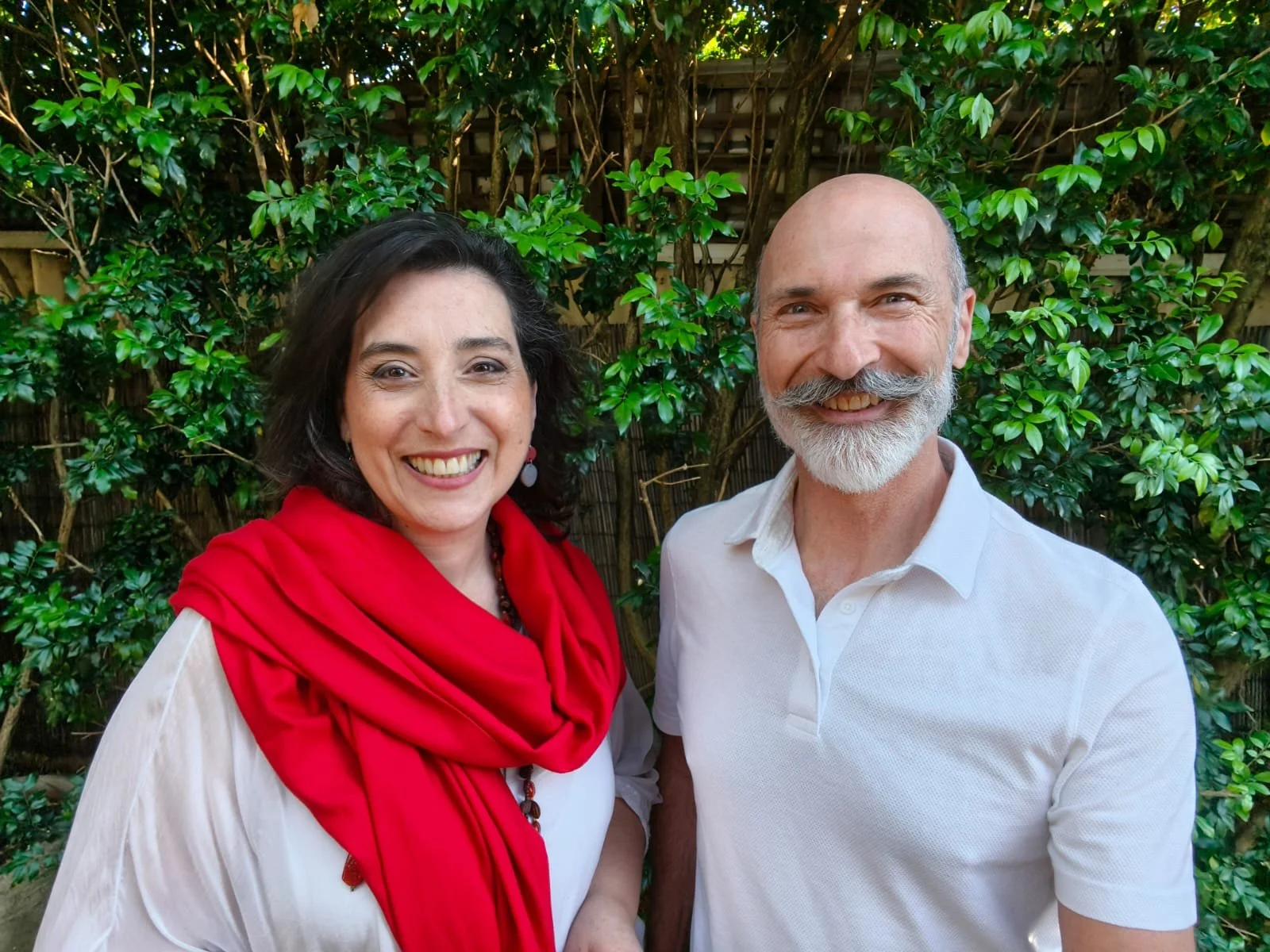
Raquel Medrano Clemente and Maurice Berger founders of Liveable Cities Collective.
Networking events can often feel hit or miss, leaving us questioning whether they’re worth the effort. Yet a mindset of continual curiosity can guide us toward new opportunities—and perhaps even a place where we truly belong. When The Biophilic Blueprint joined a virtual session with Liveable Cities Collective, hosted by Heather Johnstone of She Plants Cities in November 2025, it quickly became clear that this was no ordinary gathering.
The room—virtual though it was—buzzed with people committed to the future of our cities, spanning industries and professions: from bringing farming into urban spaces and rewilding sidewalks, to rethinking transport and tackling challenges no single sector could solve alone.
Sitting down with co-founders Maurice Berger and Raquel Medrano Clemente days later, it became clear the Collective isn’t a space for endless discussion. The focus carries a “huge emphasis on action”—and not just any action, but “radical action” that challenges the status quo on what makes a city liveable.
By liveable, the Collective means more than safe streets or functional infrastructure—it’s about thriving communities, reintroducing nature into urban spaces, equitable access, cultural connection and opportunities for all living things to flourish (biophilia).

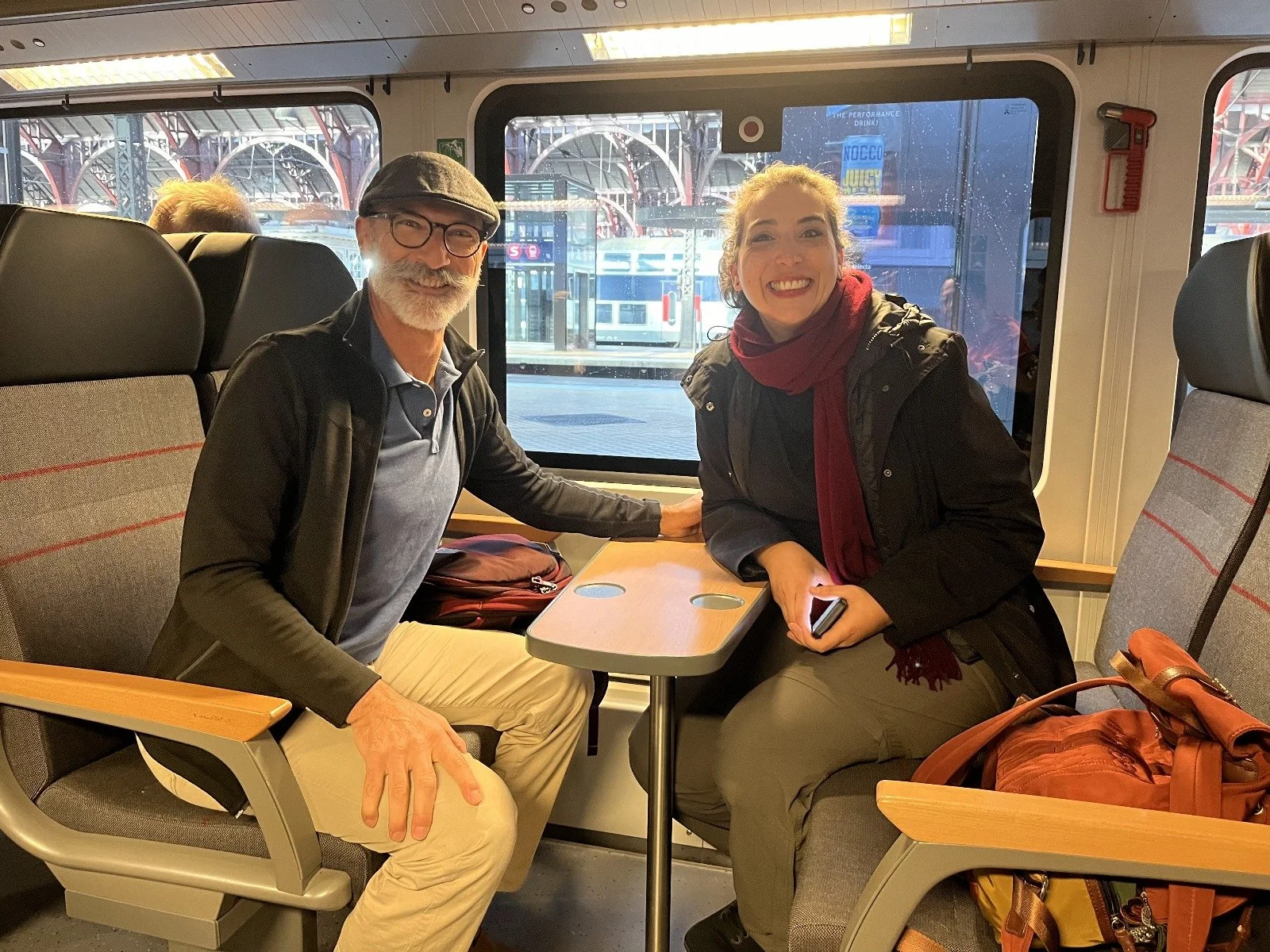
At the heart of the Collective is a simple but expansive question: what makes a city truly liveable—and how can collaboration across industries, cultures and countries bring that vision to life?
While The Biophilic Blueprint centres on restoring our relationship with nature—across the built environment, food systems and everyday landscapes—the Collective operates from a closely aligned premise: cities are living systems, shaped as much by culture, collaboration and care as by infrastructure.
Through thought-provoking online and in-person events, the Collective invites changemakers from around the world to tackle urgent, practical questions: Where are the parks? How can young people thrive beyond screens? How can communities come together to reshape urban life?
“We are here to affect change from basic innovation, exploration, collaboration and partnership,” Raquel told The Biophilic Blueprint.
“We can talk until the cows come home about what's wrong and what's not working. And if you are in the space of livability, you will hear a lot of people complaining about what's not working. And we're really good at that. But it comes to a point where you go, well, we get that—and what are we going to do about it?”
The founders themselves embody the ethos of the Collective. Coming from completely different backgrounds and experiences, they enter conversations alongside participants, fuelled by curiosity and leading by example. Their collaboration demonstrates that connection across expertise, culture and industry isn’t just possible—it’s regenerative.
And yes, they’re as different as they come. Raquel drives a “people-mover”; Maurice pedals everywhere. With careers spanning continents and disciplines, their experiences couldn’t be more diverse. Yet together, they’ve created a space where contrast doesn’t divide—it fuels creativity.
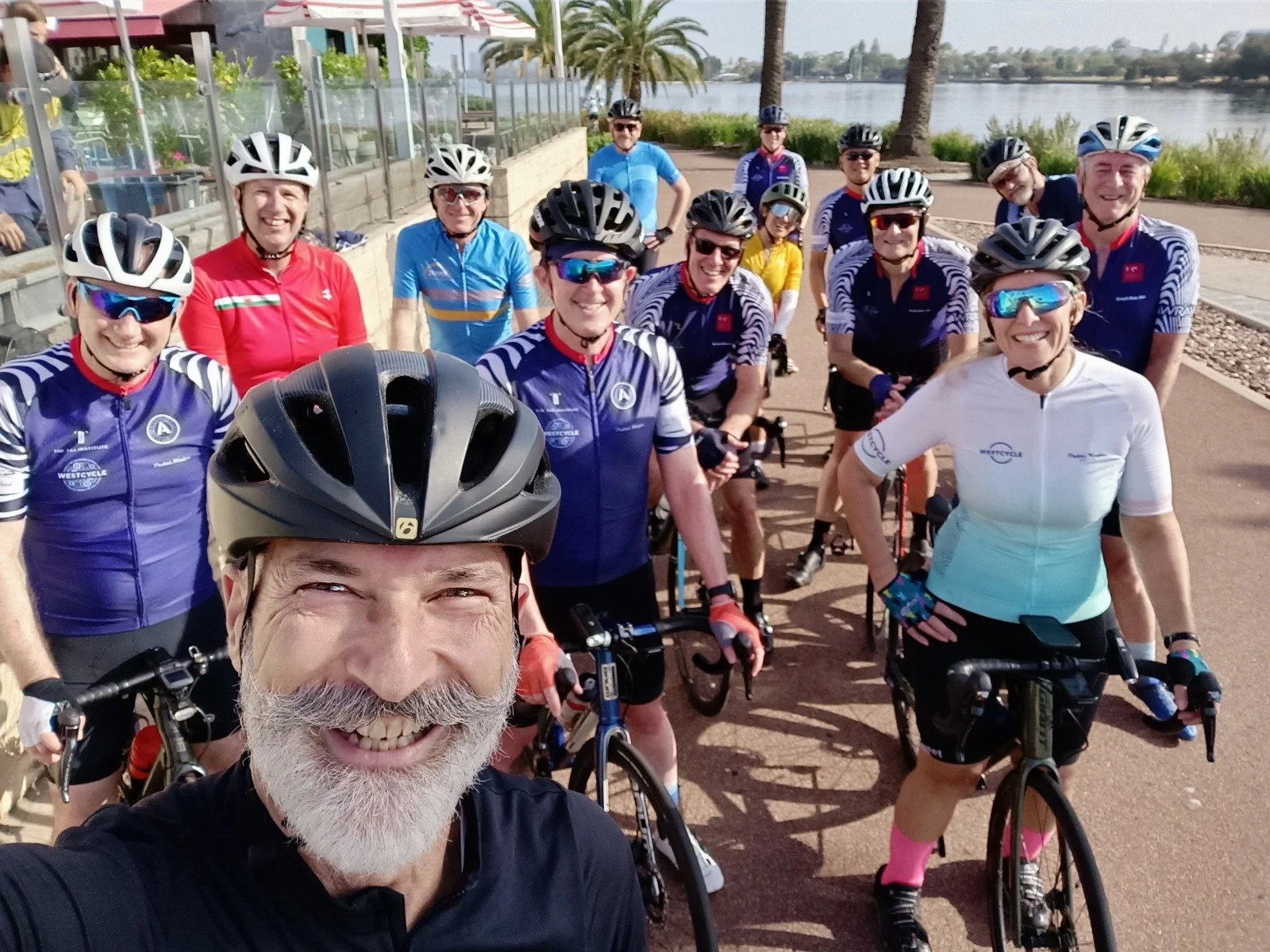
Maurice Berger: If he’s not thinking about cities, he’s thinking on two wheels.
Where It All Began
Maurice: Curiosity cycling the way
A chemist by training, Maurice has spent decades exploring diverse careers—from retail and business-to-business consulting to two decades specialising in transport, data and urban movement. “My specialty in the last 20 years has been in data, in who's around and how we move—in motorised, non motorised and on foot,” he said.
“I have lived a life, and still live a life, that is full of curiosity, and I'm not necessarily locked into a particular way that we should be,” Maurice shared with The Biophilic Blueprint. This curiosity, he explained, helps people move beyond siloed mindsets into genuine exploration.
He described “silos” as a recurring challenge among humans: groups operating in isolation, comfortable with their own language and ways of working, yet often blocked from meaningful collaboration. “There’s the us versus them mindset continually,” he said.
By approaching these divisions with curiosity rather than rigid assumptions, Maurice has found ways to bridge people and stories across disciplines—finding meaning not just in data, but in the human connections it reveals.
Driven by curiosity and a love of storytelling, Maurice founded a consultancy nearly three years ago. It was a 2024 trip to Copenhagen, attending the Bikeable City Masterclass at the Cycling Embassy of Denmark with Raquel, that would sow the seeds of what became the Collective.
“We were immersed in a city like Copenhagen,” Maurice said. “I'd not been there before on a bike, and I'm always on a bike. That is me, whether it's an upright e-bike to go shopping or visit clients … or it's on a road bike and I'm racing. Coming back from that I was inspired, but I didn't know what I was inspired to do.”
The experience sparked the idea of creating a platform for collaboration—not just around cycling infrastructure, but around liveability more broadly.
“We then created this (Collective)—it’s not about the bikeable city, although that was great in Copenhagen. That seemed to be the underpinning of creating a society that works. But in Perth, Melbourne … Australia and other countries … it might be divisive having a bikeable city versus something else. So, it seemed obvious to create something under the banner of liveable—whatever that might mean.”

Raquel Medrano Clemente sailing on Perth's Swan River in Western Australia.
Raquel: People-Mover by Vehicle and by Mission
The Biophilic Blueprint turns to Raquel, who immediately draws us into how different she and Maurice are—a reflection of what is possible when people collaborate across unique perspectives and experiences.
“I've known Maurice for six years now, and in the time that we've known each other, we could not be more different. He does not own a car, which I found weird when I first met him,” she laughs. “I drive a people-mover with eight seats. I don't ride a bicycle. I own one, but it's gathering dust in the garage.”
“We approach liveability from very different ends of the spectrum. What we do have in common is curiosity. That is a huge aspect of and value of the Liveable Cities Collective.”
Raquel told The Biophilic Blueprint she “comes from a world of business.” Trained in music, she has worked in mining, construction, banking and education, moving frequently and living in multiple cities.
She has spent the last decade in consulting, helping organisations of all sizes improve team alignment, communication and performance. “I have mastered the art of leading conversations toward shared goals, navigating conflict, and helping people work together effectively,” she said.
Moving to Australia from Argentina at the age of 22 gave her firsthand insight into multiculturalism in cities. She spent the first ten years raising her four children, navigating life without family or cultural support. “It never occurred to me until very recently—my kids are now adults—that part of a liveable city is having cultural support and inclusion,” she reflected. “It was only through discussions in Liveable Cities Collective that I realised: one of the pillars of a liveable city is cultural inclusion.”
This insight mirrors the ethos of the Collective itself—where new understandings and connections take root, and the question of what makes a city truly liveable goes far beyond concrete and cement walls.

Maurice Berger captures the early vision for the Liveable Cities Collective—before it became a reality.
More Than Connections: Making Radical Change Happen
The pillars of a liveable city—housing, environment, transport, culture and beyond—are being cultivated through conversations, with creative ideas for collaboration and action emerging constantly.
“Whatever conversation we have on each of those fields, and whoever's sharing, we're giving people the space to lead and host conversations and bring people together. The remedy is very, very clear,” Raquel said. “Every time we have a webinar or an event and we ask people, 'What did you think?' the feedback is: we want to be provoked more. We want to be challenged more.”
At first, participants often don’t know one another. And because the Collective centres on collaboration, outcomes can’t be planned or predicted—they emerge from the group itself. Raquel notes that for many, this can feel “unsettling,” a challenge to step into “radical action” without hierarchy or pre-defined expectations. Yet it’s precisely this discomfort that makes transformation possible.
Participants are encouraged to set aside what they already know and approach each conversation with openness and playfulness. This mindset, the founders explain, allows people to move beyond differences in culture, discipline and worldview, sparking new insights, igniting creativity, and creating the conditions for genuine partnerships.
By the end of the first year, Raquel said it was clear that the Collective had become more than a discussion forum—it was a space where people could express themselves, step into leadership and take meaningful action.
One international example highlights this. Maurice explained: “People overseas are watching the social media law change in Australia because it's a first-time thing.” The change came into effect in December 2025 banning social media for under-16s.
“We have somebody in the Collective from Singapore who said they're not focused on whether it's going to work, but on what those teens are going to do. Where can they go? What is the social influence for them? Where are the parks, the playgrounds, the outdoor spaces? That conversation is happening right now.”
Groups have formed to address these challenges, he said.
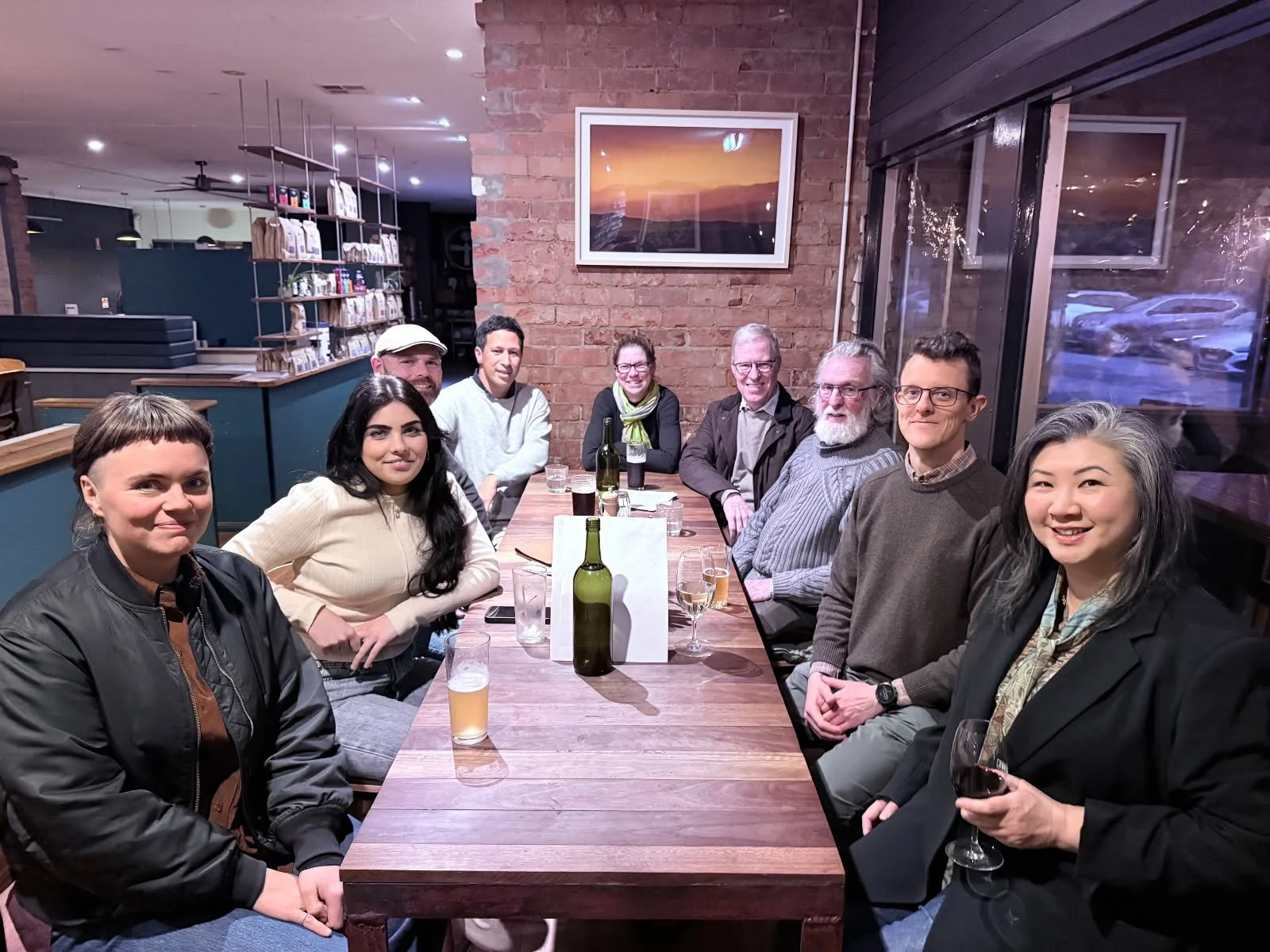
Liveable Cities Collective Network in Canberra.
Being Human Together: Walking the Walk with the Collective
Feedback from webinars and events underscores that attendees value the Collective’s “very unique space”—one that challenges and provokes participants to think differently. The pair shared multiple examples of responding to participant input, emphasising honesty, adaptability and a willingness to explore new approaches.
“At the start of the year, some people told us, ‘We love what you’re doing, and there’s so much great conversation—but when do we get to action?’ A few even left, because at that point, we hadn’t yet clarified our catalyst for change or how our speakers would drive it,” Raquel shared.
Maurice and Raquel have consistently listened to feedback, and now make the call to action a central part of the Collective’s mission—ensuring every conversation ties back to tangible outcomes.
“We’re asking people to take radical action, to think innovatively, and to collaborate with people they don’t yet know,” Raquel said.
But the founders are right there alongside them.
“We are really pushing ourselves to do things differently, and because we are, we're also in a space of uncertainty. So, we do the same—we lead by example. We are walking the walk when it comes to exploration and collaboration.”
Aligning with The Biophilic Blueprint
Liveable Cities Collective demonstrates that liveability is not only about green spaces, sustainable infrastructure or ecological design—it’s about people, culture and collaboration. For The Biophilic Blueprint, these values resonate deeply. Cities, like ecosystems, thrive when connections are made, curiosity is nurtured and communities are empowered to take meaningful action. By highlighting the Collective’s work, The Biophilic Blueprint seeks to inspire readers to see liveability as holistic: the integration of social, cultural and environmental considerations, and the active participation of diverse stakeholders in shaping the future of our cities.
References and further reading
Liveable Cities Collective connects changemakers shaping more liveable cities—visit their Linktree for events, talks and ways to engage: Linktr.ee
The Biophilic Blueprint will be joining Liveable Cities Collective at Stronger Together: From Assets to Action—a three-part series centred on shared learning and collective momentum. We’d love to see you there. Register.
Have you attended a Liveable Cities Collective event? What did you take away, learn or contribute? We’d love to hear from you! Share your thoughts in the comments below so that our readers—and the Collective—can see, learn and connect.