Published by The Biophilic Blueprint / Written by Anjelica Smilovitis
Why do trees matter, what do we lose through urban tree loss, and why do towns and cities need an Urban Forest Strategy? This in-depth conversation follows Heather Johnstone, founder of She Plants Cities, as she explores these questions and takes us behind the development of the Town of Victoria Park’s community-led strategy. From community concern to collaboration, drawing on the City of Melbourne’s experience and the skills of local volunteers, Heather shares key lessons and practical insights for other communities wanting to do the same.
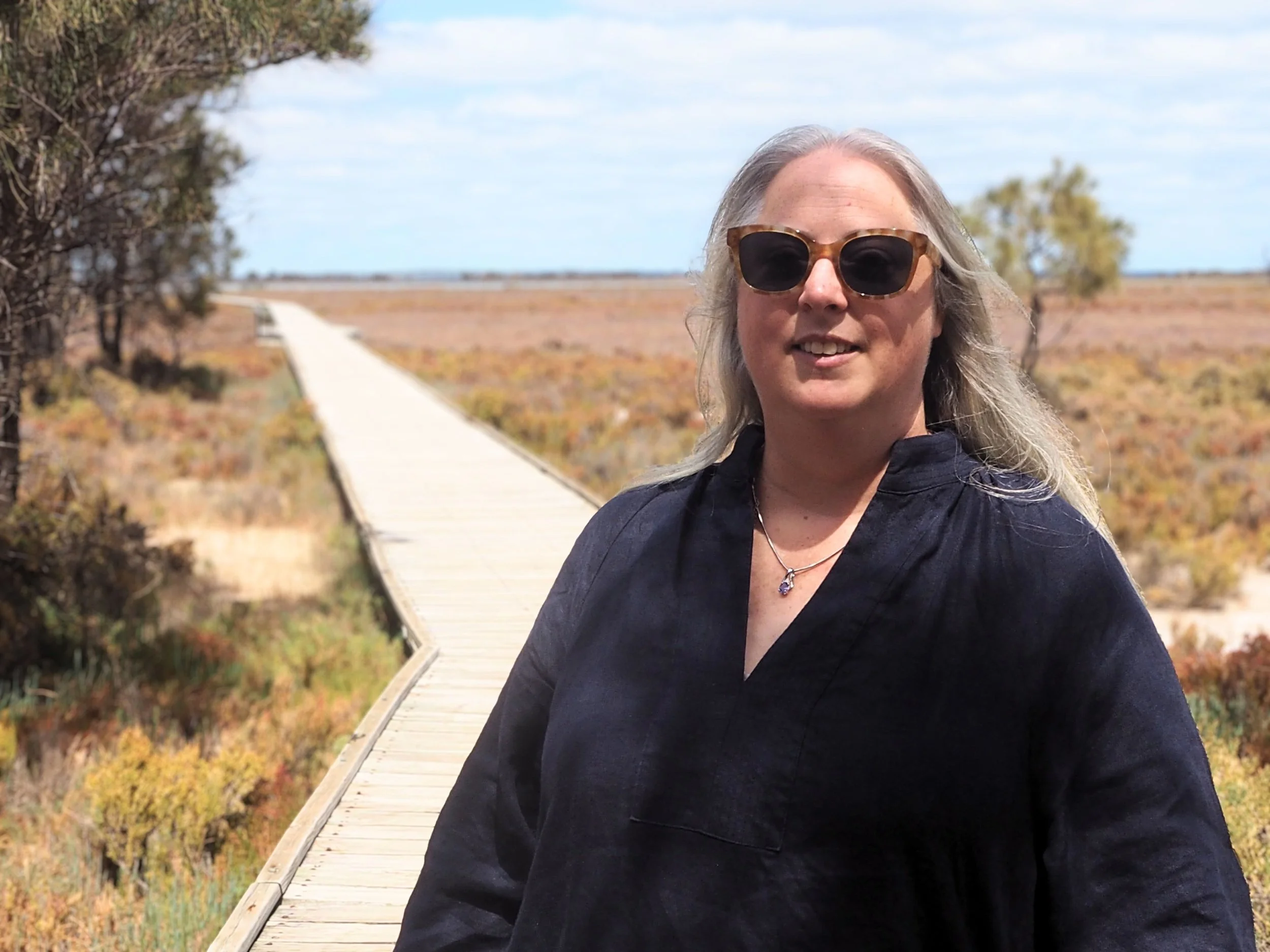
Founder She Plants Cities, Heather Johnstone at Creery Wetlands, Mandurah, Western Australia.
“Where are the trees going?”
It was a question Heather Johnstone’s daughter repeatedly asked as she watched the neighbourhood change around her.
“My daughter was always asking me, ‘Why is it so far to the park? And where are the trees going?’” Heather Johnstone tells The Biophilic Blueprint, reflecting on how ongoing development in the Town of Victoria Park, Western Australia, was affecting the neighbourhood and its access to green spaces.
For Heather, those questions struck a personal chord, bringing into focus the childhood experiences with nature that had shaped her own life. Growing up in Victoria, Australia, she spent much of her childhood exploring the natural landscape with her parents, before moving to Papua New Guinea and experiencing an entirely different natural environment.
“I spent a lot of time around big trees, playing hide and seek inside the mountain ashes and chasing wombats and birds through the scrub. It was quite a magical time. I also lived in New Guinea when I was little. I saw a completely different environment—and I have this real sense of wonder about the natural world.”
Looking back, Heather describes how moving into more urban environments changed her relationship with nature. That easy access to wildness became less familiar, and she began seeking out “pockets of nature” within the built environment, increasingly aware of how difficult it was becoming to connect with nature in everyday life.
Having a family and moving to Victoria Park only deepened this awareness. She began thinking about the natural environment her daughter would grow up in, and whether future generations would have the same opportunities to explore, play and connect with nature as she had.
Living opposite an industrial precinct and cement factory, Heather's family also experienced the impacts of development more directly, from dust and noise to concerns about water pollution and flooding.
“It was a really stark experience,” she says, particularly against the backdrop of the open spaces, clean air and connection with nature she had once known growing up.
When the facility received approval to “essentially triple their output”, it prompted Heather to look closely at environmental legislation and the systems responsible for monitoring and managing its impacts. She didn't know it then, but the questions she was beginning to ask would set her on a path towards something much bigger—like trees disappearing
As her understanding of the local environmental landscape grew, another concern came into focus: the gradual loss of trees and green space across the Town of Victoria Park. The municipality was already facing significant pressures, with limited access to public open space and one of the lowest urban tree canopies in Perth.
In 2016, tree canopy covered approximately 10 per cent of the Town's land area, according to its original Urban Forest Strategy. This was well below the level needed to support a healthy, green urban environment. Against a backdrop of growing development pressure, established trees and vegetation were increasingly disappearing from the landscape.
The threat of tree removal at Lathlain Park brought these concerns into sharp focus. As Heather and other community members rallied to protect the established trees, it became clear that continually having to fight each development proposal, one at a time, was not a sustainable way forward. Protecting what remained was only part of the challenge; the Town also needed a coordinated approach to increasing tree canopy across the municipality.
But what could be done to change that trajectory?
What emerged was something much bigger than a campaign to save individual trees. Through community collaboration and a shared vision for the future, Heather helped set in motion a community-led Urban Forest Strategy—one that would shift the Town's focus from responding to individual threats to actively planning, protecting and growing its urban forest for generations to come. Now, ten years on, its legacy offers an opportunity to reflect on how far that journey has come.
To explore that journey, The Biophilic Blueprint met with Heather near Creery Wetlands in Mandurah to reflect on her contribution to the development and implementation of the Town of Victoria Park's Urban Forest Strategy. As founder of She Plants Cities, Heather played a key role in shaping this community-driven initiative and continues to care deeply about the green spaces and natural environments future generations will inherit. She is also a passionate mum who cares deeply about the places children will one day inherit.
“I'm working at the intersection of urban forestry and community engagement, helping people understand why nature-based solutions, and nature more broadly, are so important in our cities,” Heather shares. Her collaborations include organisations such as Millennium Kids and WA Loves Nature, helping communities turn ideas into practical initiatives.
“I'm helping good people do better work … it's all about building capacity. I love doing what I do, integrating nature into cities, mostly because I've always had a strong connection with nature.”
For Heather, part of that work is challenging assumptions about what is and isn't possible when it comes to integrating nature into built environments. “There are ways to create more favourable conditions for nature, even in places that might not seem hospitable at first. We need to look at what's possible and find ways to bring more nature into our cities.”
“That is my why, that connection with nature, but also helping my daughter grow in a space where she can have some of those same joyous experiences.”
Through Heather's experience, we unpack the steps, considerations and lessons that other towns, councils and communities can draw on when shaping their own Urban Forest Strategy.
This piece also explores what trees contribute to our cities and the relationship between everyday access to nature and human health and wellbeing. Drawing on Australian research and wider studies, it considers the benefits of urban green spaces, from cooling neighbourhoods and supporting biodiversity to their links with cardiovascular health, dementia risk and psychological wellbeing.
Ultimately, this is a conversation about more than preventing tree loss. It is about recognising what nature contributes to our everyday lives, the role communities can play in shaping greener neighbourhoods, and how we can move beyond protecting what remains to restoring nature and bringing it back into our towns and cities.
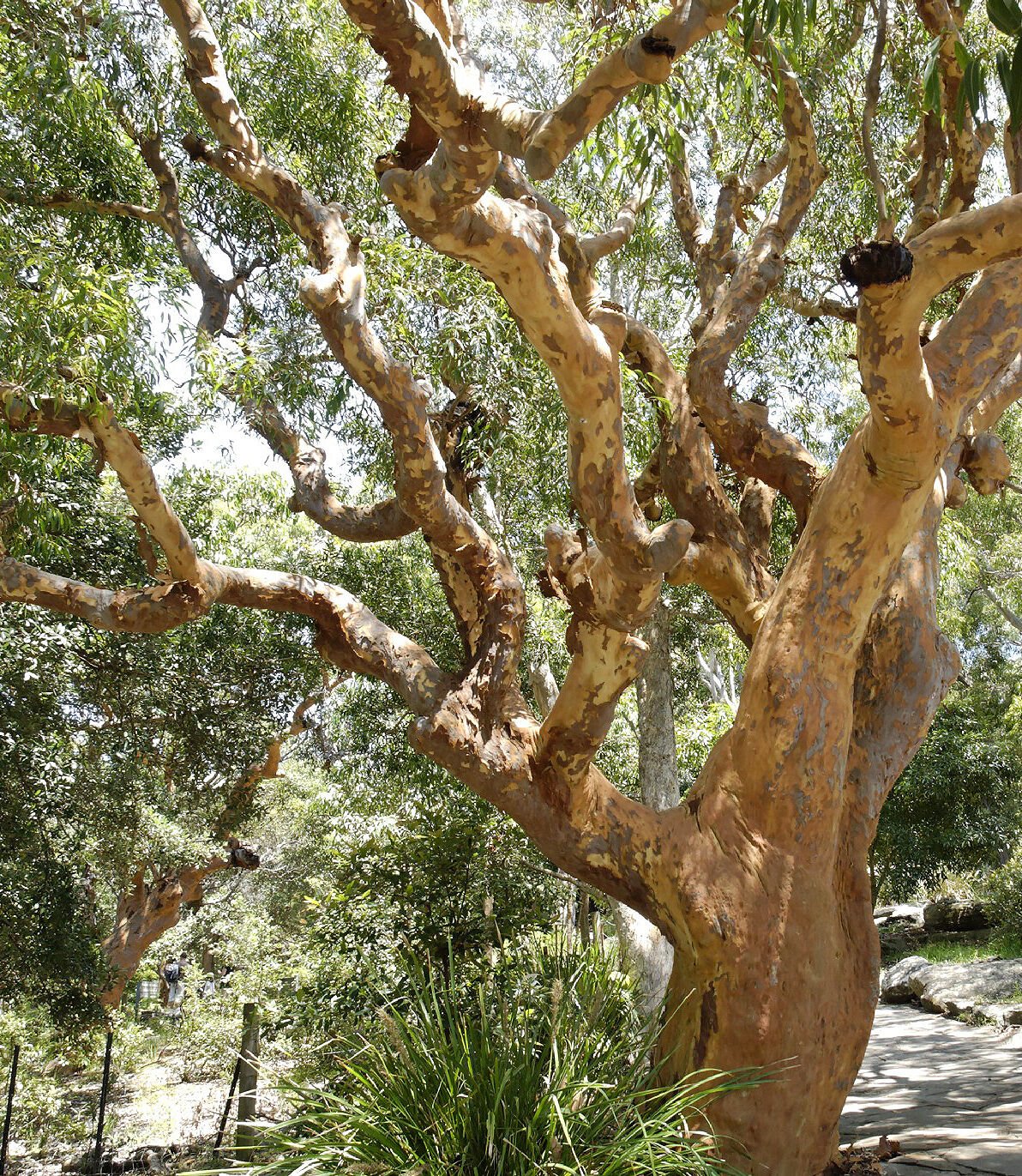
Why do trees matter? Credit: Heather Johnstone.
What Are We Losing When We Lose Our Trees?
As suburbs expand, private gardens become smaller, mature trees are removed and once-green spaces give way to buildings, driveways and other infrastructure. With them go natural systems that have taken decades, sometimes generations, to establish. It can feel as though we are being designed out of nature, our neighbourhoods increasingly confined to concrete, bitumen, paved pathways and a sameness that makes one new development look much like the next.
As development moves in and nature moves out, whether through clearing land for housing or designing neighbourhoods without adequately considering the natural environment already there, Heather believes the impacts of losing nature, particularly trees, extend well beyond the environment.
In urban spaces, we have almost normalised a way of living that is increasingly disconnected from natural ecosystems. And we are not simply talking about a park with a mown lawn and a few scattered trees. We are talking about forests, connected green corridors and biodiverse spaces that allow nature to function as an ecosystem, not just exist as decoration.
“The more cities develop, the more divorced we are from nature,” Heather says. “But nature is not scary. We've evolved with it, we need it, and we're not separate to it. We're part of it.”
For Heather, losing trees also means losing everyday opportunities to connect with the natural world, something she says can affect human beings on multiple levels.
“Whenever I think of big trees, I get this feeling in my heart… it's positive. Being around trees brings me joy. And that is not just a ‘me’ thing. It is biologically ingrained with us. We've evolved with trees.”
In his work on biophilia, American biologist Edward O. Wilson explored the idea that humans have an innate tendency to connect with other forms of life and the natural world. It is a connection that has shaped our evolution, yet one that can become increasingly difficult to maintain as the places we live become more urbanised.
And what happens when the environments around us no longer support that connection?
In a previous conversation, Melbourne-based urban planner Zachary Pavlou spoke about the importance of beauty and creating spaces that feel alive and regenerative. The environments we build, he suggested, do more than shape the physical landscape; they can subtly influence how we behave, how we interact with one another and whether we feel a sense of connection, wellbeing and cultural identity.
“Maybe that drives us more into living more solitary, disconnected lives, and maybe the ugliness of the built world drives us more and more into internal, introspective habits, whether that's doom scrolling, consuming content, so on, rather than like enjoying public life,” he said.
It raises an important question about what we are losing beyond the trees themselves. When neighbourhoods no longer invite us outdoors, offer places to gather or provide everyday opportunities to experience nature, we risk losing some of the things that make communities feel connected and alive.
There is something deeply human about our attraction to the natural world. The desire to be near trees, feel the sun through a canopy, hear birdsong or watch the seasons change is more than an appreciation of beautiful surroundings. It speaks to something fundamental about who we are and how we relate to the world around us.
Trees, in particular, are doing far more than making a neighbourhood look green. They offer shade and cooling in increasingly hot urban environments, absorb carbon, filter air pollutants, support biodiversity and provide habitat for birds, insects and other wildlife. Their canopies help regulate local temperatures, while their roots contribute to soil health and water management.
They also shape how people experience their neighbourhoods. Tree-lined streets and green spaces can make walking more comfortable, encourage outdoor play and create inviting places for people to gather. For children, this might mean climbing trees, watching birds, exploring gardens or simply having a green space nearby to play.
When these natural elements disappear, communities can lose more than vegetation. They can lose opportunities for connection, recreation, physical activity and the restorative benefits of spending time in nature. The quality of the environment we build around people has a bearing on the quality of life they experience within it.
This relationship between nature, the built environment and human wellbeing is central to the growing conversation around biophilic cities. The concept recognises that humans have an inherent connection with the natural world, and that this connection should not be lost as cities grow and urban environments become more developed.
A biophilic city is not simply one with more parks or landscaped streets. It is a place where nature is part of everyday urban life, where trees, waterways, biodiversity and green spaces contribute to the ecological health of the city and the wellbeing of its people.
These considerations become particularly important in Perth, a city shaped by its expansive north–south footprint and relatively low-density suburban development. Greater Perth stretches approximately 120 to 150 kilometres from Mandurah to Yanchep, and its continued growth places pressure on land, infrastructure and the natural environment (RAC, 2019).
Research and submissions to Western Australia's land development and planning inquiry have also highlighted the uneven distribution of canopy. Healthway's 2025 submission reported that 85 per cent of roads and footpaths across Perth and Peel had no tree canopy cover in 2024 (Healthway, 2025). Several of Perth's inner-city suburbs have also shown declines in urban canopy cover between 2020 and 2024.
These figures are particularly important when considered alongside the region's anticipated growth. The Western Australian Government's Perth and Peel planning framework projects a regional population of 3.5 million by around 2050, requiring a coordinated approach to accommodating growth across existing and new communities (Department of Planning, Lands and Heritage, 2026).
As more people, homes and infrastructure are accommodated across the region, the challenge for local governments will be to balance development with the retention of established urban forests and the integration of new canopy into the places where people live, work and travel.
Why Do (Urban) Trees Matter?
Heather points to the extraordinary abundance of life trees sustain, and the interconnected relationship between healthy ecosystems, the wider planet and human life.
“Trees are the largest living structures in our cities. There's just this abundance of life … not just the tree, but also everything that is within the tree and outside the tree; the soil, the microbes, the fungi, the birds, the insects. Even people walking underneath enjoying their shade,” Heather says.
A mature tree is an ecosystem in its own right, supporting life both above and below the ground. Its branches provide shelter and food for birds and insects, while its roots interact with the soil, fungi and microbial communities that help sustain the wider environment.
For people, trees also shape how we experience and move through our neighbourhoods. Access to trees and green spaces plays an important role in health and wellbeing, supporting physical activity, social connection and opportunities to spend time outdoors.
Mature trees help create healthier urban environments by providing shade, reducing exposure to direct sunlight and moderating temperatures. A shaded footpath can make a walk to the shops more inviting, while a tree-lined street can encourage people to spend more time outdoors. A mature tree in a front garden can also provide a sense of continuity and familiarity in a neighbourhood that is otherwise changing rapidly.
Beyond their immediate surroundings, trees perform essential environmental functions. They support urban biodiversity, provide habitat and food for wildlife, intercept rainfall, contribute to soil health and help filter air pollutants.
“Forest air is the epitome of healthy air. People who want to take a deep breath of fresh air or engage in physical activity in a particularly agreeable atmosphere step out into the forest... The air truly is considerably cleaner under the trees, because the trees act as huge air filters.”
But the benefits of living among trees extend beyond what we can see and experience in our everyday lives. A growing body of research is examining the relationship between urban tree canopy, access to nature and long-term human health, with findings pointing to implications for everything from cardiovascular health to cognitive ageing.
Wellbeing and nature: What Does the Research Tell Us?
Research increasingly recognises the relationship between urban greenery and human health. Australian research drawing on data from more than 100,000 adults has associated greater residential tree canopy with a lower risk of cardiovascular disease. Other research has found an association between living in areas with more than 20 percent tree canopy and a lower risk of developing dementia over an 11-year period.
Cardiovascular Disease Studies (Peer-Reviewed)
Heart Disease Events and Mortality. The 2023 study Leafier Communities, Healthier Hearts was published in the peer-reviewed journal Heart, Lung and Circulation. It tracked 104,725 adults over 10 years and found that greater tree canopy cover was associated with lower risks of cardiovascular mortality and heart attacks.
Cardiovascular Hospitalisations and Costs. The 2024 study Show me the money! Associations between tree canopy and hospital costs in cities for cardiovascular disease events was published in the peer-reviewed journal Environment International. It analysed 110,134 participants and linked higher tree canopy cover to lower cardiovascular hospitalisation incidence and reduced healthcare costs.
Dementia Risk Studies (Peer-Reviewed)
20% Tree Canopy Threshold. The 2023 study Why might urban tree canopy reduce dementia risk? A causal mediation analysis was published in the peer-reviewed journal Health & Place. Examining 109,688 adults over 11 years, it found that living in areas with 20% or more tree canopy lowered the odds of developing dementia by 14%.
Initial 11-Year Cohort Analysis. The foundational 2020 study Urban green space, tree canopy and 11-year risk of dementia in a cohort of 109,688 Australians was published in Environment International. It established the baseline link between higher residential tree canopy and reduced dementia diagnoses in hospital and mortality records over 11 years.
These findings reinforce that access to nature is closely connected to human health and wellbeing. Trees and green spaces are not simply aesthetic additions or lifestyle preferences; they help shape the environments in which people live, move, work and age, with implications for both physical and mental health.
“Every tree, therefore, is valuable to the community and worth keeping around for as long as possible. ”
The benefits, however, are not distributed equally.
Neighbourhoods with established tree canopy may offer shaded streets, cooler public spaces and greater opportunities to experience nature close to home. Others have limited shade, extensive hard surfaces and fewer green spaces within walking distance.
As Tisha Lad explores in Equity in Biophilic Architecture: Toward Nature as a Human Right, access to nature is also an issue of equity: where we live can influence how much nature we experience in our everyday lives.
“I feel we’re losing a part of our humanity by not embracing what nature in cities can help us to become. I think it [more nature in cities] will make us better people, more human people, more caring, more empathic.”
This disparity becomes particularly significant during increasingly hot summers, when access to shade and cooler outdoor environments can influence how comfortably people move through their neighbourhoods, access public spaces and spend time outdoors.
If nature has such a bearing on human health and wellbeing, it raises a broader question about how we approach the places we build. As towns and cities grow, perhaps the conversation needs to extend beyond how much housing, infrastructure and services can be accommodated, to consider the natural environments people need to live well. With growing evidence of the relationship between urban greenery and health, the role of nature in planning our communities becomes difficult to overlook.
This is not simply a question of preserving trees for their environmental value. It is also about recognising the contribution of nature to the health, wellbeing and liveability of communities, and considering how that value can be shared more equitably across a city.
So what might it look like to plan for growth with nature, rather than around it? How can towns and cities better understand, protect and restore their urban forests while creating opportunities for nature to become part of everyday life?
This is where urban forest strategy comes into the conversation: a way for local governments to take a longer-term, more considered view of the relationship between development, nature and the communities they serve.
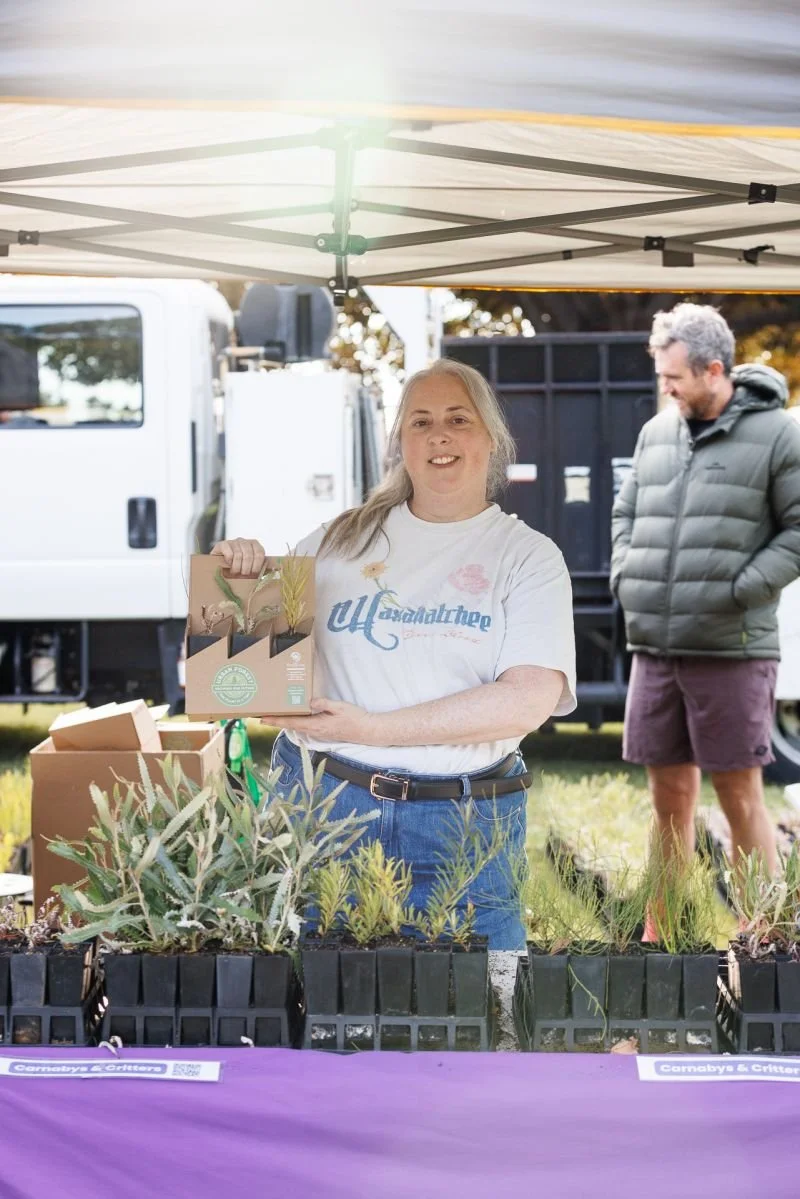
She Plants Cities, Healthier Johnstone. Credit: Marnie Richardson.
What Is an Urban Forest Strategy?
An urban forest strategy is a long-term framework for protecting, managing and expanding the trees and vegetation across a town or city.
An urban forest is not limited to a collection of public parks or street trees. It includes trees and understorey vegetation across both public and private land: in residential gardens, school grounds, commercial properties, streets, parks, bushland, institutional grounds and other urban spaces.
An urban forest strategy establishes how this living asset will be managed over time. It considers what already exists, where canopy is needed, which trees should be protected, how new planting will be prioritised and how different parts of a local government can work together to achieve shared outcomes.
Importantly, it is not simply a tree-planting plan.
Planting programmes are valuable, but planting alone cannot address the full complexity of urban tree loss. A strategy considers the conditions that allow trees to survive and mature, the competing demands placed on urban land and the policies, resources and responsibilities required to protect canopy over the long term.
What Does a Strategy Do?
A well-developed urban forest strategy provides a shared direction for decision-making. It can:
Establish a baseline: Identify existing tree canopy, vegetation coverage, biodiversity and areas where shade is limited.
Set measurable targets: Define how much canopy a town or city wants to achieve and establish timeframes for progress.
Prioritise tree retention: Recognise the value of established trees and identify ways to protect them when development or infrastructure projects are proposed.
Guide new planting: Determine where trees are most needed, which species are appropriate and what conditions are required for them to thrive.
Connect planning and development: Integrate trees into decisions about streets, buildings, subdivisions, public spaces, drainage, services and infrastructure.
Establish responsibilities: Clarify the roles of local government departments, developers, landowners, residents and community organisations.
Support community involvement: Provide opportunities for people to contribute local knowledge, participate in projects and help monitor progress.
Measure implementation: Create a framework for reporting on outcomes, reviewing progress and adjusting priorities as conditions change.
The difference between having an urban forest strategy and not having one is significant. As Heather will explain in the case study of the Town of Victoria Park Urban Forest Strategy, a proposed development in Lathlain threatened the removal of mature trees. What followed would become the catalyst for a broader approach to protecting and growing the Town's urban forest.
Without an overarching framework, decisions about trees can become fragmented across departments and development processes. A tree may be removed through an individual development proposal without its broader impact on neighbourhood canopy being considered. Similarly, planting programmes can introduce hundreds of new trees without necessarily providing the soil, water, space or ongoing care they need to thrive.
An urban forest strategy brings these decisions together under a shared, long-term vision. It helps local governments establish priorities, measure progress and remain accountable for their commitments. For the Town of Victoria Park, this meant looking beyond trees on public land to recognise that the urban forest also extends across private properties, involving residents, businesses and landowners. It also connected tree canopy with broader considerations of urban ecology, public health and neighbourhood liveability.
Why Tree Retention Must Come Before Tree Replacement
One of the most important considerations in urban forestry is the difference between retaining an established tree and planting a replacement. A newly planted tree may eventually provide shade and habitat, but it cannot immediately deliver the same canopy, ecological complexity or environmental benefits as a mature tree.
Established trees have spent decades developing their root systems, branching structures and relationships with surrounding ecosystems. Their canopies can provide substantial shade, while hollows, bark, branches and surrounding vegetation may support a variety of species.
Replacing a mature tree with several young trees does not immediately replace what has been lost.
This is why tree retention must be considered early in the development process. It is much easier to design around an existing tree when its location, root zone and canopy requirements are understood from the beginning than to attempt to preserve it after building footprints, accessways and infrastructure have already been determined.
The Western Australian Government's urban greening guidance similarly recognises that mature trees provide particularly significant benefits, including shade, cooling and habitat, and that vegetation needs to be considered as part of development planning.
“Retaining existing
vegetation is the
most efficient form
of urban greening.
Greater retention requires early
consideration of vegetation in
planning and development,
supported by expert advice.”
Case Study: Inside Victoria Park's Urban Forest Strategy
For the Town of Victoria Park, concerns about tree loss eventually reached a turning point through a development proposal at Lathlain Park. The proposal placed 98 mature trees and approximately 7,000 square metres of canopy at risk. For residents concerned about the loss of established vegetation, it became a catalyst for a broader conversation about the future of the town's urban forest.
Community members mobilised, a petition circulated and a special electors meeting was held. Rather than focusing solely on the trees at Lathlain Park, residents began considering what could be done to address the underlying issue: how could the town better protect its existing trees and ensure future development made room for more?
“One of them was that the town should develop an urban forest strategy,” Heather said. She described how the motion was put forward and passed, with support from the Town’s chief executive officer. What had begun as concern about a particular development proposal had opened the door to something much more ambitious: a long-term framework for protecting, managing and growing the Town’s urban forest.
Learning From Melbourne: Turning Community Ideas Into Policy
With the motion passed and the opportunity to develop a strategy emerging, Heather wanted to understand how other cities had approached urban forestry.
She travelled to Melbourne to speak with the City of Melbourne's urban forest officer, seeking practical insight into how its strategy had been developed, what resources were required and how the process could be adapted to Victoria Park.
“I went to Melbourne, and I had a chat to the City of Melbourne urban forest officer about how they develop their urban forest strategy, what tools they'd use, what resources they needed. And that conversation was awesome. I was so excited by it, and so enthusiastic that I came back and said, ‘Oh, this is great. We can do this. We can do that.’”
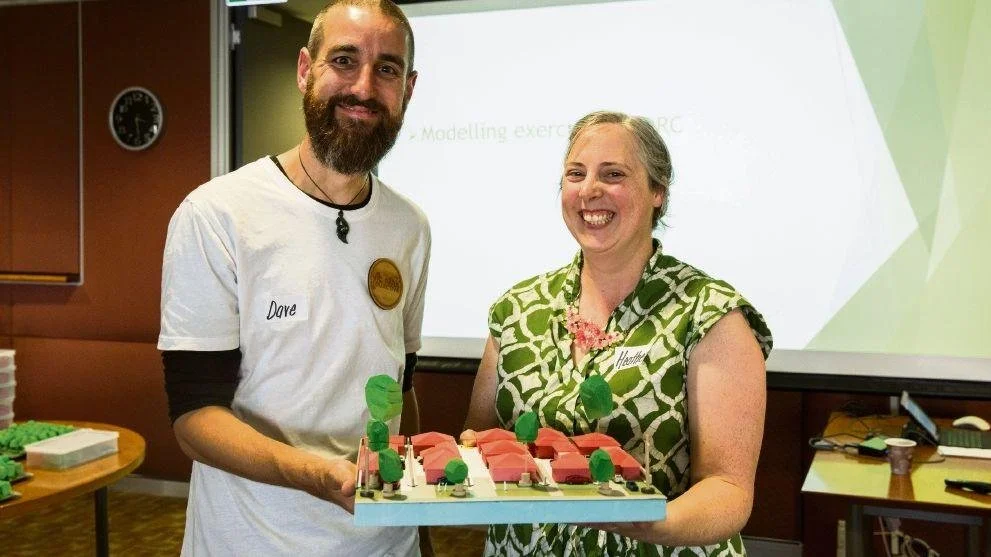
Victoria Park Collective member Dave Lindner and Victoria Park Urban Tree Network member Heather Johnstone.
The visit provided Heather with more than inspiration. It gave her a practical starting point and access to knowledge that had already been developed and tested elsewhere.
“I had all those resources from the City of Melbourne to develop the strategy. I had this roadmap that I knew was tried and tested.”
Rather than beginning with a blank page, the community could learn from another city's experience, understand the processes involved and adapt those lessons to the needs of Victoria Park.
It is a reminder that cities do not need to solve every challenge independently. Knowledge sharing between local governments, practitioners, community organisations and different professional disciplines can help accelerate progress and avoid reinventing the wheel.
Heather's enthusiasm also helped turn the idea into an opportunity for the community to take a more active role.
“The Town could see how keen I was and said, ‘Okay, great, you’re really passionate about this.’ I said, ‘Absolutely, we can do this. The community can help.’ They then put out an expression of interest for local community groups to develop the Urban Forest Strategy, and we were awarded the opportunity.”
What followed was a 17-month process of research, consultation and writing. The work brought together people with different skills, experiences and professional backgrounds, all contributing towards a shared outcome.
The strategy was endorsed by Council in September 2018, establishing a framework for protecting and growing the Town's urban forest. Its initial target was to increase tree canopy from 10 percent to 20 per cent of the municipality's land area (Town of Victoria Park, 2018).
The scale of the ambition was substantial. The original strategy estimated that reaching the 20 percent target would require approximately 1.8 million square metres of additional canopy coverage, equivalent to around 256,000 more trees than present at the time.
“It took about 17 months from when we were awarded to deliver the strategy through to endorsement, which, in council terms, is actually quite good, because we had all the community support.”
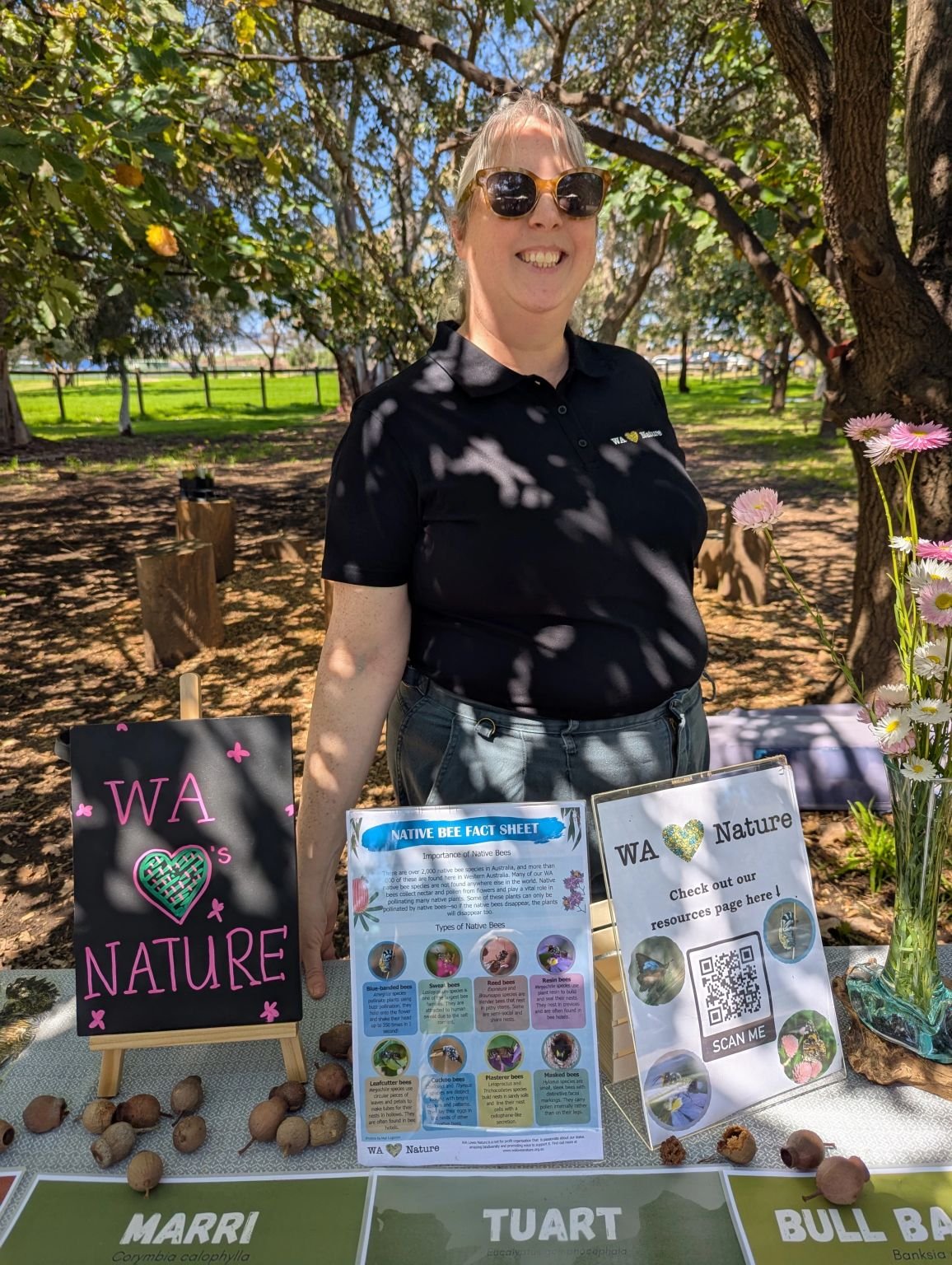
Heather Johnstone sharing about Western Australia’s biodiversity at the Trillion Trees Australia open day for WA Loves Nature.
The Power of Community: 3,700 Volunteer Hours Behind the Strategy
One of the most striking aspects of Victoria Park's Urban Forest Strategy was the amount of community effort that went into its development. The process was significant not only because it produced a formal strategy, but because community members helped develop it. Residents were not simply invited to comment on a finished document. They were involved in gathering information, contributing ideas, researching the issues and helping shape a framework that would influence the town's future.
It was an example of community participation moving beyond consultation and into the development of local policy.
“We have 3,700 hours of volunteer time contributed. We ate a lot of cakes, we drank a lot of coffee. We took thousands of photos… there were many ways people contributed their unique skills to a positive outcome—and to get more greening happening,” Heather says.
Behind those 3,700 hours were people with different skills, experiences and connections to their neighbourhoods.
Some contributed research and photography. Others brought writing skills, technical knowledge, local experience or relationships that helped move the work forward.
The contribution was not limited to people with formal qualifications in environmental science or urban planning. The process created an opportunity for residents to bring what they knew and what they could do to a shared project.
Victoria Park's experience demonstrates that meaningful community involvement requires more than asking residents for feedback. It requires creating opportunities for people to contribute their time, skills and knowledge in ways that can influence outcomes.
For Heather, the work was an example of what can happen when people are given a common purpose and the opportunity to contribute.
But getting the strategy endorsed was only part of the work.
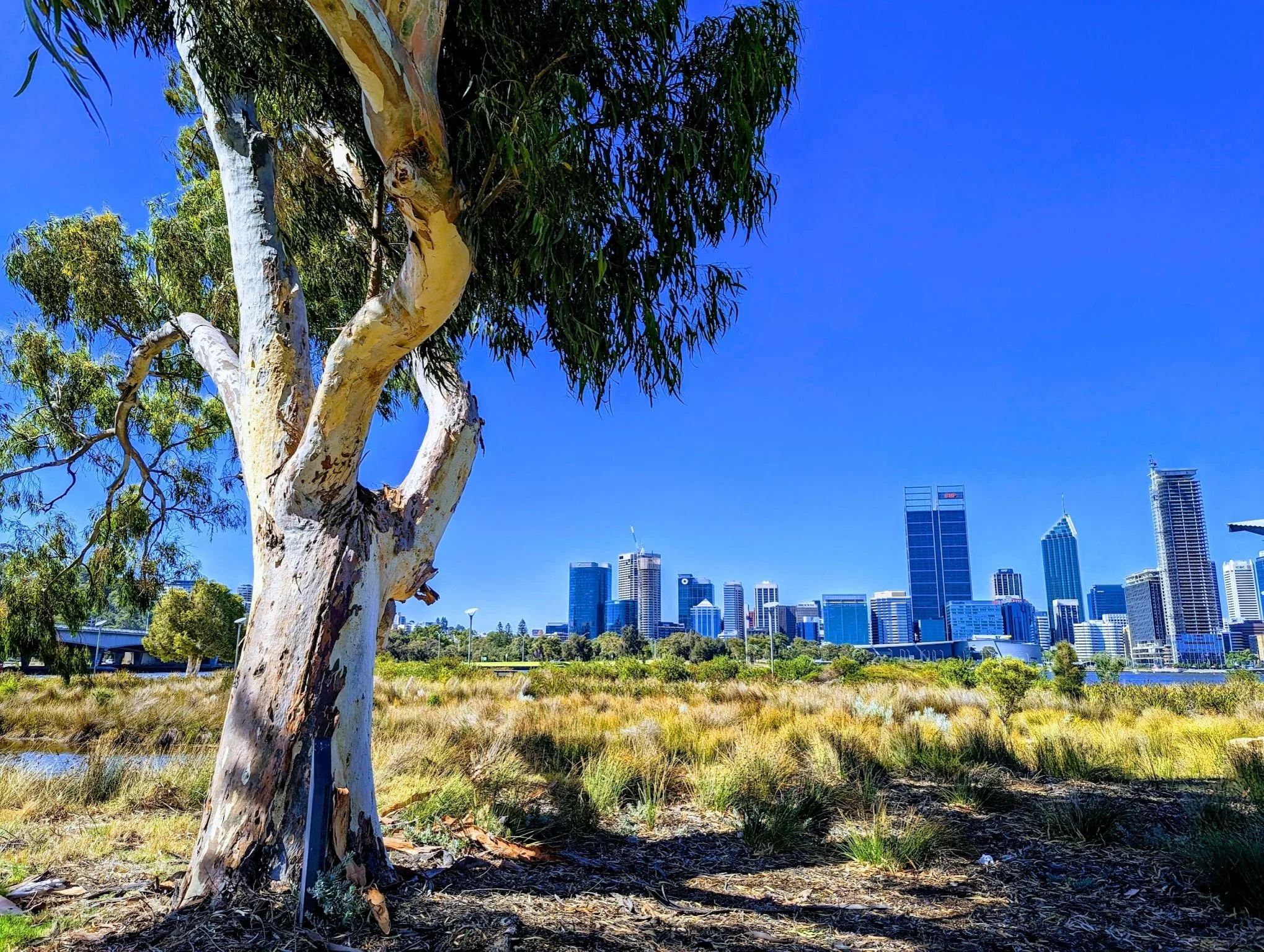
For Heather Johnstone, losing trees means losing part of our connection to the natural world. Credit: Heather Johnstone
From Strategy to Action: How Do You Turn a Plan Into Real Change?
Developing the strategy was only the beginning. The bigger challenge was turning its vision into action. As Heather points out, “It's great to write the strategy, but then how are you going to actually implement it?”
After months of work, many of the volunteers involved in developing Victoria Park's strategy were exhausted. Heather continued to contribute, helping bridge the gap between the community-developed document and the practical decisions needed to put it into effect.
The Implementation Working Group (IWG) followed, bringing together councillors, staff and community representatives to consider project ideas and monitor progress. Together, they worked on translating the strategy into an implementation plan and considering how responsibility could be shared across the organisation.
“It was a really amazing cross section of the town … that was the beginning of the transition from the community really owning this strategy to passing the baton over to the town.”
It also helped establish an ongoing relationship between the people who understood neighbourhood needs and the teams responsible for delivering projects. Heather says changes within the Town's organisational structure also helped improve collaboration.
“There was a restructure of the Town of Victoria Park as well. So instead of having separate teams doing everything, it's more a place-based approach… knowledge is transferred a lot better than it was.”
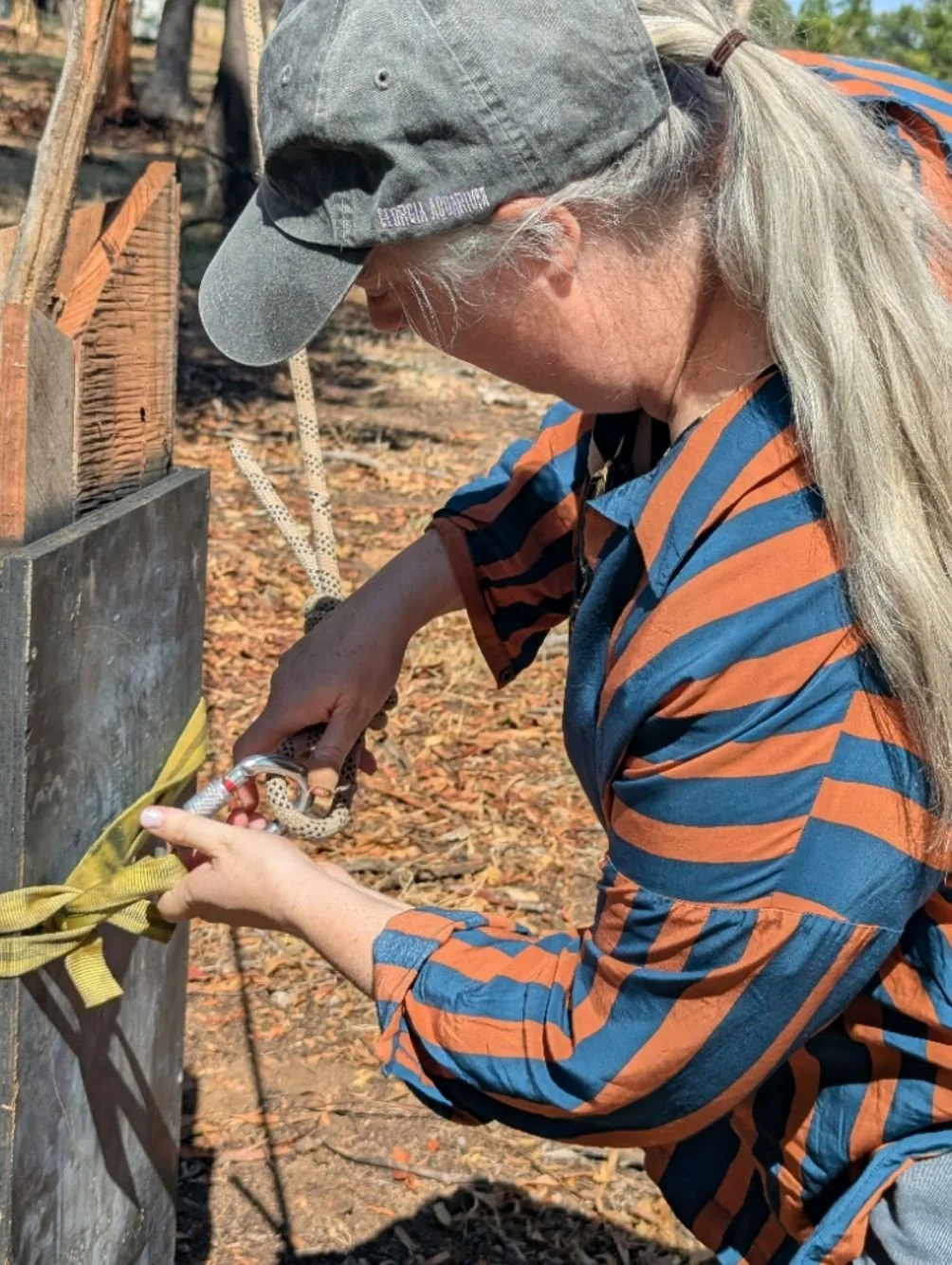
Heather Johnstone assisting with the installation of cockatoo nesting box with Millennium Kids, 2026.
For her, this kind of collaboration is essential when working towards outcomes that affect everyone who uses a city.
“There's no point in having these bigger egos go, ‘No, that's my space. You can't work in that space.’ We all use cities, and we all use cities in so many different ways.”
Urban forestry does not sit neatly within one department. It intersects with transport, planning, engineering, drainage, public open space, environmental management and community development.
A street tree, for example, is not simply a landscaping consideration. Its survival may depend on the design of the footpath, underground services, soil conditions, water availability, road infrastructure and the way nearby development is managed.
“Now that I've been exposed to what's possible, I can see really clearly where we need to go. Sometimes I have conversations with people who say, ‘Oh, it's too hard,’ or that something can't be done. But I can point to examples where it has worked.
“Take engineering, for example. People might say, ‘We can't put a tree there. It's too hot. It's just going to die.’ But there are solutions. You can install a cut in the kerb to allow more water to reach the tree, use structural soil, or introduce other measures to help trees thrive in challenging conditions.”
When departments operate in isolation, these competing requirements can make it difficult to achieve consistent outcomes. A place-based approach encourages teams to consider the needs of an area together, rather than treating each project or infrastructure requirement as a separate exercise.
For urban forests, that means considering the living systems within a neighbourhood alongside the buildings, roads and services that support it. It is also where the strategy becomes more than a document. It begins to influence how an organisation works, how decisions are made and how different areas of expertise contribute to a shared vision.
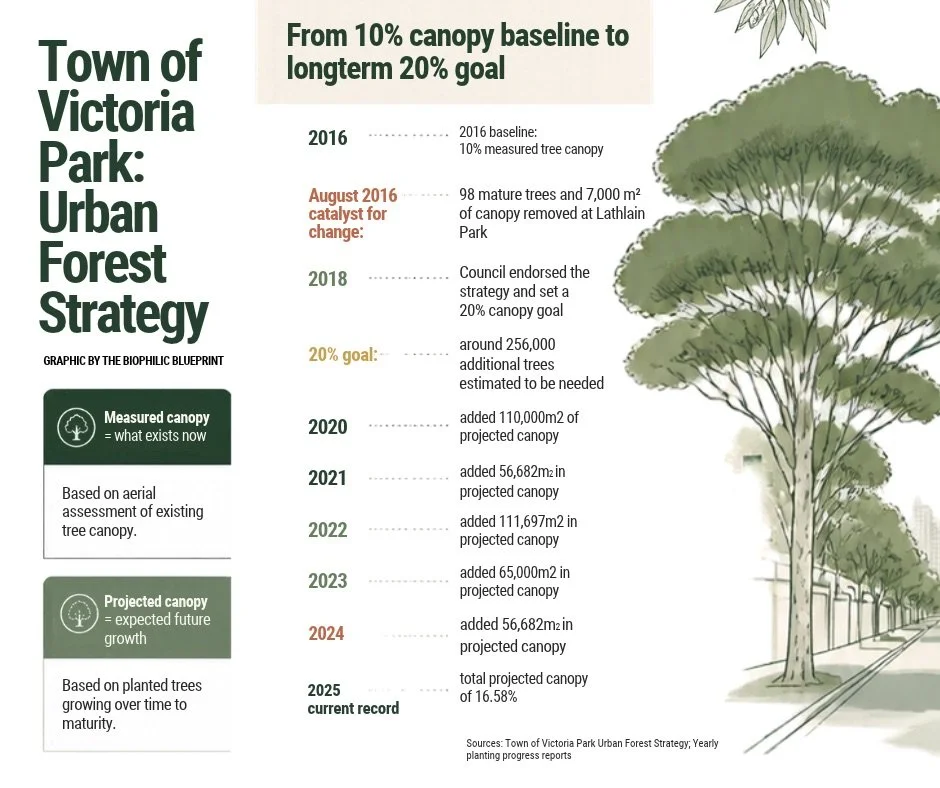
Town of Victoria Park Urban Forest Strategy snapshot view of progress. Graphic: The Biophilic Blueprint.
What Has the Town of Victoria Park Achieved So Far?
In April 2026, the Town of Victoria Park announced its sixth consecutive year of recognition as a Tree Cities of the World—an international programme led by the Arbor Day Foundation and the Food and Agriculture Organization of the United Nations. The recognition reflects the Town’s ongoing commitment to the care, management and growth of its urban forest.
Since endorsing its Urban Forest Strategy in 2018, the Town has continued to translate that commitment into action through tree-planting initiatives, community engagement, grants and policies designed to protect established trees and increase canopy cover.
The results include substantial planting and community distribution efforts. In 2025, the Town planted 5,916 trees and distributed a further 9,250 trees and shrubs to residents through its Urban Forest at Home program. Together with other urban forestry initiatives, these efforts contributed to a projected canopy cover of 16.58 per cent.
The previous year also saw significant progress, with the Town’s 2024 planting report recording 2,046 new trees, projected to contribute an additional 56,682 square metres of canopy cover.
Alongside planting, the Town has introduced a Tree Retention Policy to support the protection of established trees on private property, recognising that retaining existing canopy is an important part of building a healthier urban forest (Town of Victoria Park, 2026).
The Town’s annual reporting also provides an opportunity to assess progress against its longer-term goals. The 2025 Urban Forest Strategy review reported actual canopy cover alongside a projected canopy level of 15.71 per cent. It identified tree loss on private property as a significant contributor to the difference, while also acknowledging challenges such as increasingly hot and dry summers and the spread of pests, including Polyphagous Shot-Hole Borer (Town of Victoria Park, 2025).
Together, these initiatives and reporting milestones demonstrate the breadth of work involved in growing an urban forest. While planting new trees remains important, lasting canopy growth also depends on protecting established trees, supporting their long-term health and ensuring newly planted trees have the conditions they need to thrive.
Victoria Park’s experience demonstrates the value of setting a clear strategic direction and building the policies, partnerships and community participation needed to support it. Since 2018, the Urban Forest Strategy has provided a framework for ongoing action, with regular reviews helping to measure progress and identify opportunities to strengthen the Town’s approach.
There is still work ahead, but six consecutive years of international recognition, continued planting programs and a growing focus on tree retention reflect a sustained commitment to creating a healthier, greener urban environment for the generations who will live, work and spend time in Victoria Park.
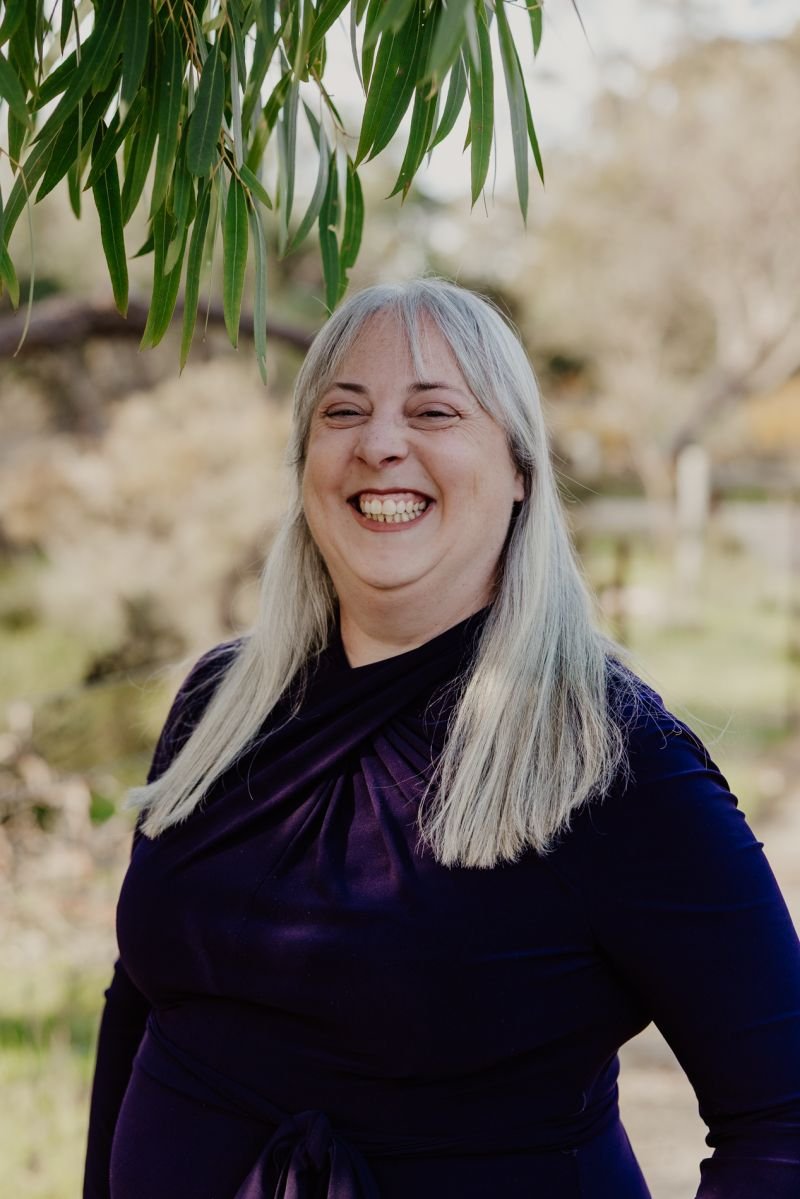
She Plants Cities, Healthier Johnstone. Credit: Marnie Richardson.
Why Every Town Needs an Urban Forest Strategy Before, During and After Development
Urban development is inevitable, but the loss of established trees does not have to be. Too often, trees are removed to make way for development, with new planting treated as a way to compensate afterwards. Yet a newly planted tree cannot immediately replace the shade, habitat, cooling and health benefits of a mature canopy.
The question is not simply how many trees we can plant, but how many we can retain, protect and give the conditions to thrive.
This is where an urban forest strategy becomes important. It gives local governments a framework for making proactive, informed decisions rather than responding to individual development proposals in isolation.
A strategy helps towns and cities look beyond individual development decisions to consider the kind of places they want to create, both now and for generations to come. As explored in conversations with Steven Lionakis and other contributors to The Biophilic Blueprint, creating places that support human and environmental wellbeing requires a longer-term, more intentional approach.
If we understand the role urban trees play in supporting human health, wellbeing and the natural systems we depend on, then their place in planning and development becomes difficult to overlook. We can build quickly, clear land and deliver new housing and infrastructure, but what are the longer-term consequences if the neighbourhoods we create are hotter, less connected to nature and less supportive of healthy living? The quality of the places we create matters just as much as the speed at which we create them.
Urban forest strategies can help put this thinking into practice, shifting tree management from reactive planting to proactive planning. Rather than treating nature as something to replace or add once development is complete, they recognise it as an essential part of shaping places from the beginning.
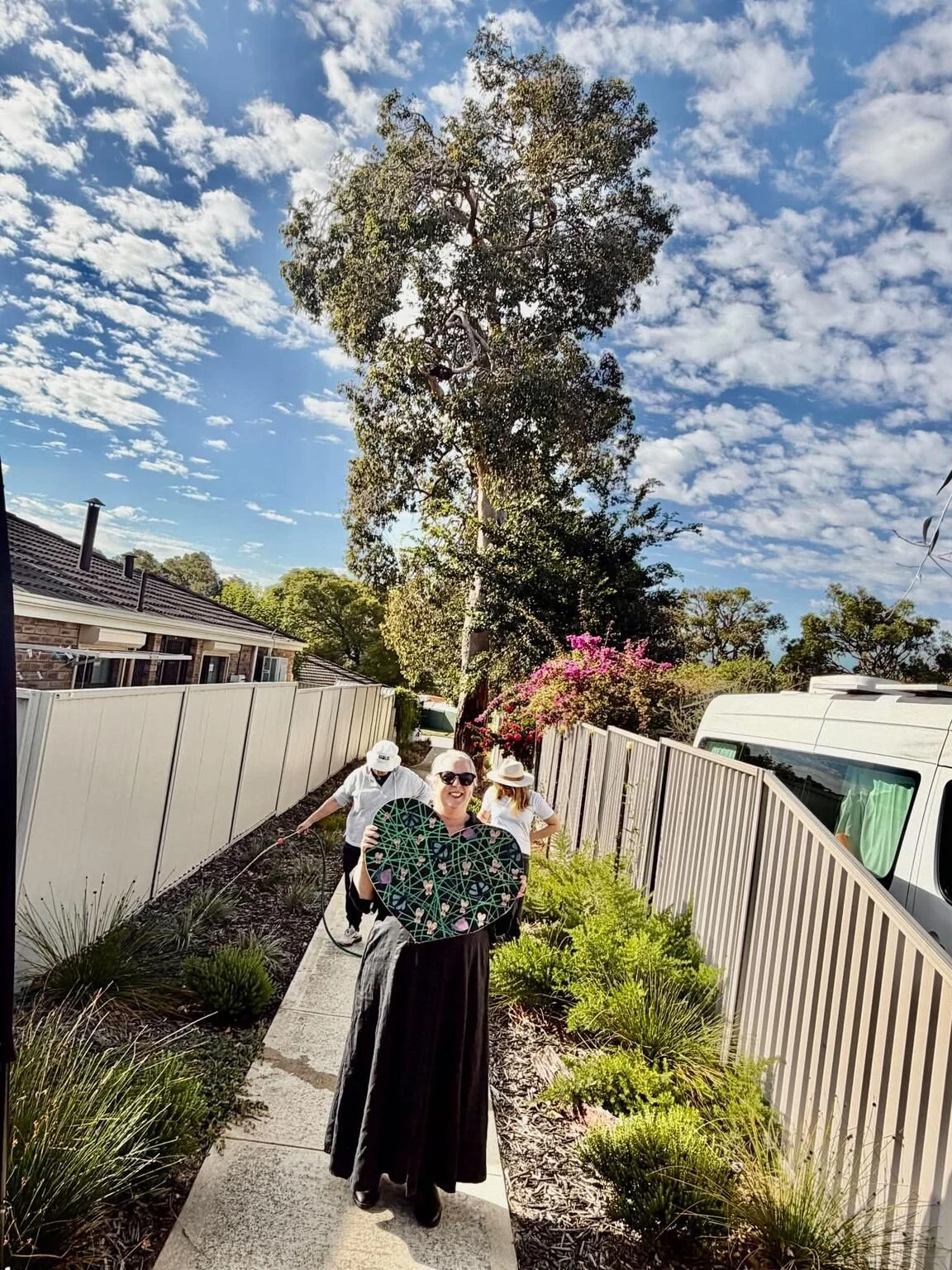
Heather Johnstone volunteering with WA Loves Nature.
Summary: What Other Cities Can Learn From Victoria Park's Urban Forest Strategy
Victoria Park's experience offers several lessons for local governments, communities, designers, developers and urban planners—and beyond. At its heart is a simple but important principle: protecting the urban forest requires us to think differently about how we plan, design and develop our cities.
1. Make tree retention the starting point for development.
Protecting established trees must be a priority from the earliest stages of planning and development. Mature trees provide shade, habitat, cooling and ecological value that cannot be quickly replaced by new planting. Rather than asking what can be planted after a site is cleared, decision-makers should first consider what can be retained.
2. Plan in harmony with nature.
Nature should be considered an essential part of the built environment, not something to accommodate once development has been designed. This means integrating existing trees, canopy, soil, water, biodiversity and green space into land-use planning, infrastructure and neighbourhood design from the beginning.
3. Bring different disciplines to the table.
Protecting and growing an urban forest is a shared responsibility. Collaboration between urban planners, architects, landscape architects, designers, engineers, environmental specialists, developers and community representatives can lead to better-informed decisions. These perspectives need to come together early, rather than working in isolation or addressing environmental considerations at the end of the process.
4. Recognise urban trees as essential to public health and wellbeing.
Trees are living infrastructure. Their contribution extends beyond aesthetics and environmental benefits to include cooling, cleaner and healthier neighbourhoods, opportunities for connection with nature, and support for physical and mental wellbeing. Urban canopy should therefore be considered as part of a community's public health and liveability priorities.
5. Make community participation meaningful.
Victoria Park's 3,700 volunteer hours demonstrate the contribution residents can make when they are invited to participate in research, planning and implementation. Community knowledge can strengthen technical expertise, build a sense of shared responsibility and help ensure local priorities are understood.
6. Connect ambition with implementation and accountability.
Targets are important, but they need to be supported by budgets, clear responsibilities, measurable outcomes and regular reporting. A strategy should be reviewed as conditions change and provide a basis for understanding what is working and where further effort is required.
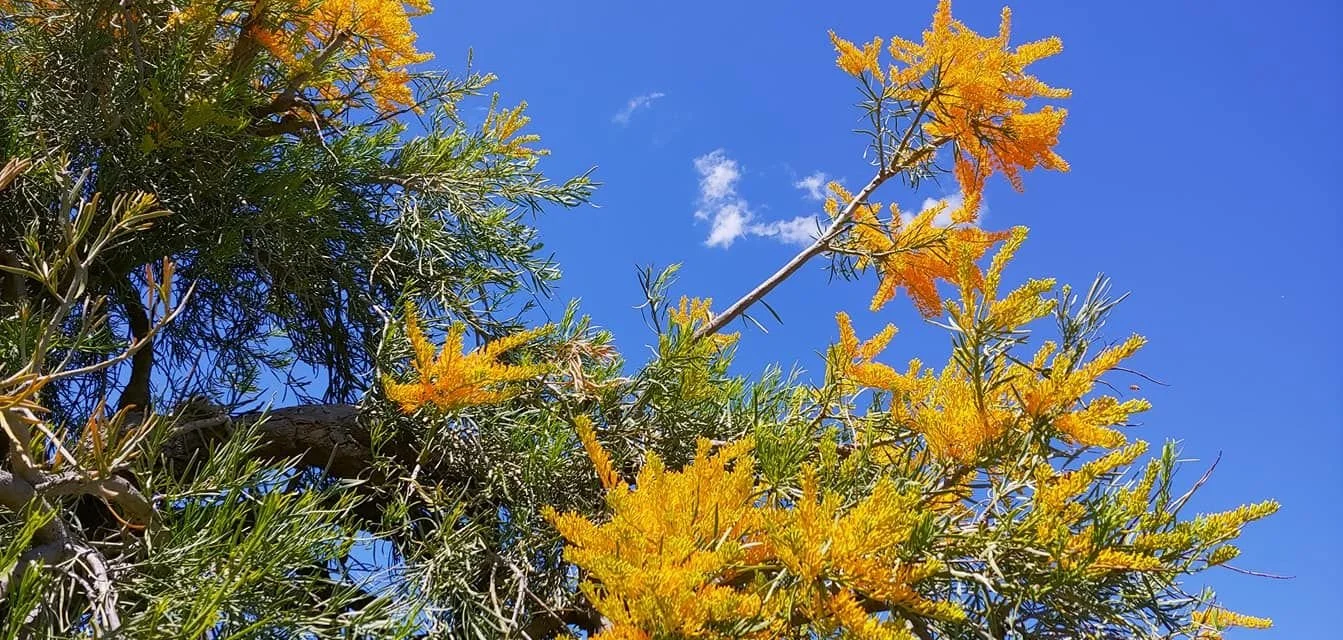
Credit: Heather Johnstone.
A Living Example of What’s Possible
Following the conversation with Heather, during which she shared valuable insights for other communities, towns and people wanting to develop an urban forest strategy of their own, we walked along a boardwalk through the surrounding wetland landscape of Creery Wetlands.
While the wetlands have no direct connection to Heather’s work in Victoria Park, they offered a fitting backdrop for a conversation about what can happen when a community comes together to advocate for change.
Creery Wetlands has its own story of community action. Situated within suburbia, this natural landscape was saved from development and is now a protected space where people can walk, hike and observe the remarkable birdlife and other living systems that call it home. Its story is a reminder of the importance of people taking an interest in the future of the places they value.
It is also a testament to the possibility of creating neighbourhoods in which development and nature can exist alongside one another. As Heather reflected throughout our conversation, when we care more deeply about the places we live, stand up for all living beings and become more intentional about the neighbourhoods we create, we can achieve far more than simply building homes, streets and infrastructure.
We can cultivate places where people and nature can thrive together, where access to green space is part of everyday life, and where communities can experience the benefits of nature close to home.
Perhaps that is the real power of an urban forest strategy: it gives a community a way to turn care into action, and a shared vision into something that can shape the future of a place for generations to come.
Why The Biophilic Blueprint Aligns With Heather Johnston's Work
At its heart, The Biophilic Blueprint explores how we can rethink our relationship with the natural world and bring nature back into the places where we live, work, learn and gather. Heather Johnston's work through She Plants Cities reflects that same understanding: that healthier cities are not created by separating the built environment from nature, but by recognising that the two must exist together. Her journey demonstrates the value of community knowledge, collaboration and long-term thinking in shaping places that support both people and the living systems around them. The question her daughter once asked—“Where are the trees going?”—is one every growing community should be asking before the next development begins. Because a truly liveable city is not simply one that makes room for more people, buildings and infrastructure. It is one that makes room for life.
Join the Conversation
If something in this article resonated with you, we’d love you to leave a comment below or join the conversation on our social media channels.
References and Further Reading
Heather Johnstone, She Plants Cities. https://www.sheplantscities.com
Australian Government Department of Education. (2025). Urban greening for health.https://www.education.gov.au/ncris/case-studies/urban-greening-health
Australian Government Department of Education. (n.d.). Urban greening for health.https://www.education.gov.au/ncris/impact-stories/secure-and-resilient-nation/urban-greening-health
Biophilic Cities. Our vision. https://www.biophiliccities.org/our-vision
Data Connect Australia. Urban greening for health. https://www.dataconnectaustralia.org.au/impact-stories/urban-greening-for-health/
Department of Planning, Lands and Heritage. (2026). Perth and Peel@3.5million. Government of Western Australia. https://www.wa.gov.au/organisation/department-of-planning-lands-and-heritage/perth-and-peel35million
Department of Planning, Lands and Heritage. (n.d.). Urban Greening Strategy. Government of Western Australia. https://www.wa.gov.au/organisation/department-of-planning-lands-and-heritage/urban-greening-strategy
Government of Western Australia. (2025). New data reveals steady tree canopy cover across Perth and Peel.https://www.wa.gov.au/government/media-statements/Cook%20Labor%20Government/New-data-reveals-steady-tree-canopy-cover-across-Perth-and-Peel-20250529
Government of Western Australia. (n.d.). Urban greening data: Perth and Peel.https://www.wa.gov.au/government/document-collections/urban-greening-data-perth-and-peel
Healthway. (2025). Inquiry into land development and planning in Western Australia: Submission.https://www.healthway.wa.gov.au/wp-content/uploads/Healthway-Submission_Land-Use-Inquiry.pdf
RAC. (2019). Accommodating Perth's urban sprawl. https://rac.com.au/horizons/lifestyle/accommodating-perths-growing-population
Sax Institute. (n.d.). 45 and Up Study. https://www.saxinstitute.org.au/solutions/45-and-up-study/
Town of Victoria Park. Urban Forest Strategy. https://www.victoriapark.wa.gov.au/about/strategic-direction/strategic-programs/urban-forest-strategy
Town of Victoria Park. (n.d.). Yearly planting progress reports. https://www.victoriapark.wa.gov.au/about/strategic-direction/strategic-programs/urban-forest-strategy/yearly-planting-progress.aspx
Town of Victoria Park. (2026). Town of Victoria Park extends state-leading run.https://www.victoriapark.wa.gov.au/news/town-of-victoria-park-extends-state-leading-run/10560
Wohlleben, Peter. (2016). The hidden life of trees: What they feel, how they communicate—Discoveries from a secret world. Greystone Books.