The “Extinction of Experience”: Walking Interviews Reveal Why Urban Greenspace Matters
Published by The Biophilic Blueprint / Written by Anjelica Smilovitis
Interview with Dr Yarden Woolf on the latest research by The University of the West of England.

Dr Yarden Woolf combines practical experience in landscape architecture and urban planning with qualitative research exploring greenspace, nature connectedness and human behaviour.
The “extinction of experience” describes the quiet fading of our relationship with the natural world as modern life becomes increasingly urbanised and digitally driven. It raises broad questions about what this shift means: does disconnection from nature gradually lead people toward indifference and disengagement? Conversely, can simply walking through a space, noticing it, and spending time within it reignite care for the natural world?
Beyond environmental concern, there is also the quieter loss of experience itself—the restorative pause of sitting beneath a tree, the sensory grounding of birdsong or running water, the emotional familiarity of a landscape, or the mental clarity that can come from simply walking through greenspace.
One England-based researcher is responding to this phenomenon by walking alongside the next generation, seeking to see the world through their eyes and understand how they experience greenspace and how this shapes nature connectedness and pro-environmental behaviour.
The Biophilic Blueprint sat down with Dr Yarden Woolf, a landscape architect and urban planner passionate about the outdoors. Her affinity with the natural world began long before her studies and career. “I’ve always loved nature,” she reflects. We pause the conversation for a moment together as we speak across Zoom. To ground us in place, Woolf describes for The Biophilic Blueprint readers where she lives and researches.“Bristol is in the southwest of England, and every second year or so, it wins England's greenest city, and it's not surprising. There's plenty of parks here. There's woodlands around it too.”
Woolf is a PhD researcher at the Centre for Sustainable Planning and Environments at the University of the West of England (UWE Bristol). She is also a research fellow on the GP4Streets project at the Centre for Public Health and Wellbeing UWE, which explores how green, blue and grey infrastructure interventions can improve streets and public environments.
Woolf connects her research directly to practical planning, reflecting on how campuses and urban environments can be designed to better support meaningful interaction with greenspace. Drawing from both her professional practice and research, she emphasises that emotional connection to nature is not accidental—it can be encouraged through thoughtful design decisions that consider accessibility, sensory experience, diversity of space and the everyday ways people move through environments.
From simple interventions such as signposting and seating to more layered approaches involving biodiversity, refuge spaces and sensory cues, the findings offer practical insights for planners, universities and designers seeking to create healthier, more connected public spaces.
“The general context of people losing touch with the natural world, and in an academia, is called ‘extinction of experience’. It's this vicious cycle where people care less, so they go out less to greenspaces, so they have less opportunity to connect. It kind of feeds itself,” says Woolf.
“In the context of climate anxiety and people thinking the world’s about to end, there seems to be a lot of knowledge within the younger generation that we might not be aware of,” Woolf shared, explaining why she is passionate about understanding how the next generation engages with nature.
Her recently published conceptual framework, Harnessing our Knowledge of the Relationship Between Experience in Greenspace, Nature Connectedness and Pro-Environmental Behaviour: A Conceptual Framework for Healthy Cities, brings together emerging research on how contact with nature can influence the way people think, feel and act toward the environment.
At the centre of the research is an attempt to better understand what may be quietly disappearing alongside this “extinction of experience”—not only regular contact with nature, but also the emotional, sensory and reflective experiences that often emerge through time spent outdoors. The study explores how younger generations form connections with greenspace, how everyday interactions with nature shape care and belonging, and what this could mean for future relationships with both place and planet.
The research was published in January 2026 with her “incredible team of supervisors” she says, honouring each with a mention of appreciation to their style of research and approach. The team consisted of Professor Danni Sinnett, Director of Studies, UWE Bristol, Dr Issy Bray, UWE Bristol and Dr Fiona Spotswood, University of Bristol.
“My PhD was joint between the Centre for Sustainable Planning and Environments and the Centre for Public Health and Wellbeing. It was a very good balance, and it was very cool to have a team of very strong women as well.”
After completing an undergraduate degree in landscape architecture, she worked across a range of projects—from residential neighbourhoods to public parks—before earning a Chevening Scholarship to study urban design and city planning at UCL. There, her master’s dissertation on London’s region’s canals became a formative experience. “I had never seen canals before, and I kind of fell in love with post-industrial canals as public spaces. That’s where it all started for me,” she recalls.
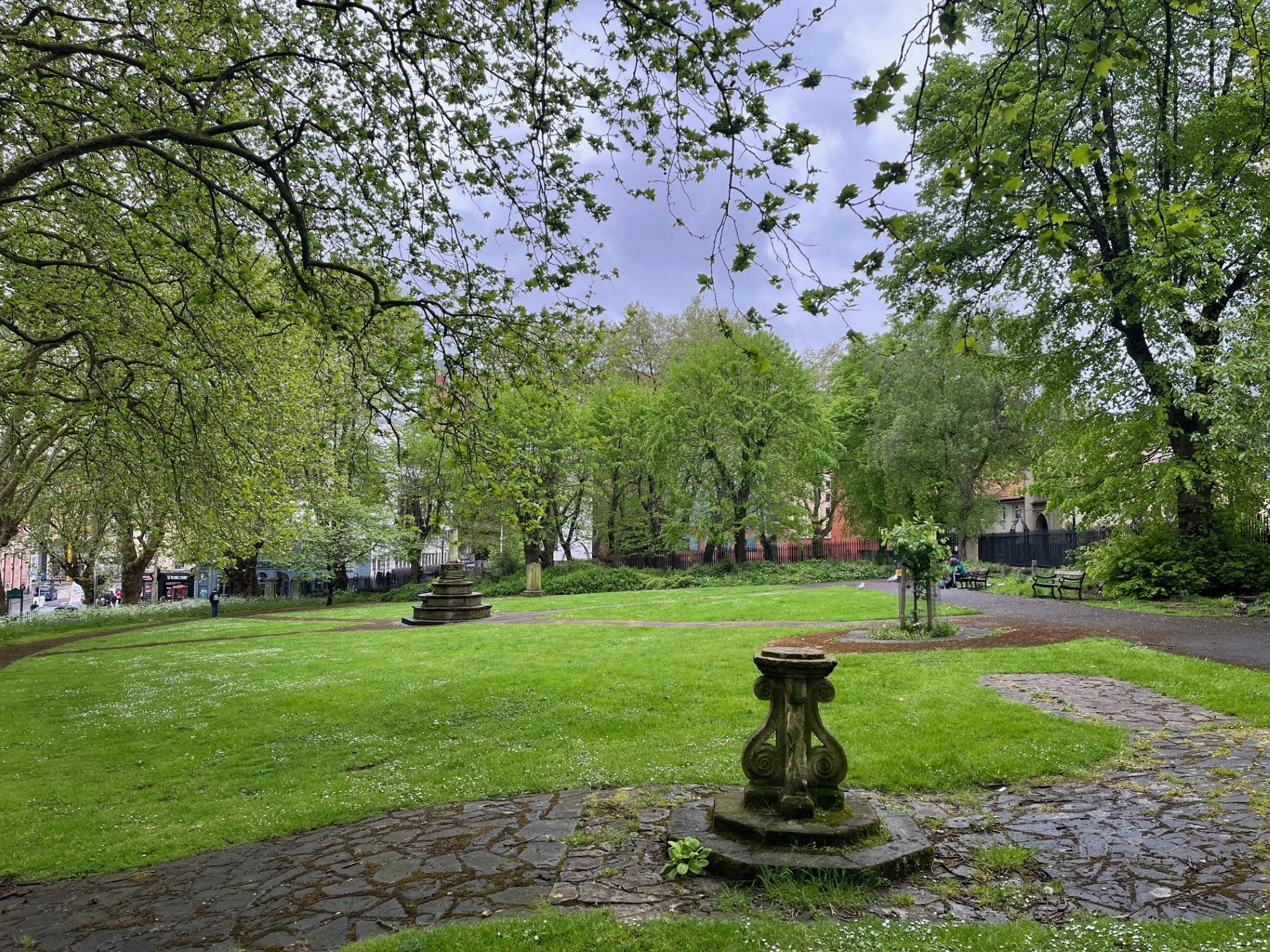
St. James Park, 2024. Photo: Yarden Woolf.
Listening to Place: Walking Interviews in Greenspace
During her master’s dissertation, she had the option of completing either a dissertation, a research project, or a design project. Coming from a design background, she chose to challenge herself by taking the written route and focused her work on canals in London.
This was the first time Woolf utilised the walking interviews method. She walked with participants along the Regents Canals in London, to understand how they experience it and how it relates to the canal’s design. Woolf walked with canal-users from Granary Square to Camden Market asking questions about their activities, perceptions and emotions while walking and cycling along the canal.
Woolf explains her own relationship to the canals. “It’s man made, but doesn't feel man made at all. They're very unique. They're elongated, especially in London. You can walk along and you're in central London, but you don't feel like you are in central London. You feel like you're out in nature; the water, the vegetation, the wildlife, mostly water farm birds, for me, was quite unique,” she said.
“I'd never seen canals before, and I fell in love with post-industrial canal as a public place, and that's where it all started for me. From the time I started doing that research, which was about how people use the canal, and how this relates to its design, I knew this is what I wanted to do, and knew I was going to do a PhD,” she said.
She described the experience as deeply enjoyable, recalling how the work rarely felt like work at all. Walking alongside participants and listening to their reflections became part of the research itself—an approach that would later resurface in her PhD studies, where she observed participants reconnecting with places they had previously dismissed simply by walking through them again and engaging with the environment in real time.
Walking interviews are a qualitative research method where conversations take place while the researcher and participant move through a physical environment together, often on foot. Rather than sitting in a formal interview setting, participants engage with the discussion while actively experiencing the place being explored.
Researchers have found this approach particularly valuable for studying lived experience, as being immersed in a location can prompt memories, emotions and observations that may not emerge in a traditional interview environment. The method is known for generating rich, place-based insights by allowing people to respond directly to their surroundings in real time, (Evans and Jones, 2011; Braun and Clarke, 2013).

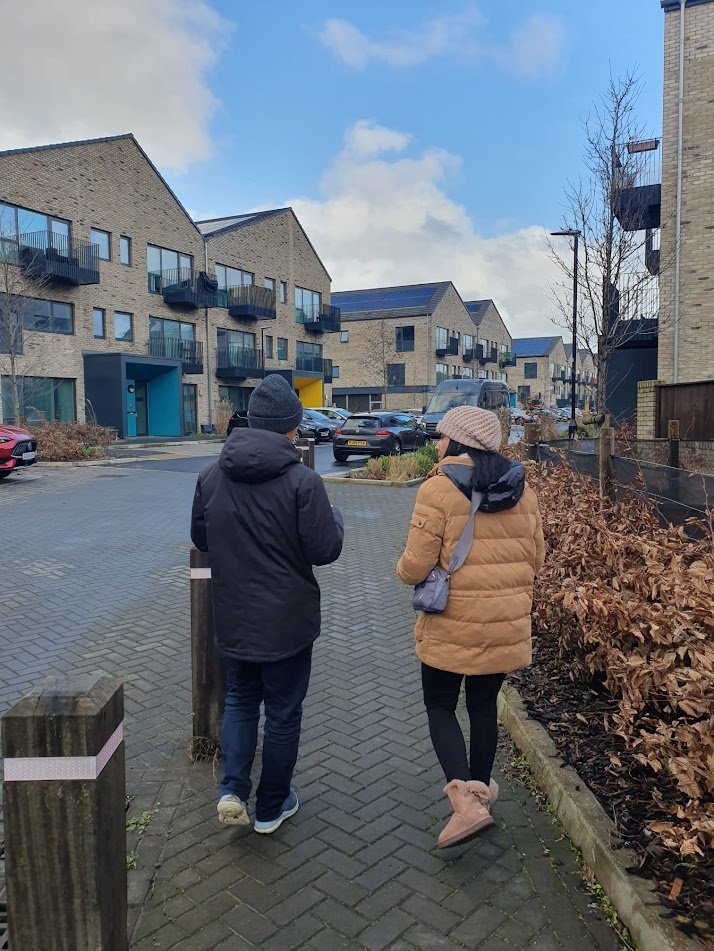
Methodology: What Counts as Greenspace?
Woolf explains how the research can be used as a conceptual framework for healthy cities, as we discuss the study in depth—from how the research was conducted and why the methodology matters, to the ways the findings can inform the planning and design of future greenspaces.
Woolf split her research up into two elements. The interviews took almost a year to conduct interviews and observations to include seasonality, like autumn and winter. “I was lucky. Bristol doesn't snow every year, but there was one snow day on campus. So that was great for my research, because I had photos of students in the snow.”
The interviews involved 27 students, each participating in two interviews between 30-60 minutes. In the first, students submitted three to five photos of greenspaces in Bristol. The second interview was a walking interview through a chosen greenspace.
“This method is powerful because it elicits memories and emotions that don’t surface in an office or survey,” she explains. One student, initially indifferent to the Royal Fort Gardens, expressed attachment and care only after walking through it. “Being there activated a connection that wasn’t evident beforehand.”
“When we walked there, he said so many positive things about it,” Woolf recalls. “He said, ‘Now that I’m here, I would mind if this place wasn’t there.’”
“Because I did walking interviews on the Regent’s Canal, I knew how powerful they can be in eliciting emotions, feelings and memories that people don’t necessarily remember unless they’re in the place,” she explains.
For Woolf, the moment demonstrated the emotional depth that can emerge when people physically reconnect with a place.
“I think that really demonstrates the power of these methods,” she says. “But it can work the other way as well.”
Woolf recruited students from two universities to capture a broader range of greenspace experiences and campus environments. The decision to recruit students from both universities was also shaped by the contrasting social and spatial dynamics of each institution. UWE Bristol operates largely as a campus university on the outskirts of the city, while the University of Bristol is embedded within the urban fabric of central Bristol, particularly around Clifton.
“They’re different social demographics,” Woolf says. “The University of Bristol attracts wealthier students and is more of a city university, while UWE is a campus university with generally lower rents and a different student experience.”
“It wasn't a comparative study, though. We weren't comparing between the two. It was about getting as many different types of greenspaces covered,” she explains. “This is where my background helped me, because I used to design these types of spaces. It was helpful in choosing where to observe.”
The study included four greenspaces at UWE Bristol and two at the University of Bristol, each selected for their differing scales, layouts and landscape characteristics. Some spaces were heavily paved and hard-landscaped, while others featured softer, more vegetation-rich environments. Rather than choosing what she personally considered the “best” spaces, Woolf aimed to represent a variety of designs and ways people might interact with them.
Through walking interviews conducted in greenspace across university campuses, Woolf sought to understand how university students experience greenspace, what draws them into certain environments, and why some spaces resonate more deeply than others. “I really like going out and speaking to people, and particularly doing qualitative methods,” Woolf shares, also explaining why she decided to do qualitative and walking interviews for the study.
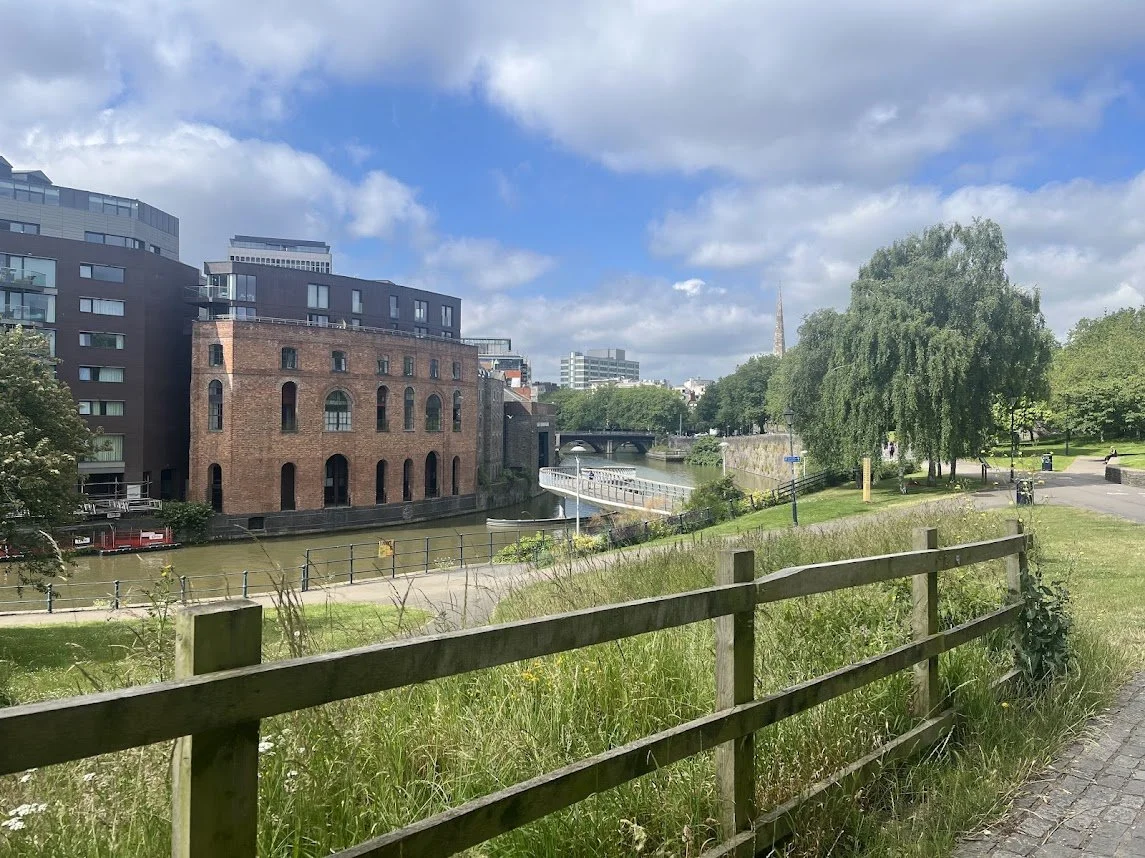
Contact through visiting greenspaces at Castle Park, Bristol. Photo: Yarden Woolf.
The qualitative approach welcomes a wide range of responses and perspectives—an important insight for planners and designers seeking to understand how people engage with nature design differently.
“I wanted to keep it very open, so there was nothing leading about it. That’s why we got such a wide range,” Woolf says. “It was interesting to see what students considered green spaces.”
One student submitted a photo of a green wall, while another shared an image of two geese standing on a patch of grass beside a McDonald’s.
“I thought that was fascinating, and I was humbled by this, because I was not expecting it,” she recalls. “At first I was like, is this a green space? But then I was like, yes, it is. If it is for the participant, then it is for the study.”
“That’s where some of the research magic happens — when you try to be open-minded and see what you're studying through your participant’s eyes,” she says. “Coming from about seven to eight years in practice, I came in thinking I knew what a green space was. It was really interesting to realise maybe I didn’t know as well as I thought.”
For Woolf, these moments became an important reminder about the value of qualitative research and the need to remain open to perspectives outside professional assumptions.
Following the interviews and observations, Woolf identified three key mechanisms that emerged throughout the research: contact, noticing and nostalgia. Together, they reveal how everyday experiences in greenspace can shape emotional attachment, wellbeing and environmental care in often subtle but powerful ways.
As we delve into each mechanism, Woolf also reflects on what these findings mean beyond academia—encouraging planners, designers and universities to see greenspaces not as static features of the built environment, but as evolving opportunities to foster connection, reflection and healthier relationships between people and the natural world.
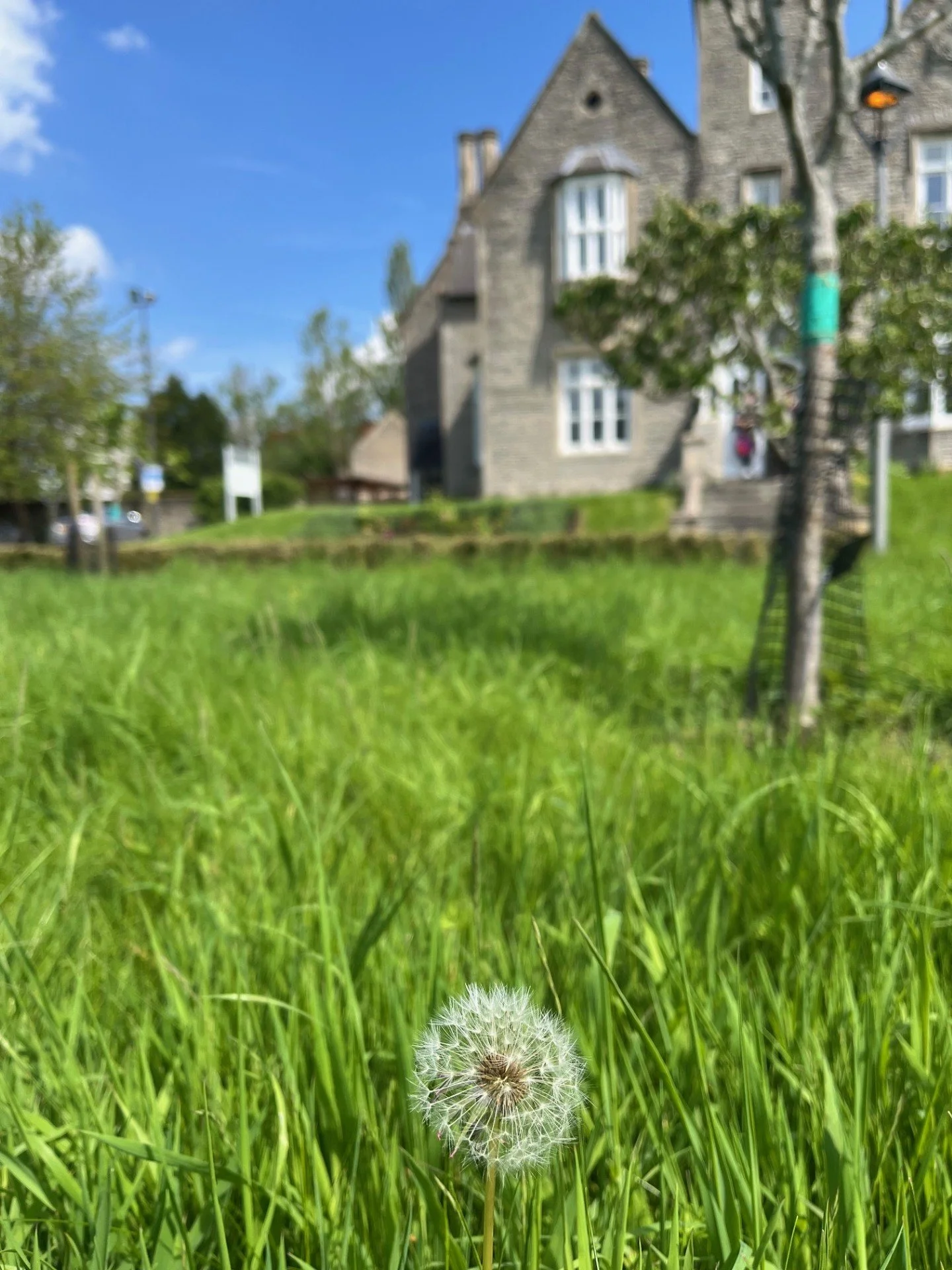
Noticing details in greenspaces at The Farmhouse, UWE Bristol. Photo: Yarden Woolf.
Mechanism 1. Contact: Everyday Encounters With Nature
The research found that contact with nature within university settings often took simple, everyday forms: studying beneath a tree, walking between buildings along vegetated pathways, sitting in courtyards, or spending breaks in quieter pockets of campus greenspace. While seemingly ordinary, these repeated moments of exposure and pause became important foundations for emotional connection, wellbeing and environmental awareness.
“Contact is the most self-explanatory one. If we want people to have a relationship with nature, they need to be in nature, or see nature, at least,” Woolf explains.
Woolf found that many students were already highly aware of the mental health and wellbeing benefits associated with greenspaces, intentionally seeking them out for moments of restoration, reflection and escape from academic pressure.
“I think, not surprisingly, with the global mental health crisis—and university students are unfortunately at the top of that, particularly post-COVID—a lot of them were very aware of the benefits of greenspaces,” she says. “They go into greenspaces to gain those benefits, whether on weekends and evenings with friends, alone, or even between classes.”
However, the research also revealed that simply being near nature was only part of the experience. Emotional attachment, care and connection often deepened when students actively engaged with their surroundings through what Woolf later identified as “noticing”.
Mechanism 2. Noticing: When Attention Becomes Connection
While presence is essential, Woolf found that active attention—what she calls “noticing”—deepens the connection between people and place.
“A lot of the emotional attachment and place attachment, and starting to care, comes when people are actively noticing,” she says. “That’s where the noticing mechanism comes in.”
For many students, this manifested through quiet and reflective activities such as journaling, meditation, breathing exercises, or simply spending intentional time outdoors between classes. Through repeated contact with greenspaces, students became more attentive to sensory details, emotional responses and personal memories connected to place.
It was within these moments of slowing down and paying attention that students often developed stronger emotional relationships with the natural environments around them—laying the foundation for deeper care, attachment and environmental awareness.

Yarden Woolf in Scotland.
Mechanism 3. Nostalgia: Memory, Belonging and Place
Perhaps the most surprising mechanism to emerge from the research was nostalgia, Woolf says. “It was also the one I wasn’t expecting. It just emerged from the study,” she reflects.
For Woolf, nostalgia extended beyond simple memories of the past. Instead, it revealed how childhood experiences, cultural backgrounds and emotional associations with nature can shape a person’s sense of belonging and connection to place.
“It’s about childhood, but not just any kind of past memories,” she explains. “It manifested really strongly with international students who sometimes come from different climates or different cultures where greenspaces look different, mean something different, or sometimes mean less.”
The findings also highlighted the importance of recognising cultural differences in how people experience nature and public space.
“We forget in the UK that people grow up with nature and hiking, and it’s quite deeply rooted in culture here,” Woolf says.
For some students, particular landscapes or environmental features triggered strong emotional responses connected to home. Woolf recalls one participant from Ukraine who had grown up near forests and found herself repeatedly drawn to the Clifton Suspension Bridge because of its backdrop of surrounding woodland.
“That really made her feel like she belonged in Bristol,” Woolf explains. “It made her want to come there all the time, spend more time there, and feel connected to and care for that place.”
“When you’re planning for cities and universities that attract international students and migration more broadly, you’re not just planning for the local community or for people who were necessarily born here.”
For Woolf, these moments revealed how nostalgia can transform memory into emotional attachment, strengthening people’s relationship with both place and the natural world.
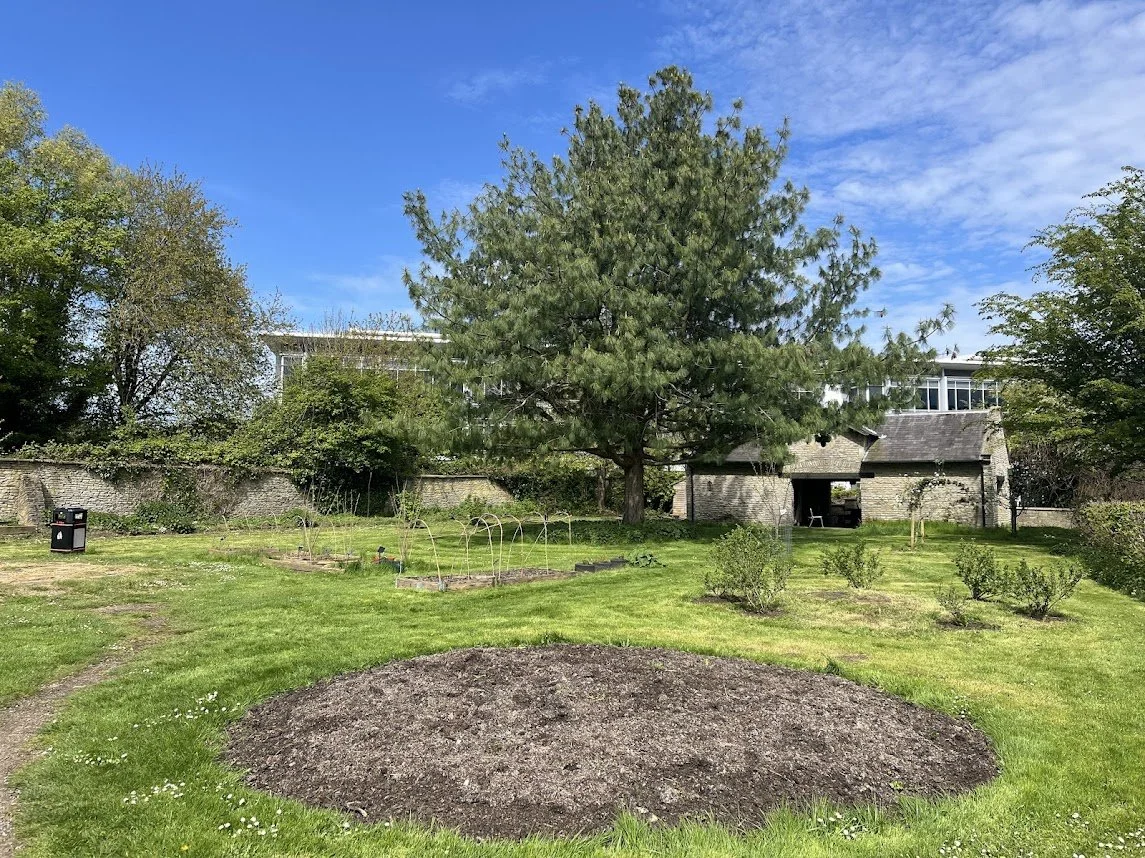
UWE Community Garden, 2024. Photo: Yarden Woolf.
Three practical insights for Urban Planning and Campus Greenspace Design
While grounded in qualitative research, Woolf’s findings also point toward practical opportunities for the future design of campuses and public environments. Her combined background in landscape architecture, urban planning and public health research offers a unique perspective—bridging the gap between lived human experience and the physical design of space. Rather than approaching greenspaces purely from a technical or aesthetic standpoint, Woolf’s work considers how people emotionally move through, remember, notice and connect with environments in everyday life.
The study offers insight into how thoughtfully designed environments may help foster wellbeing, strengthen nature connectedness and encourage deeper care for both place and planet.
Provision and Signposting
Awareness of greenspaces is crucial, says Dr Woolf. “One of the most interesting things, and this is not groundbreaking, but I have to start with it is provision and signposting, at least for students.”
“If we want people to derive benefits from greenspace, they need to know that they exist.”
Woolf explains that the University of Bristol’s greenspaces are often easier for students to discover because they are surrounded by university buildings and integrated into everyday campus movement. At UWE Bristol, however, some spaces remained hidden from students altogether.
“At UWE, some of these greenspaces are hidden, which is nice for the students that like to escape from the campus, but there's no signage, necessarily, so some of them are just not aware that they're there.”
The findings suggest that simple interventions such as signage, pathways and campus maps can significantly increase awareness, accessibility and engagement with greenspaces.
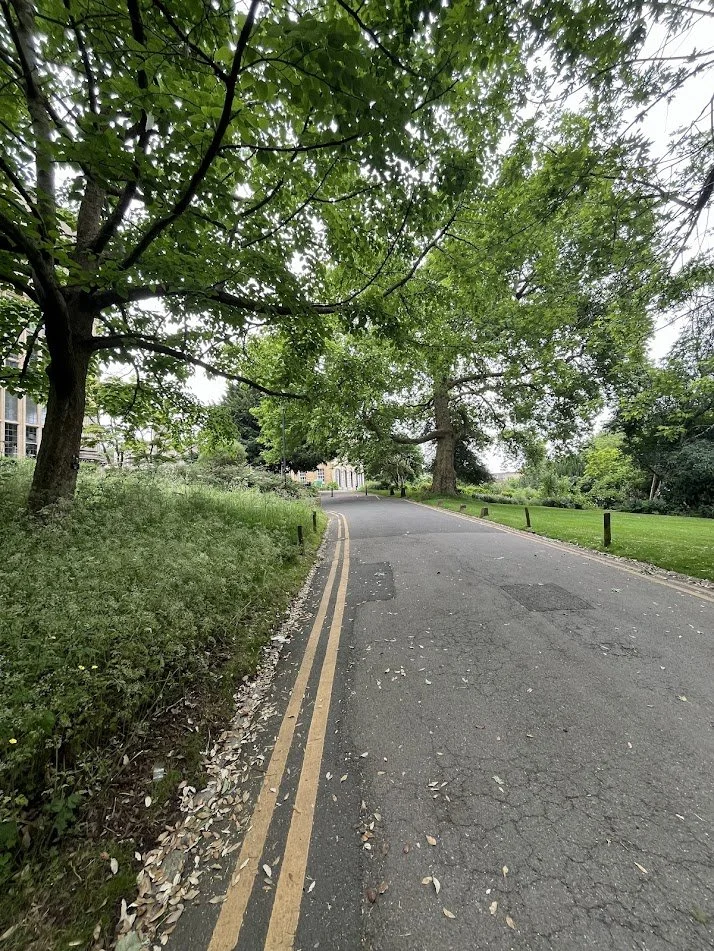
Observation session at University of Bristol. Photo: Yarden Woolf.
Design for “Noticing”
Another key finding centred on what Woolf describes as “noticing” — the sensory and emotional awareness that develops through direct engagement with natural environments. She found that natural elements including water, vegetation, birdsong and insect sounds often triggered familiarity, comfort and emotional connection, helping students feel grounded and connected to place even within busy urban environments.
“One of the main things that came up is how important natural elements are,” she says. “Different sensory cues—for instance, the sound of running water—enabled students to connect with places, even if they were in noisy city centres. This was particularly noticeable for students who grew up near oceans, seas, rivers or other water bodies, for both international and domestic students.”
For many students, it was not necessarily large wilderness experiences that mattered most, but the smaller sensory encounters within everyday spaces. “It's not groundbreaking in what we need,” Woolf reflects. “But we do need these elements to enable ‘noticing’.”
The research closely aligns with principles of biophilic design, where layered sensory experiences—sound, movement, biodiversity, fresh air and light—strengthen human connection to nature. Woolf also found that physical infrastructure played an important role in supporting these moments of pause and reflection.
“If we want to enable people for noticing activities, they need benches, chairs, a place to sit, a place to relax. Some students can relax anywhere. Others need more hidden corners within a green space. Some are fine with loud road noises. Others want a more secluded spot.”
Her observations suggest there is no singular way people engage with nature. Instead, successful greenspaces create a balance between openness, refuge, movement and stillness.
Encouraging Nostalgia and Emotional Connection
The research also revealed how memory and nostalgia shape emotional attachment to place. For many students, greenspaces became emotionally significant not only because of what they offered in the present moment, but because of what they reminded people of—childhood environments, familiar landscapes, cultural connections and experiences of home.
Perhaps most strikingly, nostalgia emerged strongly among international students, particularly those who grew up around very different climates, ecosystems or relationships to nature. For some, a landscape feature as simple as woodland, water or birdsong triggered a sense of familiarity and belonging within an otherwise unfamiliar city.
Woolf’s research suggests that people engage with nature in deeply individual ways, meaning more diverse and layered greenspaces are more likely to support a broader range of emotional, sensory and social needs. In turn, these environments create more opportunities for people to form meaningful and lasting connections with place.
The findings also challenge planners and designers to think beyond aesthetics alone. Spaces that incorporate biodiversity, sensory richness, variation, quiet retreat areas and opportunities for reflection may be more likely to foster emotional attachment and long-term care for the environment.
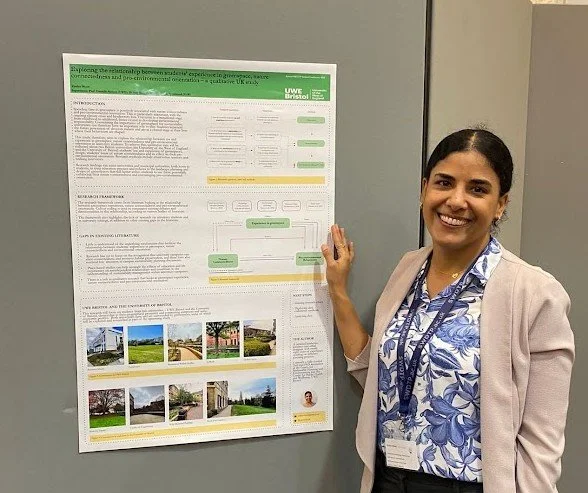
Dr Yarden Woolf.
Beyond the Research: Translating Research into Practice
The paper is a foundation for much of Woolf’s ongoing research into how people emotionally and behaviourally connect with the natural world. “We created a framework that shows how these connections work and how they can actually be applied in practice,” she said.
Alongside this, Woolf has also developed new research around what she coins “guerrilla use”—the unofficial and often unintended ways students interact with green spaces. Published in May 2026, the paper Students’ agency in campus greenspace: How guerrilla use informs the design of university greenspace - ScienceDirect explores how informal behaviours and spontaneous adaptations of space can offer valuable insights for future campus design.
“It’s when students use spaces in ways planners didn’t necessarily design for,” she explains. “Sitting on a retaining wall instead of a bench, moving furniture around, or reconfiguring a space to make it work for them.
These informal interactions reflect the diverse and often unexpected ways people engage with place, further contributing to Woolf’s broader research into greenspace, nature connectedness and pro-environmental behaviour.
Further research is already underway says Dr Woolf, including papers focused on nostalgia, walking interviews, and the role of greenspaces in wellbeing, alongside a forthcoming book chapter. Woolf also hopes the findings will contribute to future planning guidance for campus design and public space development.
“Coming from practice, I really value research being applied,” she says. “We’re not writing just for other academics. We’re writing for planners, city councils, and the people designing these places. We want things to actually happen.”
For Woolf, the growing relationship between academia and practice is where the research becomes most meaningful — translating lived experience, observation and emotional connection into healthier, more responsive cities.
Aligning with The Biophilic Blueprint
Dr Yarden Woolf’s research strongly reflects the mission of The Biophilic Blueprint: exploring how human wellbeing, environmental care and our relationship with the built environment are shaped through meaningful connection to nature. Through the mechanisms of contact, noticing and nostalgia, her work reveals how everyday experiences in greenspaces can foster emotional attachment, environmental awareness and a deeper sense of belonging — particularly at a time marked by climate anxiety, urbanisation and the growing “extinction of experience.”
Rather than simply advocating for more greenspace, Woolf’s research highlights the importance of designing environments that invite people to slow down, notice, reflect and reconnect. In doing so, her findings offer an optimistic and practical framework for how campuses, cities and public spaces can support both human wellbeing and long-term care for the natural world.
Comment below: What shapes your own connection to greenspace?
References and Further Reading:
Braun, V., & Clarke, V. (2013). Successful qualitative research: A practical guide for beginners. SAGE.
Capaldi, C. A., Dopko, R. L., & Zelenski, J. M. (2014). The relationship between nature connectedness and happiness: A meta-analysis. Frontiers in Psychology, 5, 976. https://doi.org/10.3389/fpsyg.2014.00976
Evans, J., & Jones, P. (2011). The walking interview: Methodology, mobility and place. Applied Geography, 31(2), 849–858.
GP4Streets https://www.gp4streets.org
Heijnen, I., Stewart, E., & Espiner, S. (2022). On the move: The theory and practice of the walking interview method in outdoor education research. Annals of Leisure Research, 25(4), 529–547.
Kaplan, R., & Kaplan, S. (1989). The experience of nature: A psychological perspective. Cambridge University Press.
Kinney, P. (2017). Social research update – Walking interviews. https://grandmas-story.eu/media/com_form2content/documents/c3/a203/f38/SRU67.pdf
Lewicka, M. (2011). Place attachment: How far have we come in the last 40 years? Journal of Environmental Psychology, 31(3), 207–230. https://doi.org/10.1016/j.jenvp.2010.10.001
Mayer, F. S., & Frantz, C. M. (2004). The connectedness to nature scale: A measure of individuals’ feeling in community with nature. Journal of Environmental Psychology, 24(4), 503–515. https://doi.org/10.1016/j.jenvp.2004.10.001
Veitch, J., Flowers, E., Ball, K., Deforche, B., & Timperio, A. (2020). Exploring children’s views on important park features: A qualitative study using walk-along interviews. International Journal of Environmental Research and Public Health, 17(13), 4625.
Woolf, Y. (2025). How UWE Bristol students use and experience campus greenspaces. Centre for Sustainable Planning and Environments Blog. https://blogs.uwe.ac.uk/sustainable-planning-and-environments/how-uwe-bristol-students-use-and-experience-campus-greenspaces/
Woolf, Y. (2025). Walking interviews as a research method. Centre for Sustainable Planning and Environments Blog. https://blogs.uwe.ac.uk/sustainable-planning-and-environments/walking-interviews-as-a-research-method/
Woolf, Y., Sinnett, D., Bray, I., & Spotswood, F. (2025). Harnessing our knowledge of the relationship between experience in greenspace, nature connectedness and pro-environmental behaviour: A conceptual framework for healthy cities. [Journal/Publisher pending]
Woolf, Y., et al. (accepted 2026). Students’ agency in campus greenspace: How guerrilla use informs the design of university greenspace. Urban Forestry & Urban Greening.