Published by The Biophilic Blueprint / Written by Anjelica Smilovitis
This story emerges from the City of Melbourne (Narrm), on the lands of the Wurundjeri Woi-wurrung and Bunurong / Boon Wurrung peoples of the Kulin Nation. While grounded in this place, the ideas explored here resonate far beyond it.
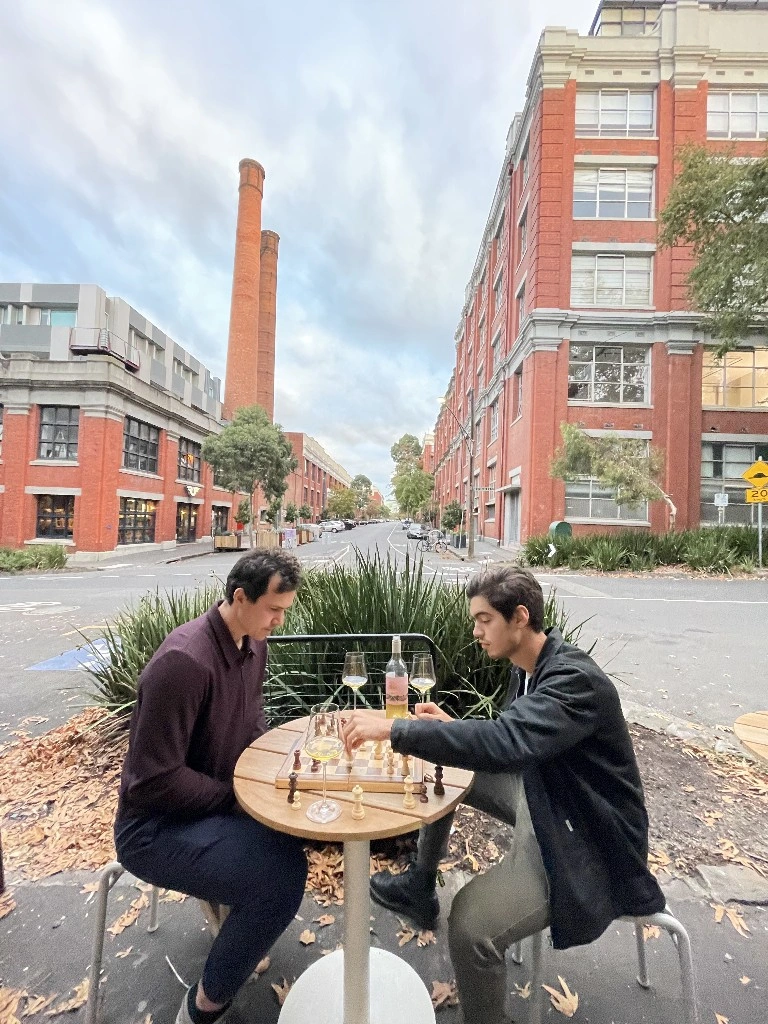
Zachary Pavlou calls for more beauty in the built environment.
Across the world, voices are rising to ensure beauty is not overlooked in the built environment. Architects, urban planners, design thinkers—and increasingly the public—are calling for a revival of what makes spaces truly captivating: from natural elements and cultural references to the forms, proportions and styles of architecture.
As cities expand faster than ever and developments rush from plan to construction, urban designers and advocates alike are confronting a pressing question: what happens when buildings and planning are devoid of the kind of beauty that connects with the people who inhabit them? Could this also be contributing to the increasingly “combative environment” that often surrounds development—between communities and planners, developers and residents, and the ongoing tension between growth and preservation?
At its core, it may be about something far more human: beauty—or the lack of it.
For Melbourne-based urban planner Zachary Pavlou, the call for greater beauty in the built environment reaches far beyond aesthetics—it speaks to something fundamental about how humans experience the places they inhabit. He argues that much of the conflict surrounding development stems from a simple problem: what’s being proposed is often “ugly”—and disconnected from the natural environment that people instinctively respond to. Somewhere along the way, beauty slipped out of the conversation about how we design our cities—and that absence may be shaping how people feel about the places around them.
While architecture can certainly be a creative pursuit, it also shapes the spaces where people live, work, learn and gather. For this reason, the environments that define everyday life arguably deserve greater public participation in how they are imagined and realised, argues Zachary.
“Achitecture is commonly viewed as an artistic endeavour, as a way for people to pursue their artistic flair and express themselves, in a sense, in the same way that a painter gets to paint a mural or a musician gets to write a song,” he said.
“But what makes architecture fundamentally different, and why this beauty question is so important, is that no one gets to choose whether they interact with architecture or not.”
“I can choose not to listen to classical music if I don't like it. I can choose not to go to the Monet exhibition if I don't like Monet, but if you design my school or my office or my church to be ugly, I must engage with that every day, all the time, and I didn't get a say over that.”
The Biophilic Blueprint spoke with Zachary about the role of beauty in the built environment—and why it is far more than aesthetic. Beauty, he argues, is fundamental to wellbeing, connection to place and the social fabric of communities. Our conversation explored the idea that city-making, public buildings and neighbourhood design carry a responsibility to the people who live among them.
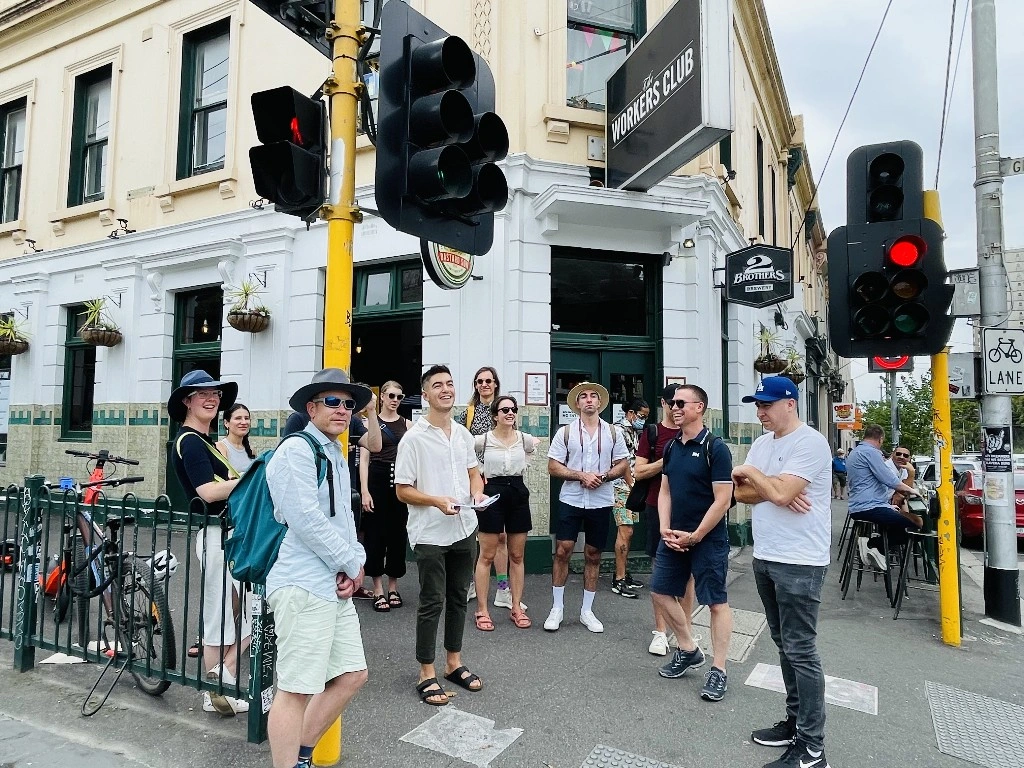
Zachary Pavlou leads a Street Level Australia walking tour in Melbourne.
Zachary is working to shift how people think about the built environment as Chapter Lead for Melbourne at Street Level Australia (SLA) a registered charity and architectural advocacy organisation dedicated to bringing beauty back into public conversations about cities and development.
Together with colleagues at Street Level Australia, he is challenging the status quo, advocating for a renewed focus on beauty in contemporary architecture, and showing how its absence in modern urban environments may contribute to deeper social disconnection and wellbeing challenges.
“Our thesis is that so much conflict over development exists because what's being proposed is ugly. And you will have a lot more unity, agreement and collaboration if the developments being proposed are attractive.”
In other words, the heated debates surrounding development might not always be about opposition to change—but opposition to how that change looks and feels.
“We (SLA) advocate for beauty as the missing piece in our conversations about urbanism, urban development, nimbyism (NIMBY: Not In My Backyard) and housing,” Zachary explained. “We're seeing this all over the world. We're only one very small part of a global movement asking for more beauty in the built environment.”
In line with principles of biophilic design, beauty in cities is not just aesthetic—it is the thoughtful integration of natural patterns, light, materials and greenery into the built environment. Streets, plazas and buildings designed with human-scale proportions and references to nature can enhance wellbeing, encourage social connection, and create spaces people feel drawn to inhabit and care for.
Teaching People to See Beauty Again
Street Level Australia works with planners, architects and communities to reintroduce conversations about beauty in everyday urban life. The organisation runs walking tours, community meetups and advocacy initiatives that encourage people to look more closely at their surroundings.
“In my time at Street Level, we've done walking tours and written advocacy letters and host local meetups, to get people to reconnect with their built environment and ask for more beauty in their streets and towns and cities,” Zachary said.
A common question arises early in these conversations: what exactly is beauty?
The standard answer, Zachary says, is usually the familiar phrase that “beauty is in the eye of the beholder”. However, he challenges the idea that aesthetic experience is entirely subjective.
“It's seen as a catch-all statement that is true because people have heard it before. But people can feel beauty more than they can define it,” he says.
“The general public has a very unified view of what a beautiful building is… and it's not something that I can write down in a clear statement. What I can do with people who want to talk about architecture and beautiful architecture is show them pictures, ask them to feel it—and the agreement is stark.”
Zachary explains that walking tours often reveal how little attention people pay to their built surroundings until someone draws their focus to the details.
“A lot of the times we take for granted some of the architectural details or stylings… they become part of the background,” he said. “But when you point that out to people and start to see those things specifically, they begin to see the world differently.”
“When you teach people and take them on this journey, showing them how beauty can be achieved in the built environment, it opens their minds to the idea that we can do it again.”
The Impact of Design Devoid of Beauty
Zachary further suggests that environments lacking beauty—which he describes as needing to be “living” and regenerative—can subtly shape human behaviour, discouraging connection, wellbeing and the expression of cultural identity.
“Maybe that drives us more into living more solitary, disconnected lives, and maybe the ugliness of the built world drives us more and more into internal, introspective habits, whether that's doom scrolling, consuming content, so on, rather than like enjoying public life,” he said.
“Maybe ugly architecture and ugly choices of streets divide us and keep us separated and force us into our cars and harm our relationships. ”
Across many modern cities, buildings and neighbourhoods increasingly prioritise efficiency, cost and speed of construction, often at the expense of creating beautiful, vibrant places to live. Streets and public spaces that lack beauty, character and connection to nature can subtly shape how people feel, interact and experience daily life. Over time, these environments may contribute to a deeper sense of disconnection—from place, from community and even from ourselves.
A piece in the Journal of the Congress for the New Urbanism (CNU) explores this idea, noting that when new developments ignore the character of existing neighbourhoods, communities often resist change—not because they oppose growth, but because they fear losing the qualities that make a place meaningful. The CNU argues that beauty in cities is not a luxury but a necessity, and a vital component of their long-term sustainability.
The influence of environments on human behaviour is increasingly supported by research in neuroscience and neuroaesthetics. Scholars studying how surroundings affect brain responses suggest that aesthetic experiences can shape emotional regulation, wellbeing and social connection. Neuroarts researcher and author Susan Magsamen, co-author of Your Brain on Art, explains that art and beauty can trigger profound neurological responses: “There is a neurochemical exchange that can lead to what Aristotle called catharsis, or a release of emotion that leaves you more connected to yourself and others afterwards,” she writes.
In this sense, beauty is not simply decorative.
Zachary describes beauty in the built environment as something that resonates with what people know and value—the place they live, their culture, how and where they grew up, and the styles that feel familiar to them.
Biophilic design, which we are building on in The Biophilic Blueprint, shows that incorporating plants, sunlight, water features and organic shapes into urban spaces creates environments that are visually compelling and psychologically restorative. These spaces support both individual and community wellbeing, connecting people to nature even within dense, urban landscapes (Kellert & Calabrese, 2015).”
This is where the role of architecture becomes crucial—it's not just about aesthetics or style, but about designing the very environments that influence how we live, connect and thrive. An architect exemplifying this approach is Koichi Takada, whose work draws directly on nature-centred design principles. Takada’s buildings do more than function—they evoke a sense of beauty and harmony.
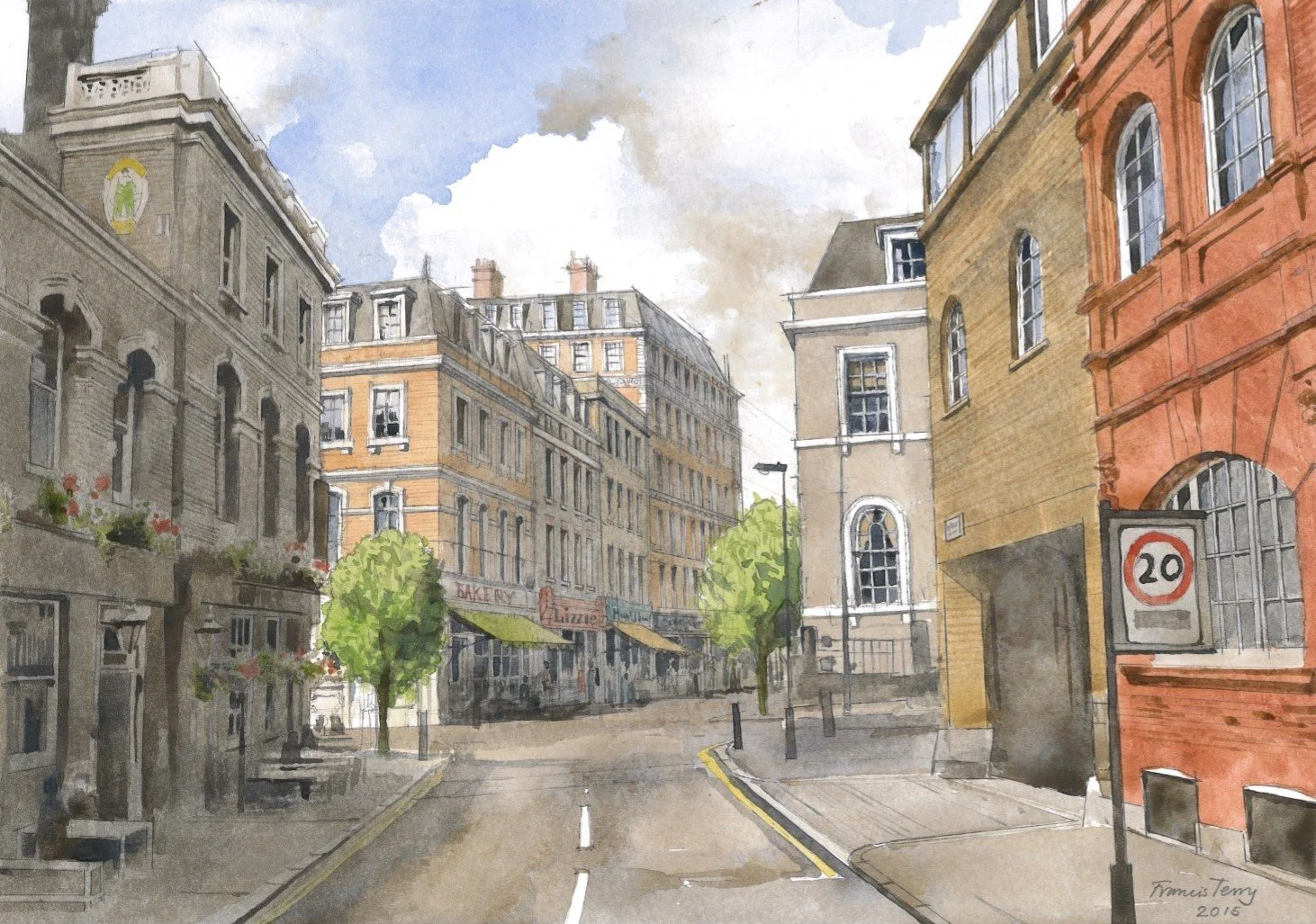
UK-based organisation Create Streets examined the relationship between architectural awards and public approval. Photo: Create Streets.
The Disconnect Between Architects and the Public
One of Pavlou’s points is that professional architecture culture can be disconnected from public preferences.
“What’s really interesting is the only group of people who disagree with the public consensus of what a beautiful building is… are architects,” he said. “They're the only ones who truly believe the ‘beauty is in the eye of the beholder’ statement.”
He points to research by the UK-based organisation Create Streets, which examined the relationship between architectural awards and public approval. Create Streets is a design practice, town-builder and think tank that leads research, master-planning, design coding and community co-design to help develop and steward beautiful, popular gentle density places that residents and neighbours can love for generations.
Between 1 April and 22 May 2015, Create Streets invited approximately 4,000 followers via Twitter and email to take part in a “Pop-Up Poll.” A total of 283 respondents participated. The poll asked, “Which of these would you most want to see built on an urban street very near to where you or a close friend live?” Four options were presented in randomised order. Respondents were also asked about their location (urban, suburban, or rural) and profession: 37% identified as architects, planners, or working in creative arts; 66% were urban, 27% suburban and 6% rural.
Their findings revealed that the buildings least preferred by the public were often the ones receiving architectural or planning awards.
“They've reviewed how much the public likes a building against the number of architectural awards that those buildings win. And effectively, the more architectural awards a building has, the less it's loved by the public,” Pavlou explained.
For him, the research illustrates a striking disconnect between the creators of buildings and the people who live with them.
“The other side of this—the architects who design what I would call abstract, ugly modern buildings—they typically have their architectural offices in beautiful 19th-century heritage-listed industrial buildings,” he said.
“So it’s this ultimate hypocrisy of not practicing what you preach.”
If cities are meant to serve both people and planet—reflecting principles of biophilic design—the places we inhabit must be shaped through a more collective, human-centred lens. As Ludo Campbell-Reid shared with The Biophilic Blueprint, cities shouldn’t be treated like machines; they should be designed around the needs of people and the natural environment, beauty included.
Just as roads, parks and utilities shape how cities function, the aesthetic quality of buildings and streetscapes profoundly influences how communities experience and sustain their surroundings.
The lesson is not new. The modern preservation movement gained momentum in the 1960s after large parts of historic neighbourhoods were demolished during urban renewal. As the National Trust for Historic Preservation observed in 1966, “The real value of any building to the community lies in its being a delight to the eyes and in its susceptibility to human use.”
For Zachary, this highlights that beauty is fundamental to how we experience and inhabit cities.
Relearning the Language of Place
Despite growing public interest in beauty, Zachary believes several barriers remain. One is education. From his conversations with architects, he says many architecture schools focus primarily on design history beginning with the Industrial Revolution.
“To me that is totally crazy,” he said. “It's like watching the credits of a movie and saying you've seen it.”
Another challenge is perception. Many people assume traditional or human-centred architecture is impractical in modern cities.
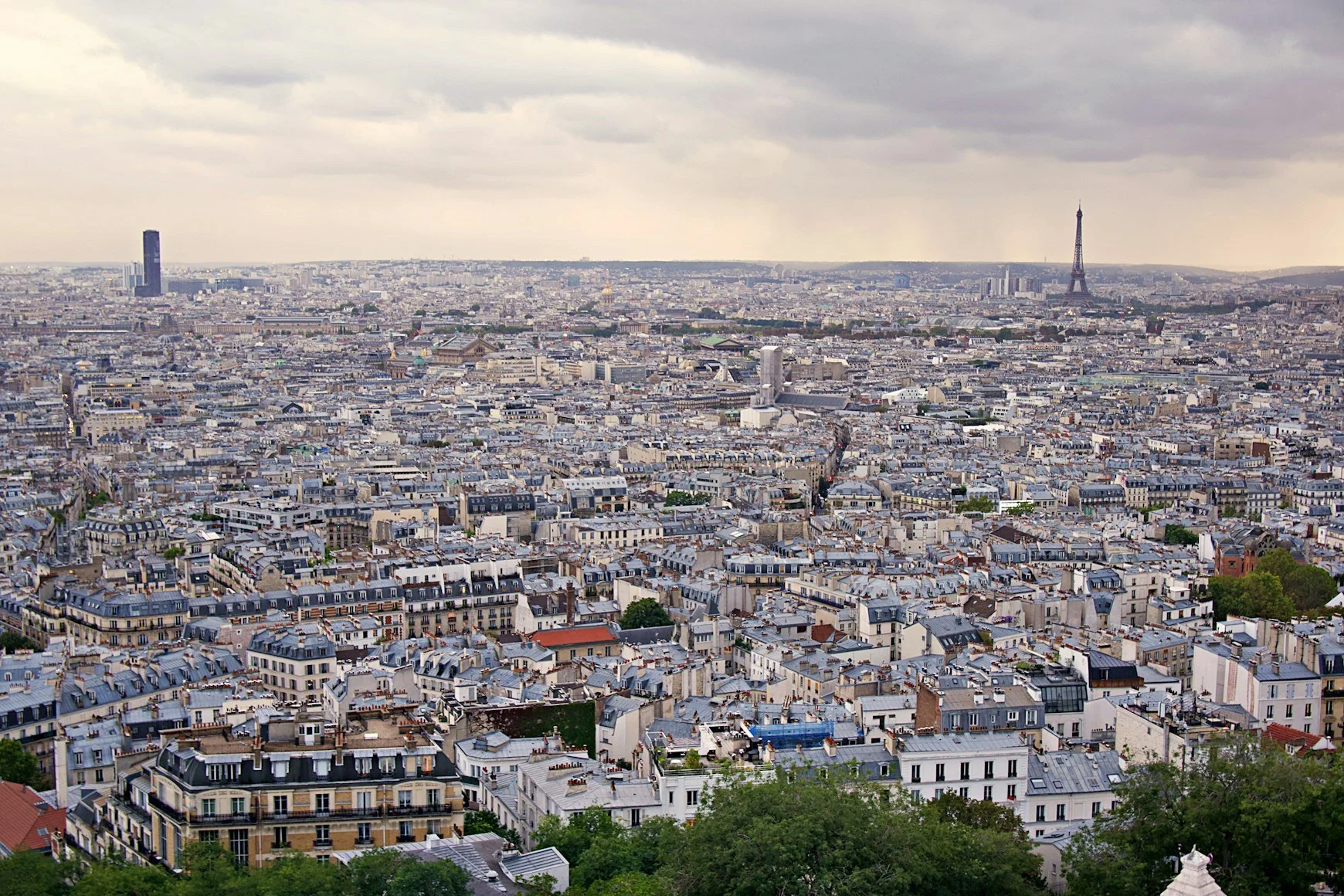
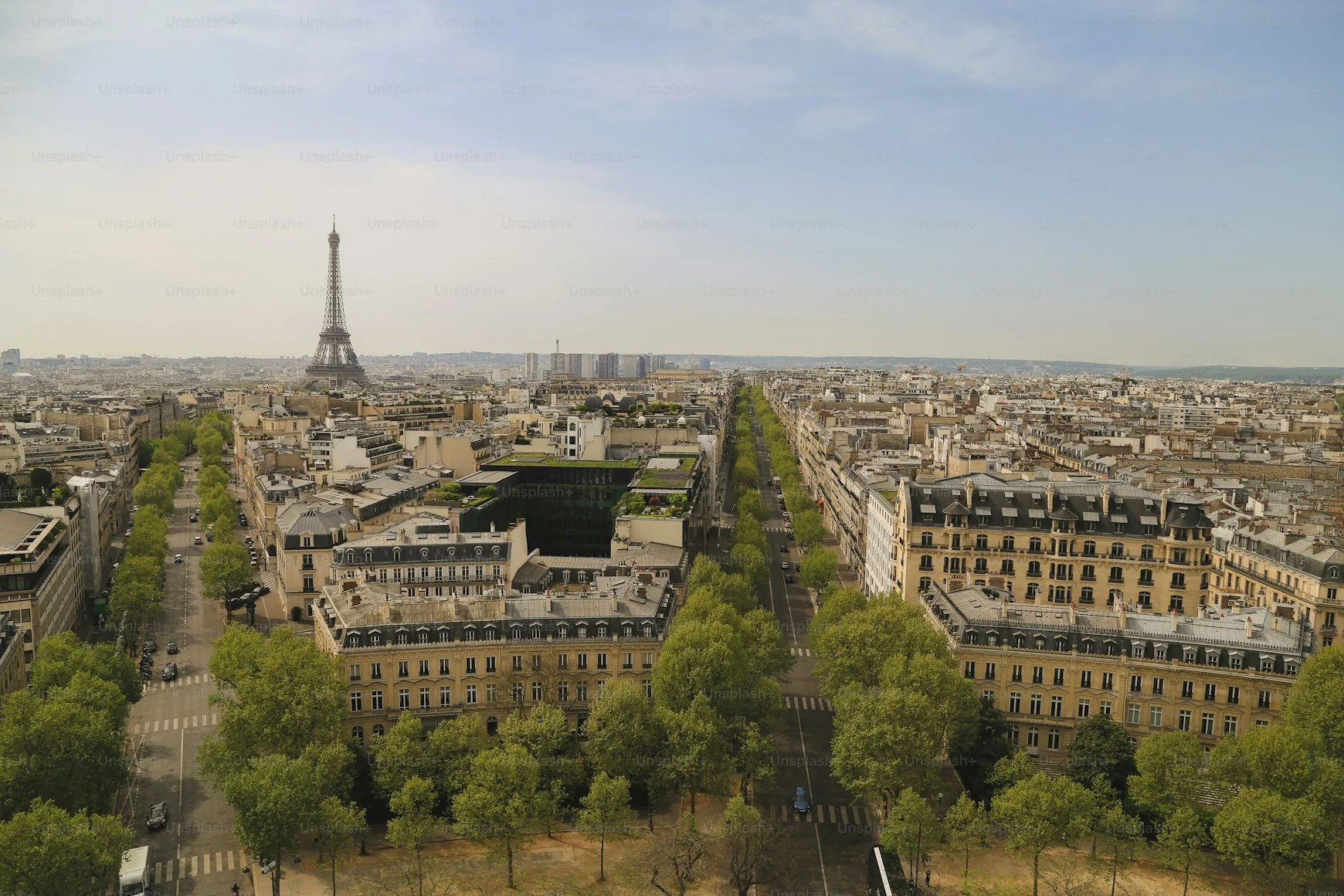
“I think people have this view that the modern city has to be 30 storey glass boxes,” Pavlou said. “Even though places like Paris, which famously don't have any tall buildings—except for one hideous one—they're far more dense than the average modern city as far as their population goes.”
Cost is another common concern. While traditional construction methods can be more expensive upfront, Zachary argues they often prove more economical over time. “If you build once right, then you don't have to rebuild every 30 or 40 years. I think there's a real lack of ambition, lack of long-term thinking.”
Many historic buildings continue to be reused today precisely because they were built to last. “The cheapest way to build is to not have to build at all.”
However, Pavlou also highlights an important distinction in the conservation debate: not every building needs to be preserved.
Beyond Preservation: A Regenerative Approach to Beauty
While heritage conservation plays an important role in protecting historic buildings, Zachary believes beauty cannot survive through preservation alone.
“That’s a big difference between what I advocate for in my work and my life, and what maybe heritage groups advocate for,” he said.
“What makes Street Level and organisations like ours different, is we very much view beauty as a living thing rather than something that’s stuck in the past.”
Heritage groups perform an important function, he says, particularly given how much historic architecture has already been lost. But relying only on conservation creates a fragile system.
“If all you can do is conserve, and you lose 10 percent of your battles every year, eventually there's nothing left.”
Instead, Street Level promotes a “regenerative” approach to architecture he says—one that focuses on creating new beauty, not just protecting the old.
“We're bound to lose some buildings over time. It's guaranteed,” Pavlou said. “The world is going to change.”
“But if we can re-unlock the ability to make more beauty, and potentially buildings that are even more beautiful than things we've seen in the past, then losing an old building isn't actually a problem.”
In some cases, he believes this scarcity of beauty has led to overly rigid heritage protections.
“You see these crazy heritage listings on buildings that are totally dysfunctional,” he said. “They could be in a complete state of disrepair. They could have been built wrong to begin with, but because they were built 200 years ago, we hang on to them.”
“We think that's a really unambitious way of viewing the world.”
The Way Forward: Beauty and Culture in Cities
For Zachary, moving beyond preservation and critique means actively reimagining and creating new spaces that celebrate both beauty and cultural diversity. Street Level Australia has created an archive of inspiration, drawing on traditional architecture from around the world as a reference for beautiful buildings, spaces and neighbourhoods. This approach is especially relevant for Australian cities—a multicultural nation that deserves built environments reflecting its diversity.
“In a lot of respects, I don't believe that British classical architecture is right for Australia, and I don't think it necessarily reflects modern, multicultural Australia,” Zachary said about the need to evolve. “I would love to see multiculturalism reflected in our built form.”
For Zachary, this means embracing architectural influences from many different cultural traditions.
“Seeing beautiful Thai architecture where Thai architecture belongs, and Mediterranean architecture where Mediterranean architecture belongs, and so on,” he explained.
“I'd love to draw from everyone's different cultural backgrounds, rather than have them obliterated, which seems to be what modern Australian architecture has become for the most part.”
One architect Zachary highlights is Alvyn Williams, founder of SoftLoud Architects.
“He is by far doing the most honest Australian architecture,” Zachary said. “I see a lot of natural, local materials and a real tribute to local biodiversity. One of his projects, Yackandandah House, is exactly what people are seeking in architecture: it has strong classical foundations, but uses local materials and styling, set in natural landscapes.”
“Williams is a really lovely guy—values-driven and passionate about his work.”
For Zachary, the future of cities lies in designing with both beauty and culture in mind—creating spaces that people feel connected to, proud of and inspired by. By looking beyond preservation and critique, architects, planners and communities can collaborate to craft environments that are not only visually compelling but also socially and ecologically enriching.
How ‘beauty’ aligns with The Biophilic Blueprint
Zachary Pavlou’s vision for cities aligns closely with The Biophilic Blueprint as both recognise that human wellbeing, social connection and a sense of place are deeply tied to the environments we inhabit. By championing beauty, his approach reflects biophilic ideas—bringing natural patterns, textures, materials and sensory richness into everyday urban life. Together, these perspectives imagine cities not just as functional spaces, but as living, restorative places that nurture people, communities and the natural world, showing how thoughtful design can inspire, connect and sustain.
Comment below: Do you think modern development has forgotten about beauty? What do you think makes a building or place feel beautiful to you?
References and further reading:
Congress for the New Urbanism. (2024, May 30). Beauty: Essential to sustainability. CNU Public Square. https://www.cnu.org/publicsquare/2024/05/30/beauty-essential-sustainability
Create Streets. (2017, September). Pop-up poll 1: Public perceptions of architecture. https://www.createstreets.com/wp-content/uploads/2017/09/Create-Streets-Pop-up-poll-1.pdf
Kellert, S. R., & Calabrese, E. F. (2015). The practice of biophilic design. Terrapin Bright Green.
Magsamen, S., & Smith, K. (2014). Your brain on art: How the arts transform us. BenBella Books.
Naturalizing architecture: Koichi Takada’s Japanese lens on nature-centred design. https://www.thebiophilicblueprint.com/living-archive/naturalizing-architecture-koichi-takadas-japanese-lens-on-nature-centred-design
Street Level Australia. (n.d.). Inspiration archive. https://www.streetlevelaustralia.org/inspiration-1
The “Doctor” of city‑making: Ludo Campbell‑Reid on regenerating urban design. https://www.thebiophilicblueprint.com/living‑archive/the‑doctor‑of‑city‑making‑ludo‑campbell‑reid‑on‑regenerating‑urban‑design
Tranquil spaces: Designing for the brain with neuroaesthetics and biophilic design. https://www.thebiophilicblueprint.com/living-archive/tranquil-spaces-designing-for-the-brain-with-neuroaesthetics-and-biophilic-design