Is Sustainability Dead? Matthew VanSweden on “Living Buildings” and Regenerative Design
Published by The Biophilic Blueprint I Written by Anjelica Smilovitis
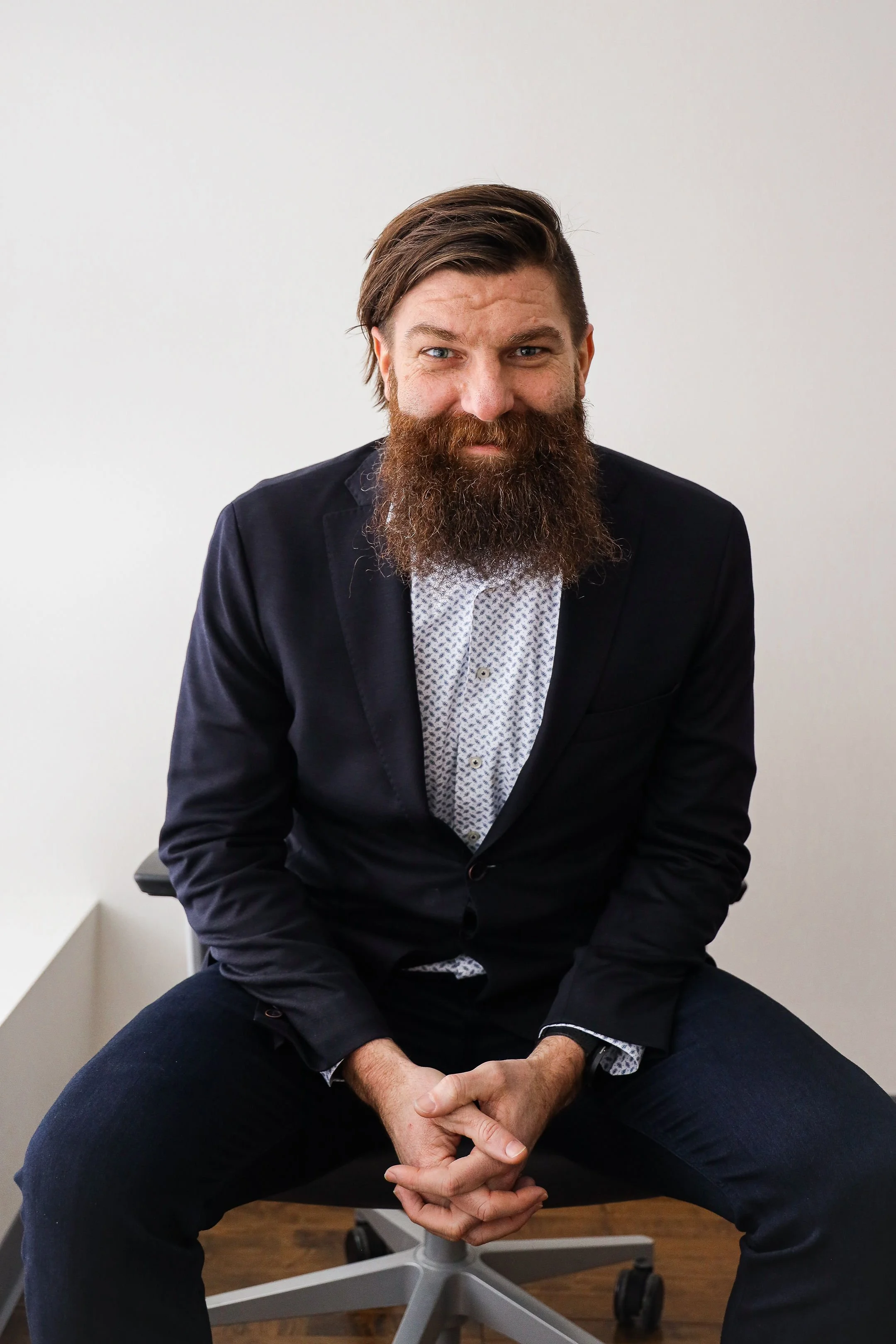
Matthew VanSweden, Sustainability Lead at Progressive Companies in Grand Rapids, Michigan.
From sustainability checklists to living buildings, biophilic design and regenerative thinking are reshaping the conversation on what design can and should do.
For decades, sustainability in architecture focused on compliance to “do less harm”—energy points, certifications and technical metrics. Buildings may meet these checklists, yet they often fail to nurture human wellbeing or contribute meaningfully to ecosystems. Sustainability in this sense becomes a series of boxes to tick rather than a framework for shaping places that thrive.
Registered Architect Dr Fiona Gray articulated the problem in a LinkedIn post: “Sustainability is dead. For too long we’ve treated sustainability as the gold standard in architecture and urbanism but it’s getting us nowhere fast. The uncomfortable truth is that sustainability isn’t nearly enough. At best, it slows down the damage. At worst, it gives us a false sense of achievement while we continue extracting, depleting and disconnecting. The way we build is a reflection of a deeper problem—a mindset that sees nature as a resource to plunder rather than a living system that we are part of.”
This “deadness” of traditional sustainability is exactly what regenerative thinking seeks to overcome. Rather than asking how to reduce harm, regenerative design asks how design, architecture and construction can actively contribute to people and planet.
As the Living Future Institute asks: What if every single act of design and construction made the world a better place?
The beauty of this approach is that it is not a one-size-fits-all mentality. The elements that make a building “living” change depending on place, purpose and intent. It’s personalised and meaningful, and asks: What is this building for, and how does it contribute to humans and the planet rather than take from it?
Biophilic design plays a part in this philosophy. Regenerative building programs, such as those created and championed by Living Future, aim to restore balance between the natural environment and the built environment. By designing structures in harmony with nature, these programs guide architects and developers toward creating “living buildings” that not only minimise harm but actively nurture human wellbeing and the environment.

Matthew VanSweden—“just a guy figuring out his place in the world.”
It shows how biophilic design is not just about adding plants to a space—it’s about shaping how people experience a building, fostering belonging, culture and meaning. The connection to natural environments and sensory richness become core design drivers, helping to create spaces that resonate with both people and place.
This is the philosophy championed by Matthew VanSweden, Director of Regenerative Design at Progressive Companies in Grand Rapids, Michigan in the United States of America.
Matthew is a national expert in climate justice and regenerative design. He empowers clients and project teams to relentlessly pursue good, oftentimes dramatically exceeding their sustainability goals.
The Biophilic Blueprint sat down with Matthew to discuss the shift from “doing less bad” to creating buildings that “do good”, and how regenerative thinking can transform spaces and the people who use them.
With more than two decades of experience across architecture, engineering and construction, Matthew has witnessed the evolution of sustainability—and where it falls short. He now advocates for a regenerative approach, made up of many components, with biophilic design at the centre of much of his work.
This shift mirrors the cycles of life.
Matthew says his understanding of regeneration started early growing up on a farm and witnessing firsthand the interconnectedness of life. “One of the things I'm fond of saying is life is utterly dependent on death. There's a cycle. We can't live our lives unless something else dies. There's beauty .. there's grace .. there's elegance in that … there's reciprocity in that.”
Together, we take a journey through the early stages of sustainability and its evolution over his career, highlighting how language and mindset have shaped the way humans engage with environmental challenges. Understanding these shifts is critical, he says, because language and motivation can either be drivers or distractors of meaningful progress.
“Climate change is abstract,” Matthew explains. “Most folks, they just don't care about starving polar bears at the end of the day. They get sad … and then they have to feed the family.”
It’s here that sustainability can miss the mark—focused on improving systems at a distance, while cities and communities continue to grow without a deeper connection to the environments they occupy. When sustainability is reduced to a checklist, it can reinforce a disjointed relationship between the built and natural worlds.

Regenerative thinking, by contrast, offers a way forward. It reconnects people to place, to nature, to culture and to meaning. And while it may not be a distant polar bear that drives action, buildings that foster this connection can cultivate care for what is immediate and local—making environmental responsibility something people can feel, experience and ultimately protect.
For developers and designers, Matthew demonstrates how aligning their values with biophilia can bring life to their work and surpass traditional sustainability goals, while also showing how the language around climate change and environmental responsibility can shape—or limit—the way people engage with these challenges.
The Evolution of Sustainability Thinking
As a young man, Matthew’s journey into sustainability began with a stark realisation about the role buildings play in climate change. “My origin story in sustainability was this awareness of the often quoted ‘40 percent of global greenhouse gas emissions come from buildings.’”
He began to delve into the idea that architecture and the built environment are central to the conversation on climate change—and learned of the impacts extending far downstream in the supply chain as well.
It wasn’t just the statistics that shaped his perspective, but also his sense of fairness and justice. “I've always held a heart for justice and fairness—what is okay, what is acceptable—and this started influence my early thinking,” he says. “I was always pretty critical of systems that caused harm, and starting to learn about capitalism as a force for a lot of positive social progress, but also the underbelly of capitalism isn't really pretty. There's a lot of exploitation … a lot of harm caused within the supply chain.”
Without a formal academic pathway into sustainability, Matthew immersed himself in the literature shaping environmental thought. “I was reading folks like David Orr, Bill McKibben, William McDonough, and Rachel Carson—these early thinkers who helped shape the environmental movement in the ’70s, around the birth of the Environmental Protection Agency (EPA). I was trying to absorb all this literature without a formal degree—just a guy figuring out his place in the world.”
Yet during those early years, the dominant narrative carried a particular tone. “The dominant message was we're having a tremendous impact—and you should do better! The root of it was guilt and shame. Change your behaviors, because how dare we spoil the planet? A lot of the early messages was in that vein.”
His critique highlights a persistent gap in translating environmental messages to everyday people—and how guilt and shame are not the antidotes to change.
Reflecting further, he adds, “A lot of the early work was trying to guilt people into making better personal choices and that's been the last 20 years.”

John M. Lee, “‘Silent Spring’ is Now Noisy Summer,” New York Times, 22 July 1962, 86. Credit: Environmental & Society Portal.
When Sustainability Became a Checklist
Over time, sustainability language became embedded in professional practice. Certification systems, energy metrics, and environmental frameworks were introduced to guide projects and measure outcomes. Yet often, the deeper purpose behind these systems—the question of what a building could truly contribute to its environment and occupants—was lost.
“Let's stop using this word sustainability,” Matthew says. “It's confusing. Nobody really knows what it is. It means everything, so it means nothing.”
“When certifications become the goal,” he explains, “the tendency is just to jump into the easiest path… the path of least resistance to the certification. We've all seen these buildings. We have all been in projects where we know we need to track the right things. But you know how it goes—you get to the third stage of the project and it’s like… oh, we're shy in points. We need to do all this stuff to get the scorecard aligned.”
The result is a process focused more on accumulating points than creating meaningful outcomes.
“We can sometimes add complexity to a project without adding any actual value. So it just becomes more difficult and then everybody's like, what are we even doing here?”
Familiarity with these systems can also breed complacency, he warns. “The metaphor I bring to mind is with regard to how most vehicle accidents happen within the mile of your home. It's because it’s (the direction) is so familiar we stop paying attention. A lot of the language around sustainability has become so familiar we just keep doing the thing, because that's what we do.”
Living Building Challenge, Living Future.
A Shift Toward Regenerative Design
Matthew’s perspective began to shift as he encountered new frameworks and approaches, including the work of the International Living Future Institute and the principles of regenerative design. The move toward a regenerative mindset, he explains, began with exposure to frameworks like the Living Building Challenge (LBC). Matthew saw it as a highly elegant approach.
“It’s a construct. A frame. Don't regulate all the things you need to do; regulate the things we want to accomplish. It’s a departure from the prescriptive approach—it’s an invitation to think differently, so long as we’re getting where we need to go…”
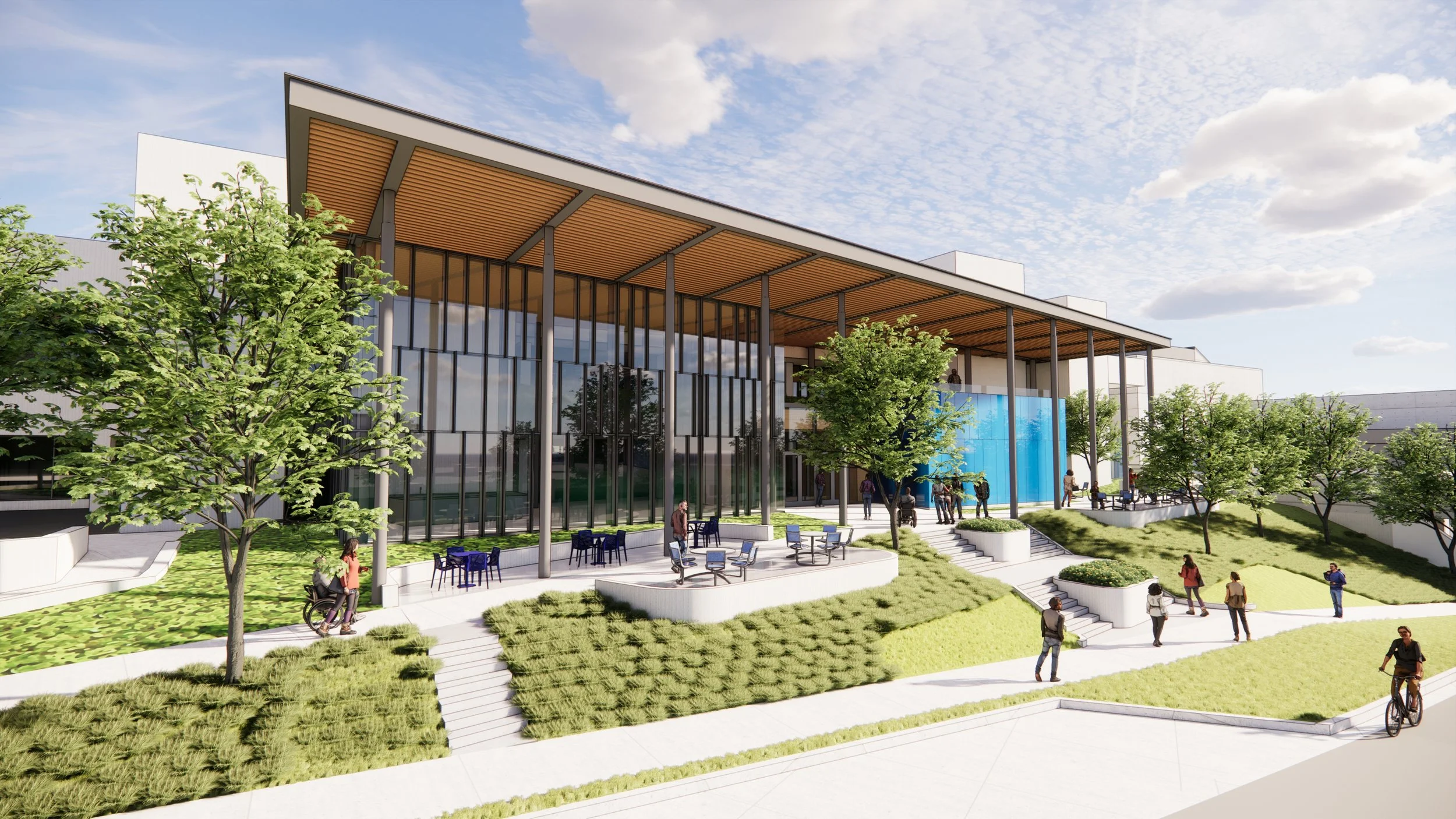
Grand Rapids Community College (GRCC).
In a video, Matthew eloquently explains the Living Building Challenge and its “Imperatives,” which guide projects toward regenerative outcomes. The central philosophy of the LBC is holistic: it asks designers to create projects that give back to their context—producing more energy than they consume, treating water on-site, enhancing ecosystems, and celebrating beauty and equity alongside performance.
The Living Building Challenge consists of seven performance categories, or “Petals”: Place, Water, Energy, Health + Happiness, Materials, Equity, and Beauty. Each Petal is subdivided into Imperatives, with 20 across all seven Petals: 10 Core Imperatives that address fundamental requirements and 10 additional Imperatives that push performance toward positive impact.
Biophilia is not an afterthought—it is one of the Petals with a core intention: designers must deliberately incorporate natural elements and patterns that foster human–nature connections, strengthening wellbeing and sensory engagement. These requirements recognise that buildings aren’t just technical systems to be optimised—they are lived spaces that should nurture people and reflect their relationship with place and nature.
The framework’s emphasis on beauty and biophilia highlights that regenerative spaces must also uplift the human spirit and reconnect occupants with nature in meaningful, culturally resonant ways. In advocating for biophilic and regenerative approaches, Matthew is pointing toward this deeper ambition: buildings that are not just responsible, but restorative—where design becomes a force for ecological health, cultural vitality and human wellbeing.

A Regenerative Project Highlight with Progressive Companies
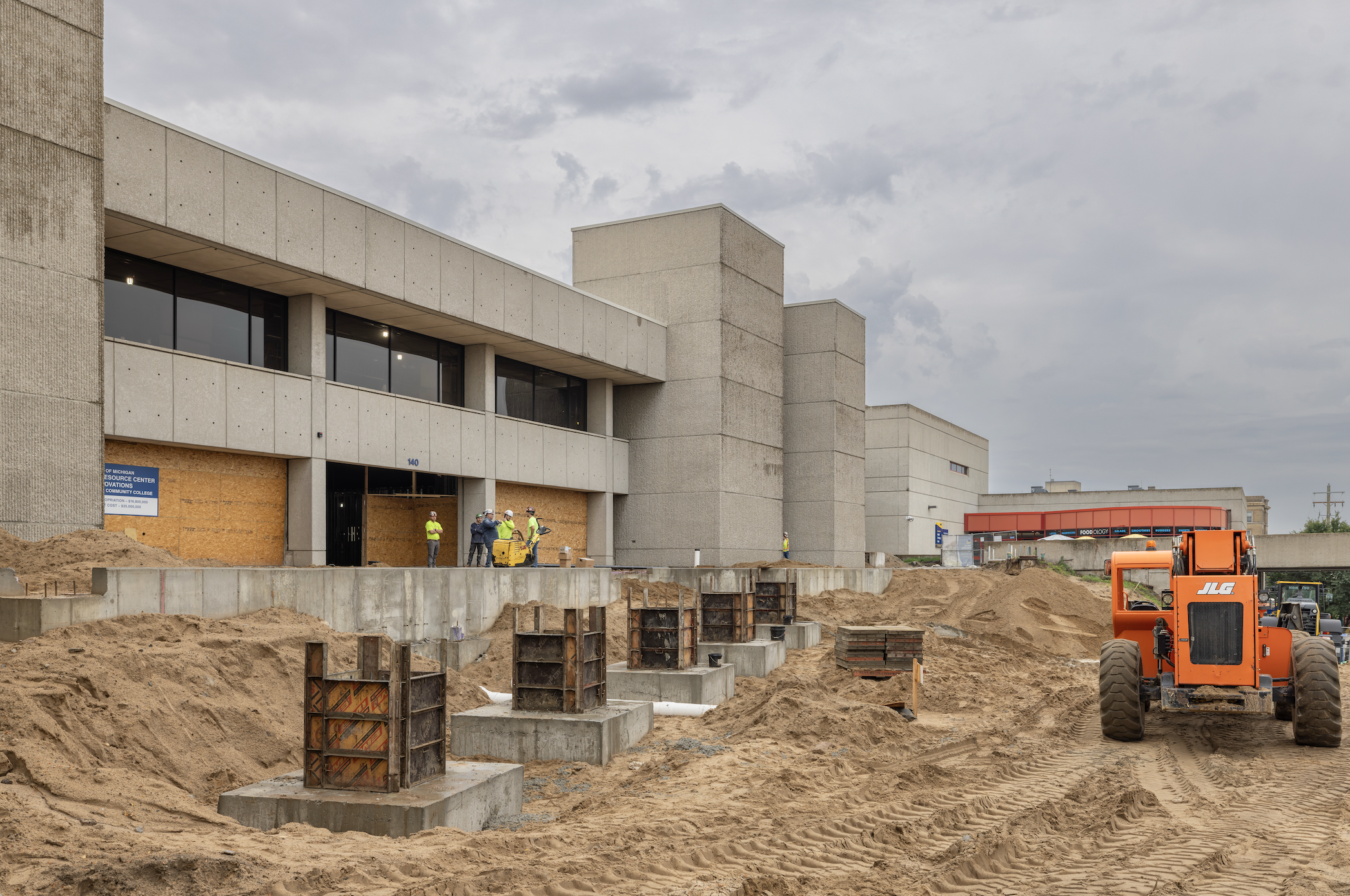
One of the earliest moments Matthew experienced regenerative design in practice was on a project at Grand Rapids Community College (GRCC), where a Brutalist campus building became the canvas for a deeper exploration of belonging and life. Students, he observed, found it “really hard to navigate campus,” with a sense of placelessness because everything looked the same.
“It was cold. It doesn’t feel good in my body to be in a space like a concrete bunker,” Matthew explains. The conversation quickly shifted toward what the building could do for the people who used it. “We needed to think about belonging and invest in this infrastructure of care for these students.”
Matthew also saw the existing Brutalist structure not as something to remove, but as something with untapped potential. “There’s a designer I work with who loves the Brutalist style,” he says, describing a philosophy where the architecture serves as a foundation for future generations to bring to life. Rather than erase it, the team worked with it. “We couldn’t tear down and restart… we had to be really tactical and thoughtful… but we also knew we needed to add life to it.”
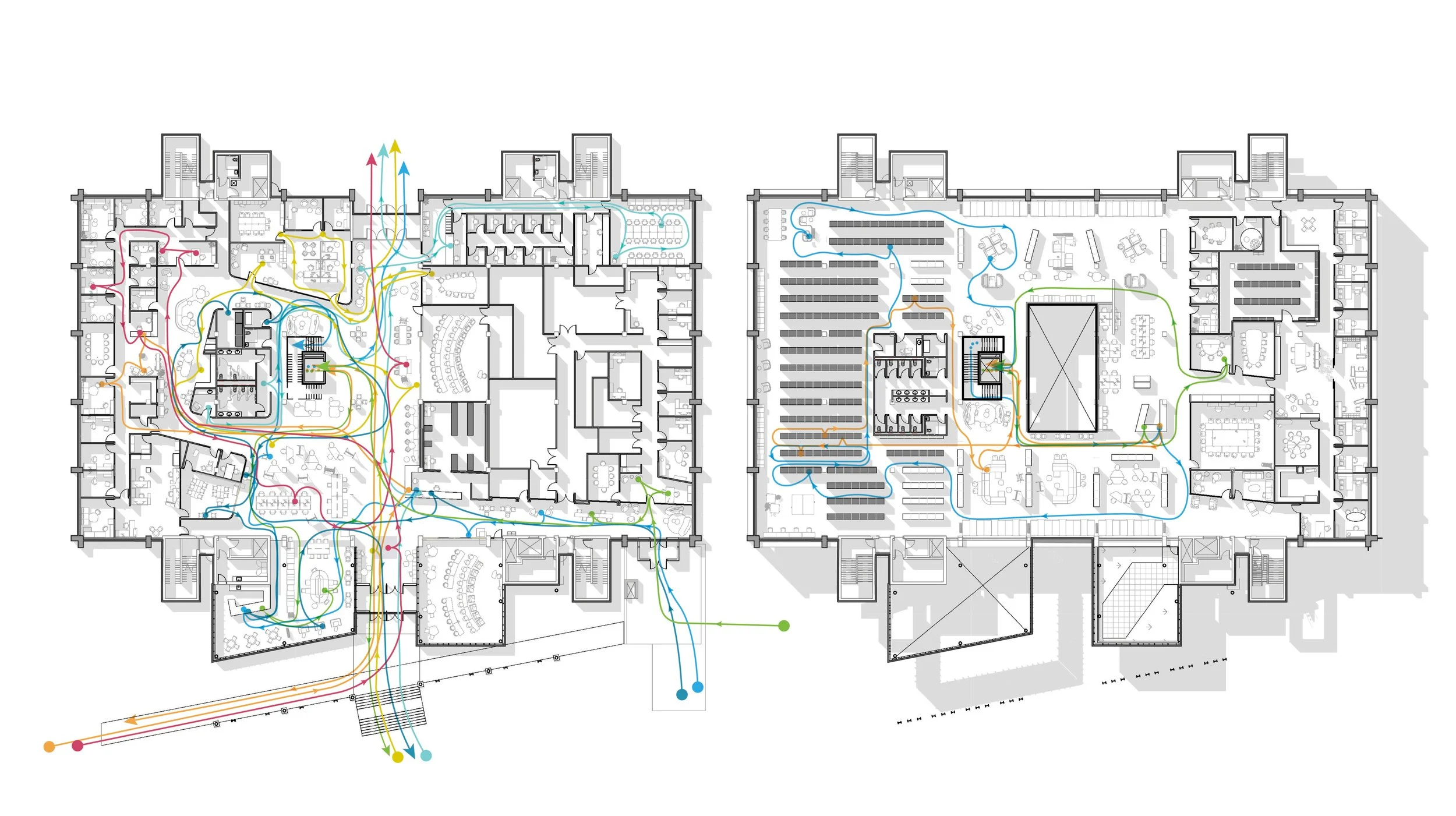
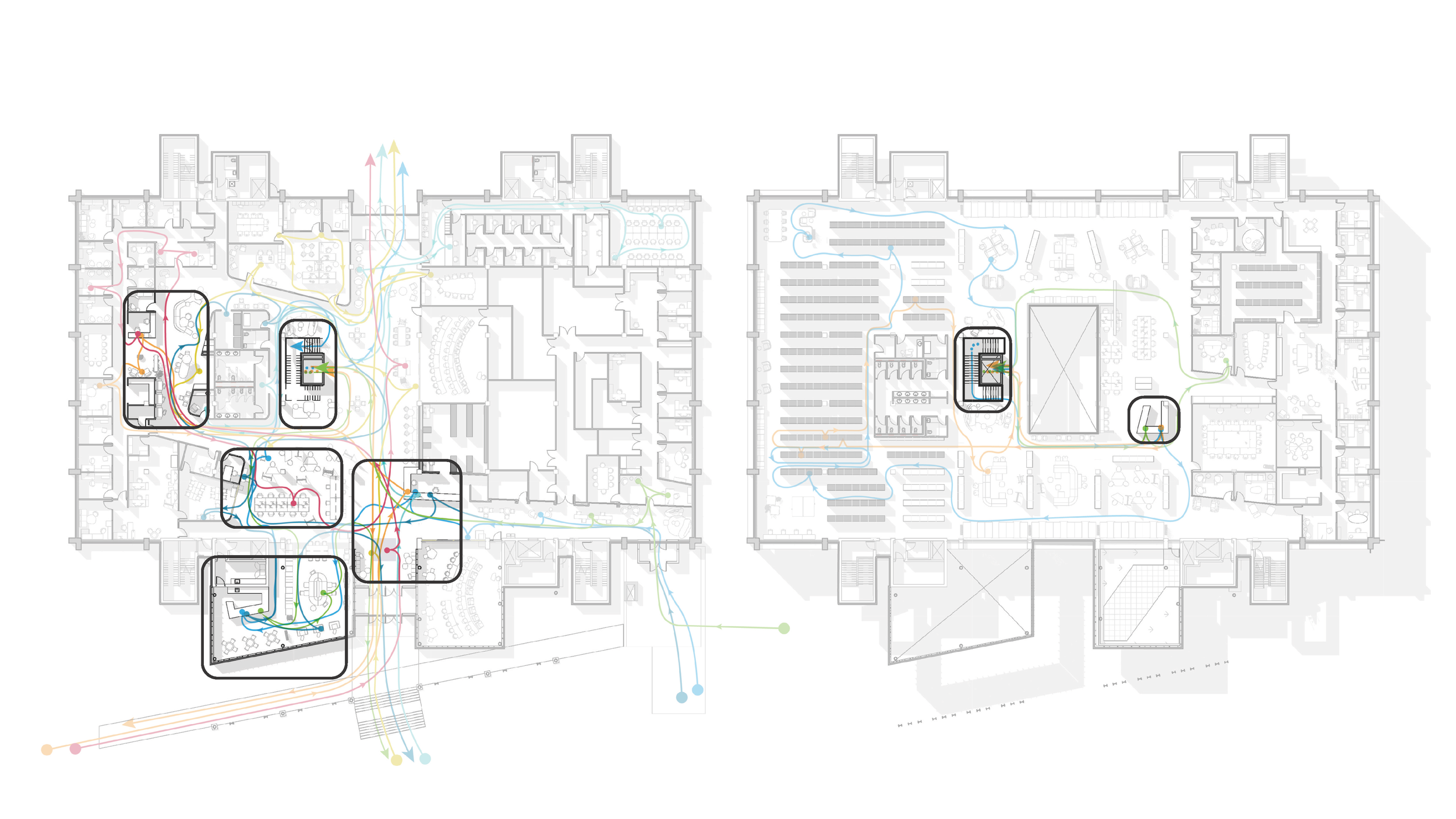
For Matthew, this was more than a design solution—it was a cultural intervention. “Beauty is a really, really important… it’s almost the opposite side of culture,” he says, highlighting how regenerative design must respond to people’s lived experience and sense of belonging. The project demonstrates that when design prioritises human connection over checklists, the life that emerges becomes the most meaningful measure of success.
Integrating Regenerative Thinking and Biophilic Design
Within practice, Matthew’s role is not simply to guide certifications but to help teams and clients think differently about what buildings can achieve.
“If the first 15 years of my career was trying to convince everybody to see the world the way I saw it, the last five years has been trying to translate the tactics through my client's value system. My job is to translate that into the work that we're doing together so that you can see how your values live in this world. People get really excited about their values showing up.”
“When somebody says we need architectural services, I'm on the team that produces the proposal, goes to the interview, and sells the vision of what the project could be. Before we just start running forward with a checklist and doing all the things you do to get certification, let's pause and ask the question: what does the project really need? We'll tailor a strategy based off that.”
In one early project at Progressive, this shift led to a clear realisation.
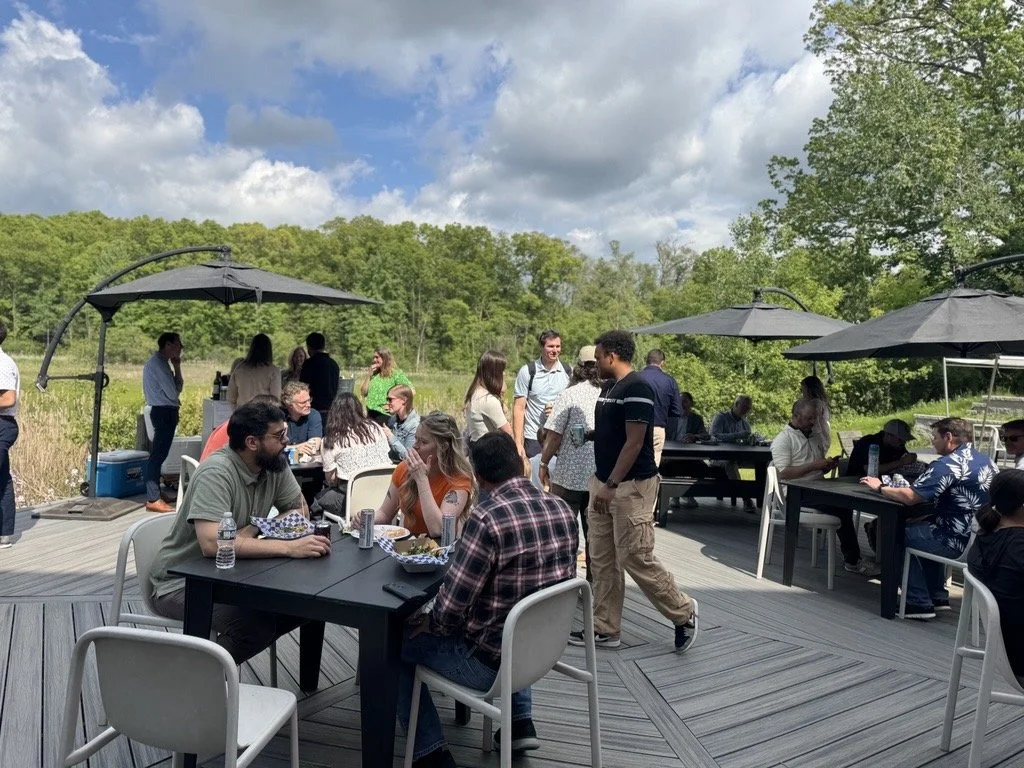
Grand Rapids, Michigan office on deck during summer.
“Once we started understanding what the project really needed, it was really clear that a biophilic intervention made all the sense. If we had just jumped into the scorecard, we would have just done all the things on the checklist and called it good.”
Matthew emphasises the importance of being involved from the very beginning, where biophilic design can shape both the values and the experience of a project.
“I kept being invited to these projects when they're already baked. They're already defined, and then it's mostly to do contractual agreements. I would be invited at a point in the project and all the big decisions were already made, and I wanted to ask questions and challenge those decisions.”
He notes how easily the role of a sustainability consultant can become constrained. For Matthew, meaningful change requires earlier engagement. “The consultant can get put in a box. There's a silo. I can come in before it's even a project and start thinking through what the opportunities might be.”
This approach allows him to work alongside clients from the outset, embedding biophilic and regenerative thinking into the very DNA of a project. As Matthew says: “Buildings do things. There are values embedded in them.” And central to these values, he adds, is love. “Love is a pretty omnipresent idea across almost every value system,” he explains.
It’s not about imposing ideas or redesigning plans, but about uncovering opportunities that enhance ecological health, human wellbeing and cultural resonance—long before the first materials are specified.
Underlying this entire philosophy is a principle often missing in modern culture: slowing down.
“Our whole society has a love affair with speed. We sacrifice so much good at the altar of efficiency. The only way of doing it differently is to take more time. You have to spend time wrestling with what the project needs. You have to understand your client's business model.”
“You need to go real, real slow in the beginning in order to go fast.”
How The Biophilic Blueprint shares the vision of living buildings
This conversation with Matthew VanSweden aligns closely with The Biophilic Blueprint’s mission to highlight the human-centred and regenerative potential of the built environment. His focus on biophilic design, early engagement and embedding client values into projects exemplifies how architecture can foster wellbeing, cultural connection and ecological restoration—the very outcomes the platform seeks to explore and champion.
Comment below: Is Sustainability dead? What does this mean to you?
References and further reading:
International Living Future Institute. Living Future. https://living-future.org
Living Building Challenge. https://living-future.org/lbc/
David Orr: An environmental educator and scholar, known for work on sustainability in higher education and ecological design.
Bill McKibben: A prominent environmentalist and author, founder of 350.org, focused on climate change activism.
William McDonough: Architect and designer, co-author of Cradle to Cradle, pioneering sustainable design principles.
Rachel Carson: Marine biologist and writer whose book Silent Spring helped launch the modern environmental movement and influenced the creation of the EPA.